Soapstone Countertops: Why They Are the G.O.A.T. of Kitchen Design
The Best Soapstone Countertops: What Every Homeowner Should Know First
The best soapstone countertops combine natural beauty, extreme heat resistance, and zero-maintenance sealing into one timeless kitchen surface.
If you want the quick answer, here it is:
Top reasons soapstone ranks as one of the best countertop materials:
- Naturally non-porous – never needs sealing, unlike granite or marble
- Heat-proof – you can set a 500°F pot directly on the surface without damage
- Antibacterial – resists mold, bacteria, and stains without any chemical treatments
- Develops a rich patina – darkens gradually to a deep charcoal over time
- Repairable – light scratches sand out in minutes with fine-grit sandpaper
- Proven longevity – original soapstone sinks and countertops from the 1800s are still in use today
| Feature | Soapstone |
|---|---|
| Needs sealing? | Never |
| Heat resistant? | Yes – extreme heat |
| Scratch resistant? | Moderate (easily repaired) |
| Nonporous? | Yes, naturally |
| Color range | Gray to deep charcoal |
| Cost installed | $70–$120 per sq. ft. |
| Lifespan | 50+ years (often centuries) |
Soapstone is a metamorphic rock made primarily of talc, chlorite, and dolomite. That high talc content is exactly what gives it the smooth, almost velvety feel that makes it so distinctive to the touch. It has been used in homes, laboratories, and commercial kitchens for centuries – and for good reason.
It is not the flashiest stone on the market. But for homeowners who want a surface that genuinely performs day after day – with hot pans, spills, and heavy use – it is hard to beat.
This guide covers everything you need to make a confident decision: types, costs, maintenance, design ideas, and who soapstone is (and isn’t) right for.

Why Designers Rank These as the Best Soapstone Countertops
When we talk to interior designers in the Chicago area, they often refer to soapstone as the “quiet luxury” of the stone world. Unlike the high-gloss, busy patterns of some granites, the best soapstone countertops offer a matte, understated elegance that feels grounded and organic.
Technically known as steatite, soapstone is a metamorphic rock formed under intense heat and pressure. Its primary ingredient is magnesium silicate (talc), which gives the stone its signature “soapy” feel. Because it is chemically inert and non-porous, it won’t react to acidic foods like lemon juice or red wine. This is why you’ll find it in high school chemistry labs—it can handle almost anything you throw at it.
Furthermore, its antibacterial properties make it a top-tier choice for families. Since moisture cannot penetrate the surface, there is nowhere for bacteria or mold to hide. While it has a deep New England heritage—often found in historic farmhouses—modern sourcing from Brazil has introduced incredible varieties with dramatic white veining that look stunning in contemporary Chicago lofts.
If you are exploring Natural Stone Countertops, soapstone stands out because it doesn’t try to be anything else. It is honest, durable, and gets better with age.

Identifying the Best Soapstone Countertops: Architectural vs. Artistic Grade
Not all soapstone is created equal. If you’ve ever seen a beautiful hand-carved soapstone figurine, you were looking at “artistic grade” soapstone. This variety has a very high talc content (up to 80%), making it soft enough to carve with simple tools but far too soft for a kitchen.
For your home, you want architectural grade soapstone. This grade typically contains around 30% talc, with the remainder being harder minerals like quartz and chlorite. This ratio provides the perfect balance: it retains that silky, matte feel but offers the density and durability required for a Soapstone Countertop that lasts a lifetime.
When selecting your slabs at our Elk Grove Village facility, we recommend looking for a standard 3cm (1.25-inch) thickness. This provides the structural integrity needed to skip the plywood sub-base often required for thinner materials.
Choosing the Best Soapstone Countertops for Your Design Style
One of the biggest myths about soapstone is that it only belongs in a rustic farmhouse. In reality, it is incredibly versatile.
- Modern Farmhouse: Pair dark gray soapstone with crisp white cabinetry and charcoal subway tile for a high-contrast, classic look.
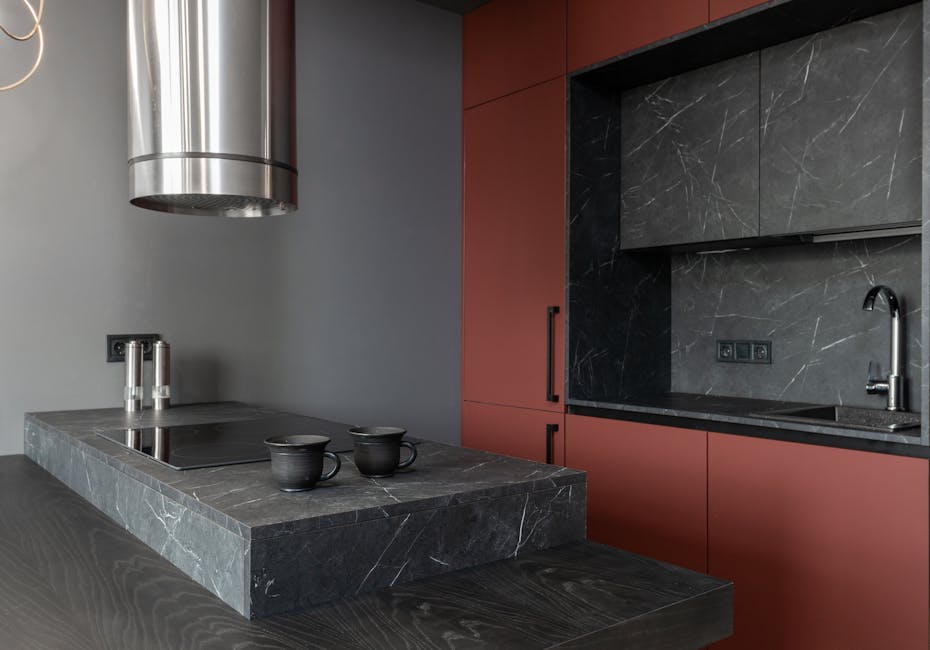
- Contemporary/Minimalist: Use slabs with minimal veining and pair them with flat-panel wood cabinets. The matte finish of the stone absorbs light rather than reflecting it, creating a soft, moody atmosphere.
- Traditional: Combine soapstone with warm wood tones and gold or brass hardware. The warmth of the metal makes the green or blue undertones of the stone pop.
For more visual inspiration, you can see how designers use 14 Soapstone Countertops to Inspire Your Kitchen Design to create spaces that feel lived-in yet sophisticated.
Performance and Durability: Heat, Scratches, and Longevity
In home improvement, “durable” often means “invincible.” With soapstone, durability means “resilient.” It is a different kind of tough.
Let’s look at how it stacks up against the competition:
| Property | Soapstone | Granite | Marble | Quartz |
|---|---|---|---|---|
| Heat Tolerance | 500°F+ (Best) | High (Requires trivet) | Moderate | Low (Can scorch) |
| Porosity | 0% (Non-porous) | 0.5% – 2% | High | 0% |
| Acid Resistance | High (No etching) | High | Low (Etches) | High |
| Scratch Resistance | Low to Moderate | Very High | Moderate | High |
| Sealing Needed | Never | Every 1-3 years | Every 6 months | Never |
The standout feature here is heat resistance. Soapstone is a thermal mass, meaning it holds temperature beautifully without cracking or scorching. You can take a cast-iron skillet directly from a 500-degree burner and set it on the counter. No trivet, no panic.
However, because of the talc content, soapstone is softer than granite. It will scratch if you drag a heavy pot across it or drop a sharp knife. But here is the secret: unlike quartz or granite, where a chip is a permanent eyesore requiring a professional, soapstone is DIY-repairable. These marks are often seen as part of the “story” of the kitchen, contributing to its historical charm. If you’re looking for The Best Materials for Residential Countertops, soapstone is the choice for those who value performance over a “perfect” plastic look.
Maintenance and the Art of the Natural Patina
Soapstone is a “living” surface. When it first arrives from our warehouse, it will likely be a light, powdery gray. Over time, as it is exposed to touch and cooking oils, it will naturally darken. This process is called developing a patina.
To Oil or Not to Oil?
This is the most common question we hear. You have two choices:
- Leave it natural: The stone will darken unevenly over time, creating a rugged, “lived-in” look.
- Accelerate the process: Many homeowners apply food-grade mineral oil or a soapstone wax (a blend of walnut oil and beeswax) to the surface. This immediately turns the stone a deep, rich charcoal or black and brings out the hidden veining.
Repairing Scratches
If you get a scratch that bothers you, the fix is simple:
- For light scratches: Simply rub a little mineral oil over the mark. It will often disappear instantly.
- For deeper nicks: Use a small piece of 120-grit sandpaper to buff the area, followed by 220-grit for a smooth finish. Re-apply your oil or wax, and the countertop will look as good as new.
For a deeper dive into the lifestyle of owning this stone, check out Should You Choose Soapstone Countertops? Pros, Cons & Tips.
Cost Analysis and Beyond-the-Countertop Applications
Investing in the best soapstone countertops is exactly that—an investment. Because soapstone is less common than granite and requires specialized fabrication (it’s dense and heavy!), the price point reflects its exclusivity.
- Average Cost: Expect to pay between $70 to $120 per square foot installed.
- Factors affecting price: Slab rarity (dramatic veining costs more), edge profiles, and the complexity of the installation.
Popular Applications
Because soapstone is so versatile, our Chicago clients often use it for more than just the perimeter counters:
- Integrated Sinks: We can fabricate a custom “apron-front” or farmhouse sink out of the same slab for a seamless, high-end look.
- Backsplashes: A full-height soapstone backsplash is heat-resistant and incredibly easy to wipe down behind a stove.
- Fireplace Surrounds: Because it holds heat and radiates it back into the room, it is the premier choice for hearths and mantels.
- Outdoor Kitchens: Since it is unaffected by UV rays, freezing temperatures, or rain, it is one of the few natural stones that thrives in the Chicago climate year-round.
- Bathroom Vanities: Its moisture resistance makes it perfect for “wet” environments where other stones might stain from makeup or soap.
Frequently Asked Questions about Soapstone
Can you put hot pots directly on soapstone?
Yes! Soapstone is famous for its thermal stability. It is used to line wood-burning stoves and pizza ovens because it can handle extreme temperatures without cracking or scorching. You do not need a trivet.
Does soapstone need to be sealed like granite?
No. Soapstone is naturally non-porous. Liquids cannot soak into the stone, so there is no need for chemical sealers. Oiling the stone is purely an aesthetic choice to darken the color; it is not for protection.
How do you fix a scratch in soapstone?
Most surface scratches can be hidden with a quick application of mineral oil. For deeper scratches, you can lightly sand the area with fine-grit sandpaper and then re-oil it. The repair is usually invisible.
Conclusion
At Global Stone Inc., we’ve spent over 20 years helping Chicago homeowners find the perfect surfaces for their lives. Soapstone isn’t for everyone—if you want a countertop that looks exactly the same on day one as it does on year ten, you might prefer quartz.
But if you want a material with soul—a stone that is warm to the touch, shrugs off the heat of a busy kitchen, and tells the story of your home through a beautiful, aging patina—then soapstone is the G.O.A.T. (Greatest of All Time).
Whether you are in Naperville, Elk Grove Village, or downtown Chicago, our in-house designers and fabricators are here to help you select the best soapstone countertops for your project. Plus, with our lifetime warranty, you can cook with confidence knowing your investment is protected.
Ready to see these slabs in person? Explore our Soapstone Countertop options or visit our showroom today!