
Upgrade Your Home with Sleek Carbon Slate Countertops Today
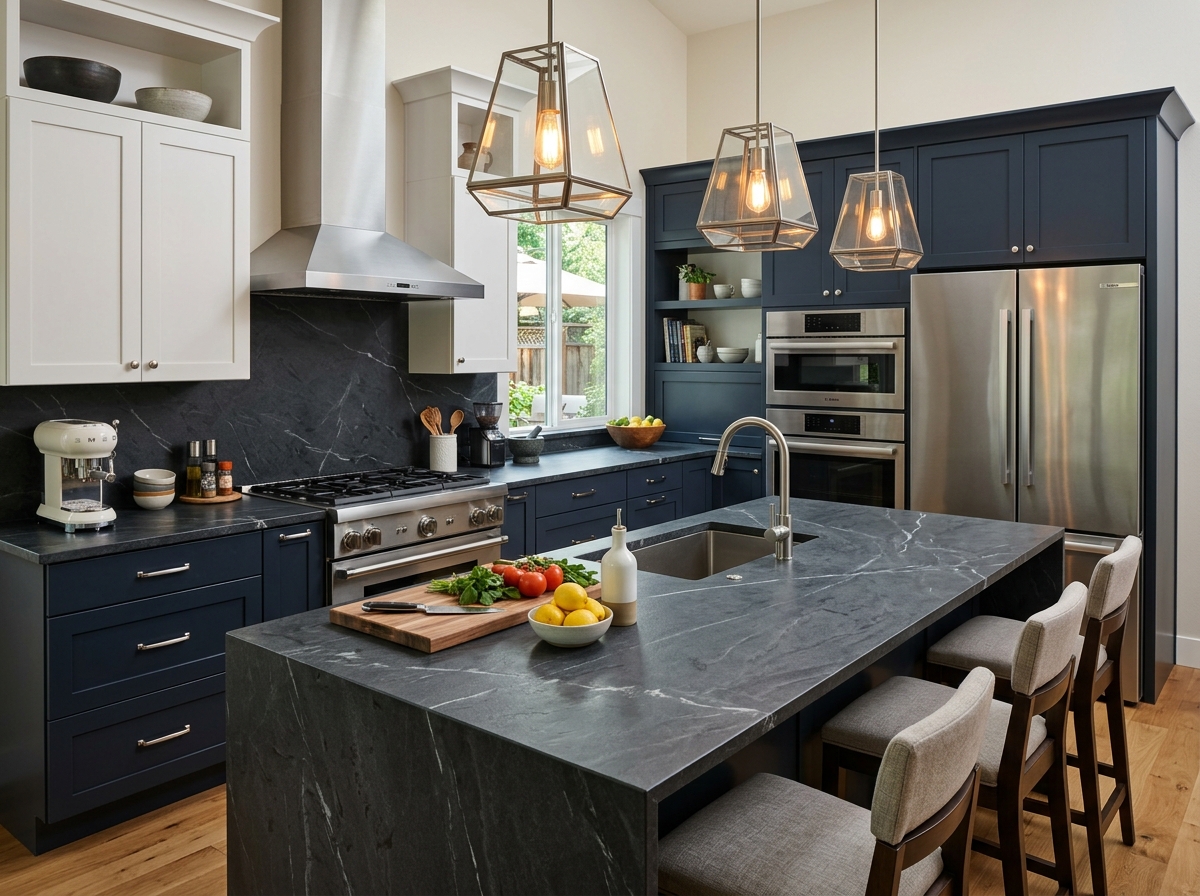
The Smartest Way to Buy Carbon Slate Countertops for Your Home
Carbon slate countertops are one of the most versatile and visually striking surface options available for kitchen and bathroom renovations today.
If you’re ready to buy, here’s a quick overview of your main options:
| Type | Best For | Starting Price |
|---|---|---|
| Natural slate (e.g., Carbon Grey Basalt) | Countertops, outdoor kitchens, fireplaces | Request quote |
| Ledger stone slate tile | Accent walls, backsplashes | ~$8.65/sqft |
The right choice depends on your budget, application, and how long you want it to last.
Natural stone like Carbon Grey Basalt is a true stone — durable, heat-resistant, and low-maintenance. It needs no sealing and works beautifully in both indoor and outdoor settings. While there are many surface options on the market, natural stone offers a level of durability and heat resistance that is hard to match under daily use.
This guide breaks down every option so you can shop with confidence.

What are Carbon Slate Countertops and Panels?

When we talk about carbon slate countertops, we are usually referring to a specific aesthetic: deep, moody charcoal greys and blacks that provide a sophisticated, matte finish. This look can be achieved through several different material technologies, ranging from 100% natural stone to advanced stone veneers.
At its heart, slate is a fine-grained, metamorphic rock derived from shale or mudstone. In home improvement, “Carbon Slate” has become a popular term for varieties like Carbon Grey Basalt or Vermont Black, which offer a more consistent, solid color than the multicolored slates of the past.
For those who want the look without the weight of a full slab, stone veneer technology allows for thin layers of natural stone to be backed by fiberglass or resin. This makes it possible to enjoy natural stone countertops in areas where structural load might be a concern.
Material Composition and Sustainability
One of the reasons we love working with slate is its inherent sustainability. As a natural material, it is quarried rather than manufactured using intensive chemical processes. Its legendary longevity—historically evidenced by its use in roofing slates—means that once you install it, you likely won’t ever need to replace it. This durability significantly reduces the long-term carbon footprint of your home. When looking for the best materials for residential countertops, slate stands out as an eco-friendly frontrunner.
Design Styles for Carbon Slate Countertops
The design versatility of carbon slate is unmatched. It isn’t just a flat, black rock; it comes in several distinct finishes:
- Honed Finish: This creates a smooth, matte surface that feels soft to the touch and looks incredibly modern.
- Satin/Brushed Texture: Often found in granites like Carbon Grey Satin, this finish is achieved by brushing the stone with wire brushes, giving it a subtle, leather-like feel.
- Fluted Panels: A massive trend in Chicago interior design right now, fluted slate panels add vertical texture to kitchen islands or bathroom walls.
- Visual Depth: While the base color is charcoal grey, high-quality carbon slate often features blue undertones and bright white highlights that catch the light.
The result is a surface that offers both natural stone beauty and durability, fitting perfectly into minimalist, industrial, or contemporary homes.
Key Benefits and Performance of Carbon Slate Countertops
Why choose carbon slate countertops over the usual suspects like granite or quartz? The performance data tells a compelling story.
| Feature | Carbon Slate (Natural) | Granite | Quartz (Engineered) |
|---|---|---|---|
| Heat Resistance | Excellent (Heatproof) | High | Moderate (Resin may burn) |
| Stain Resistance | High (Non-porous) | Moderate (Needs sealing) | Excellent |
| Maintenance | Very Low | Moderate | Low |
| Hardness (Mohs) | 5.5 – 7 | 6 – 7 | 7 |
Slate is naturally resistant to moisture and fire. Because it is chemically inert and has very low porosity, it doesn’t harbor bacteria, making it an incredibly hygienic choice for kitchens. Its weather resistance also makes it one of the few stones that can transition seamlessly from your indoor kitchen to an outdoor BBQ area without fading or cracking.
Heat, Stain, and Scratch Resistance
In a high-traffic kitchen, you need a material that can take a beating. Natural carbon slate is highly water-resistant and handles impact well. While it is slightly softer than granite on the Mohs scale, it is much more resistant to thermal shock. You can generally set a hot pan directly on a natural slate surface without worrying about the “thermal crack” that can plague other stones.
However, it’s worth noting that while slate is scratch-resistant, it is prone to “cleaving” or chipping if a heavy cast-iron pot hits a sharp edge. This is why we often recommend beveled or rounded edges for slate installations in busy households.
Cost and Purchasing Carbon Slate Countertops
Budgeting for your renovation? Here are the numbers you need to know:
- Ledger Tiles: For backsplashes or accent walls, Carbon Slate Field Tiles typically run around $8.65 per square foot. These are often sold in boxes of 6 pieces (covering 6 sqft).
- Full Slabs: For custom-fabricated countertops in the Chicago area, pricing varies based on thickness (2cm vs 3cm) and the specific quarry origin.
If you are considering a tile-based approach, you can learn more about slate tile countertops to see if they fit your DIY goals.
Comparing Carbon Slate to Traditional Stone Alternatives
Choosing between carbon slate countertops and other materials often comes down to the “vibe” of your home.
Slate vs. Granite: Granite is famous for its “salt and pepper” speckling. Carbon Grey Satin granite is a great alternative if you want the hardness of granite but the dark, consistent look of slate. However, granite requires periodic sealing, whereas many slates do not.
Slate vs. Quartz: Engineered quartz brands offer styles like Vena Carbona, which mimics the look of grey stone with wispy white veins. Quartz is more “perfect” and consistent, but it cannot be used outdoors because the resins will yellow in the sun. Natural slate is the winner for outdoor durability.
Slate vs. Quartzite: Carbon Grey Quartzite is another heavy hitter. It looks like concrete or soapstone but offers the extreme hardness of quartzite. It’s a “refined luxury” option for those with a higher budget.
To see how these all stack up in a broader context, check out our countertops overview.
Installation and Maintenance Guide
Installing carbon slate countertops is not a Sunday afternoon DIY project—at least not if you’re using natural stone slabs. Because slate is a “foliated” rock (meaning it forms in layers), it requires expert handling during the cutting and fabrication process to prevent delamination.
For a kitchen countertop that needs to be perfectly level and water-tight, we always recommend professional installation by experienced stone fabricators.
For more on keeping your stone looking new, see our countertop maintenance tips.
Sealing and Long-Term Care
A common question we hear at our Elk Grove Village facility is: “Does slate need to be sealed?” The answer: It depends on the finish.
- Natural Cleft Slate: Usually doesn’t need sealing because it is so dense.
- Honed or Satin Finish: The process of smoothing the stone opens up the pores. For stones like Carbon Grey Satin, we recommend applying 2 to 4 coats of a solvent-based impregnating sealer.
For daily cleaning, skip the harsh chemicals. A mild dish soap and warm water are all you need. If you do get a minor chip, they can often be repaired with a color-matched epoxy resin—a service we provide to ensure your kitchen stays flawless.
Frequently Asked Questions about Carbon Slate Countertops
Do carbon slate countertops need to be sealed?
Most natural slates are very dense and don’t require sealing. However, if the stone has been “honed” or “brushed” to create a satin finish, it becomes more porous and should be treated with an impregnating sealer to prevent oil stains.
Are carbon slate panels suitable for outdoor kitchens?
Yes! Natural carbon slate is one of the best materials for the Chicago climate. It handles the freeze-thaw cycle of our winters and the direct sun of our summers without cracking or losing its color.
How do I clean carbon slate surfaces without damaging the finish?
Avoid abrasive scouring pads or acidic cleaners (like vinegar or lemon juice). Use a soft cloth and a pH-neutral cleaner. For heavy staining, use a commercially available stone cleaner designed for natural surfaces.
Conclusion
Upgrading to carbon slate countertops is an investment in both style and substance. Whether you choose the rugged beauty of natural Carbon Grey Basalt or a sleek, honed finish, you’re choosing a material that is built to last.
At Global Stone Inc., we have over 20 years of experience serving the Chicago area, including Naperville and Elk Grove Village. Our in-house designers and fabricators handle everything from the first measurement to the final installation, all backed by our lifetime warranty.
Ready to transform your space? Use our Job Registration Form to get started on your estimate today!