Everything You Need to Know About Limestone Countertops
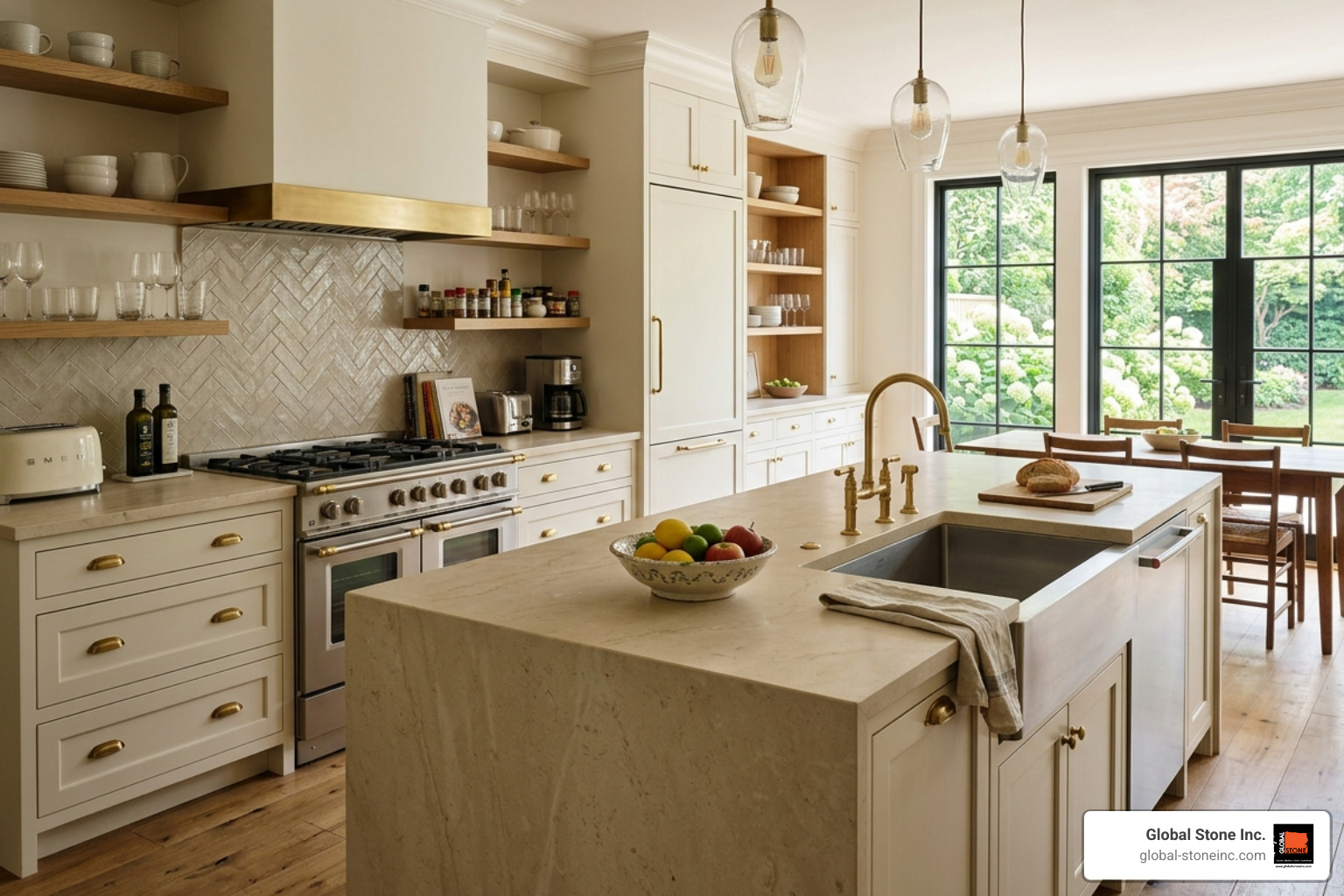
The Natural Stone Countertop More Homeowners Are Choosing in 2026
Limestone countertops are natural stone surfaces cut from sedimentary rock formed over millions of years on ancient ocean floors — and they’re having a serious moment in kitchen and bathroom design.
Quick answer: Here’s what you need to know at a glance:
| Feature | What to Expect |
|---|---|
| Material | Natural sedimentary rock, mainly calcium carbonate |
| Hardness | 3–5 on the Mohs scale (softer than granite or marble) |
| Best for | Bathrooms, low-traffic kitchens, decorative surfaces |
| Maintenance | Seal every 6–12 months; avoid acidic cleaners |
| Cost | ~$3.15–$18.10/sq ft (material only) |
| Finishes | Honed, polished, tumbled, natural cleft |
| Biggest perk | Unique, warm, natural beauty with fossil details |
| Biggest risk | Etching and staining from acids and spills |
Limestone brings something that engineered stone simply can’t replicate — character. Each slab contains fossils, shells, and mineral patterns formed over millions of years. No two pieces look alike.
That natural beauty comes with trade-offs, though. Limestone is softer and more porous than granite or quartz, which means it needs more care. For the right homeowner, it’s a stunning choice. For others, it can become a maintenance headache.
This guide covers everything — from how limestone forms, to costs, colors, care routines, and whether it’s the right fit for your kitchen or bathroom.
I’m Greg Zamarski, and with over 20 years of experience fabricating and installing natural stone countertops at Global Stone Inc. in Elk Grove Village, I’ve worked with countless homeowners choosing limestone countertops for their renovations. Whether you’re drawn to limestone’s warm, organic look or still weighing your options, this guide will help you make a confident decision.
What Are Limestone Countertops and How Are They Formed?
To understand why limestone countertops look the way they do, we have to look back millions of years. Limestone is a sedimentary rock, which means it formed through the gradual accumulation of organic material. Most of the limestone we use today originated in warm, shallow marine environments.
Imagine an ancient ocean floor. Over eons, layers of calcium carbonate — the primary ingredient in limestone — built up from the skeletal remains of marine creatures, shell fragments, coral debris, and even algae. Under the immense geological pressure of the earth and sea, these layers solidified into the rock we now quarry.
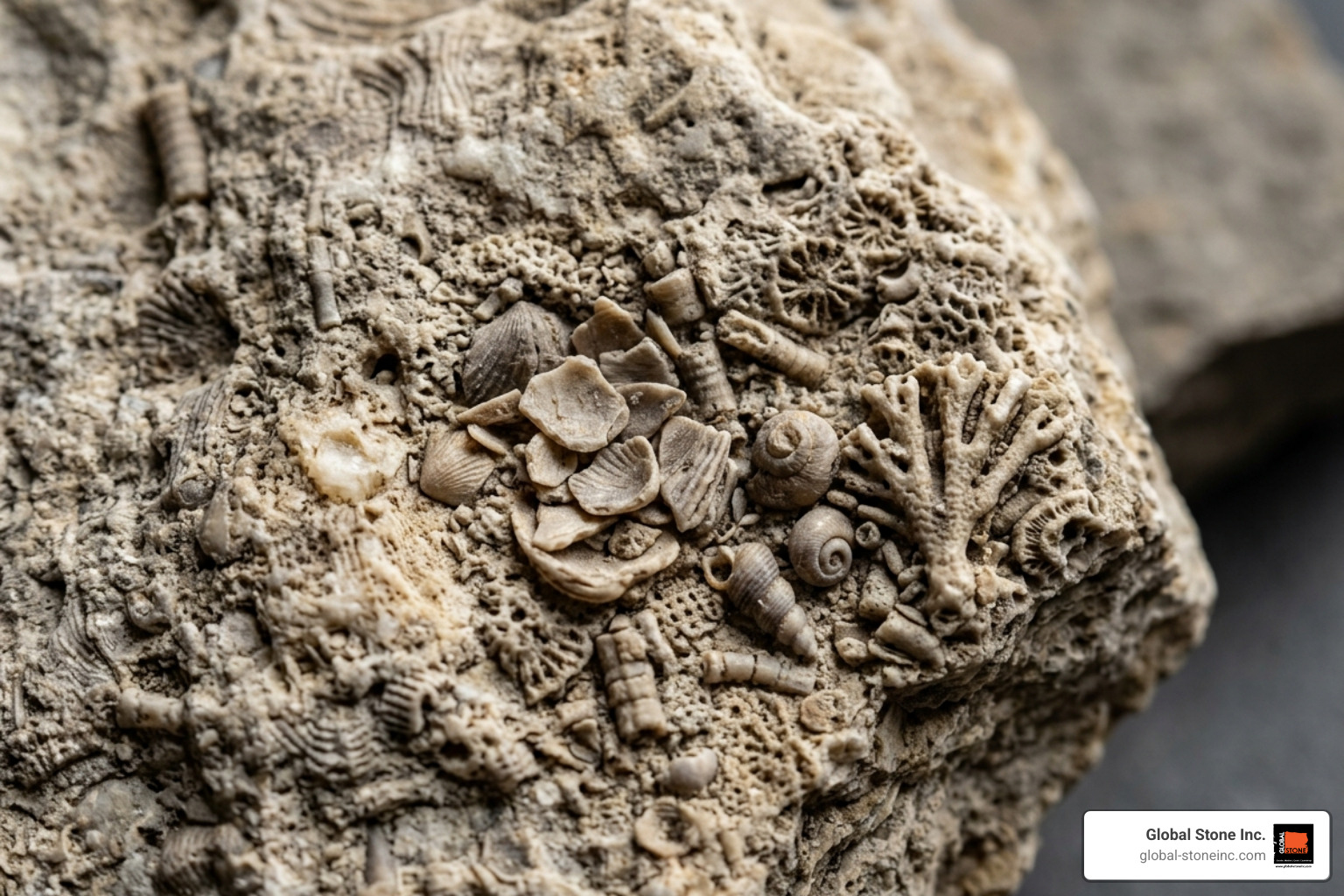
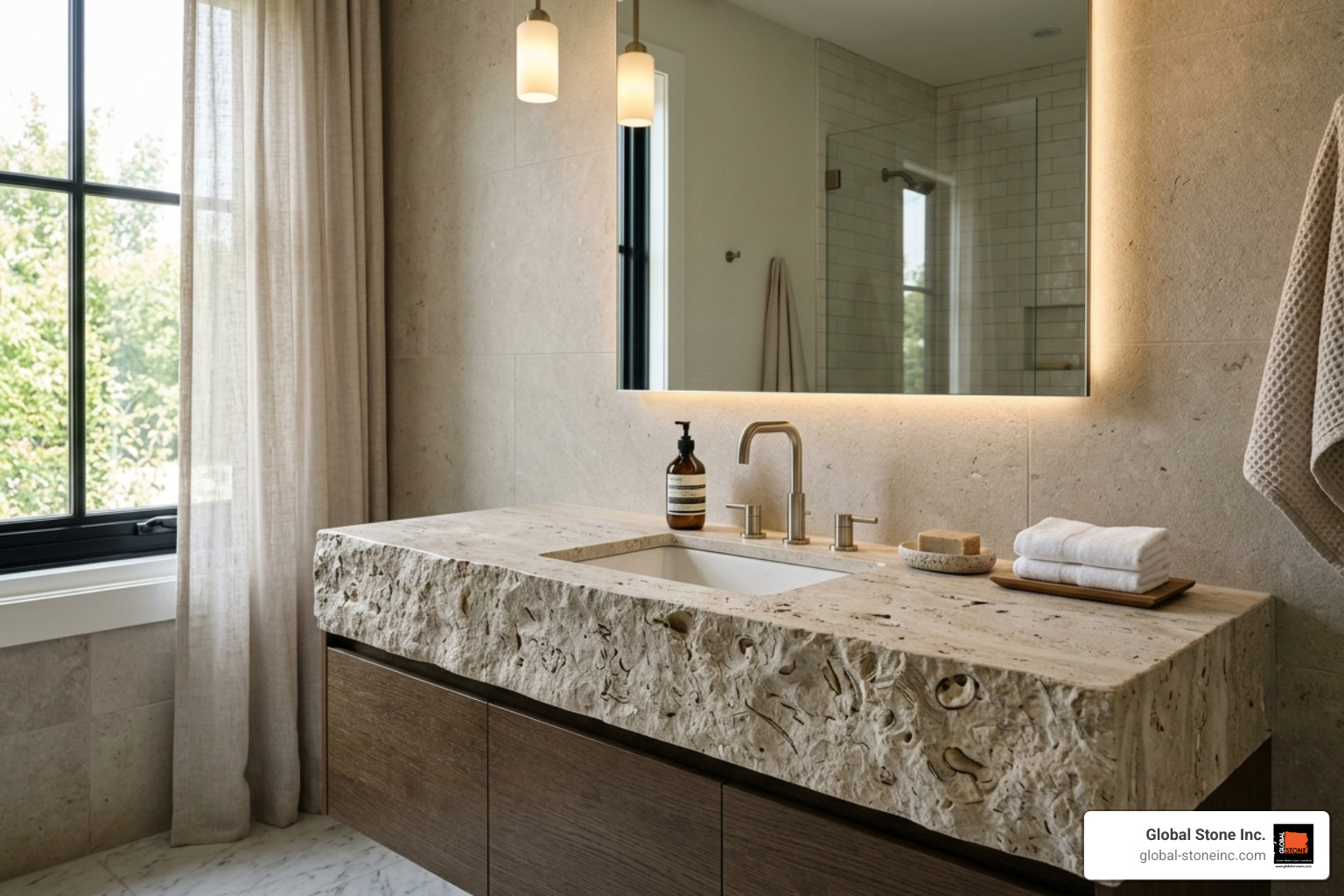
Because of this organic “recipe,” limestone is famous for its unique fossilization patterns. When you look closely at a slab, you aren’t just looking at stone; you’re looking at a history book. It is common to find tiny shells, prehistoric fossils, and intricate coral structures embedded directly in the surface. This gives the stone a “living” aesthetic that feels much warmer and more connected to nature than the sterile patterns of many man-made materials.
An incredible testament to limestone’s journey is the summit of Mount Everest. Believe it or not, the very top of the world’s highest peak is made of limestone that originally formed on an ocean floor before being lifted by tectonic movements. If it can survive the Himalayas, it can certainly handle your kitchen — provided you treat it with the respect a world-traveling stone deserves!
The Pros and Cons of Limestone Countertops
Choosing the right surface for your home is all about balancing beauty with practicality. In our 20+ years of serving the Chicago area, we’ve found that limestone appeals to a very specific type of homeowner: the one who values “patina” and natural elegance over perfection.
The Pros: Why We Love It
- Natural Elegance: Limestone has an understated allure. It doesn’t scream for attention like some high-gloss granites; instead, it offers a soft, muted glow that complements modern minimalist and rustic styles alike.
- Heat Resistance: Like most natural stones, limestone is naturally heat-resistant. While we always recommend using trivets, it won’t melt or scorch like some synthetic materials.
- Unique Textures: From velvety-smooth honed finishes to rugged “natural cleft” faces, the tactile experience of limestone is unmatched.
- The “Granite Alternative”: For those who find granite too busy or quartz too “fake,” limestone is the perfect middle ground. You can learn more about this in our article on Why Limestone Counters Are the Granite Alternative You Need.
The Cons: What to Watch Out For
- Softness: On the Mohs Hardness scale, limestone ranks between 3 and 5. For context, granite is a 6 or 7. This means limestone is prone to scratches and chips if handled roughly.
- High Porosity: Limestone is like a very dense sponge. If you spill red wine or olive oil and leave it, the stone will “drink” the liquid, leading to deep stains.
- Acid Sensitivity: This is the big one. Because limestone is calcium-based, it reacts chemically with acids. Lemon juice, vinegar, and tomato sauce can “etch” the surface, leaving a dull, whitish mark that can’t just be wiped away.
- Patina Development: Over time, your limestone will age. It will develop small scratches and slight color shifts. In Europe, this is considered beautiful “character,” but if you want your counters to look brand new forever, this might be a dealbreaker.
Comparing Limestone to Granite, Marble, and Quartz
When our clients visit our Elk Grove Village facility, they often ask how limestone stacks up against the “Big Three.” Here is a quick breakdown of how these materials compare in the real world.
Limestone vs. Granite
Granite is the king of durability. It is harder, less porous, and much more resistant to acids. However, granite often has a very “speckled” or busy look. Limestone offers a much more uniform, serene aesthetic. If you have a high-traffic kitchen with kids and frequent cooking, granite is the safer bet. If you want a sophisticated, “Old World” look, limestone wins.
Limestone vs. Marble
These two are “sister stones.” Both are calcium-based and both etch when exposed to acid. Marble is generally denser and can take a higher polish, while limestone is often preferred in a “honed” (matte) finish. Limestone tends to be slightly more affordable than high-end marbles like Calacatta or Statuario.
Limestone vs. Quartz
Quartz is an engineered stone (about 90-93% mineral quartz mixed with resins). It is the most “bulletproof” option because it never needs sealing and is totally non-porous. However, quartz is a factory product. It lacks the fossils, the natural depth, and the “soul” of a limestone slab.
| Feature | Limestone | Granite | Marble | Quartz |
|---|---|---|---|---|
| Durability | Moderate | High | Moderate | Very High |
| Acid Resistance | Low | High | Low | Very High |
| Maintenance | High (Seal 2x/year) | Low (Seal 1x/year) | High (Seal 2x/year) | Zero Sealing |
| Weight (lbs/sf) | 13–15 | 16–18 | 15–17 | 15–17 |
| Look | Earthy, fossilized | Speckled, bold | Veined, elegant | Consistent, varied |
Design Styles and Popular Colors for Limestone
One of the best things about limestone countertops is their versatility. Whether you are aiming for a French Country kitchen or a sleek, minimalist penthouse in downtown Chicago, there is a limestone for you.
Popular Colors
- Jura Beige: A favorite for its rich, creamy tones and abundance of visible fossils and shells.
- Jerusalem Gold: Offers a warm, honey-colored glow that feels like a piece of the Mediterranean.
- Kota Brown: A more rustic, earthy option that hides wear and tear slightly better than lighter stones.
- Touques Gris: A sophisticated gray that pairs beautifully with “Organic Modern” designs and white cabinetry.
Finishes Matter
The finish you choose will completely change the vibe of the room. A honed finish provides a soft, matte look that is very popular in 2026 because it hides etching better than a shiny surface. A polished finish makes the colors pop and feels more traditional, but it shows every fingerprint and water spot. For a truly rustic feel, a tumbled texture or natural cleft face provides a rugged, ancient look.
Limestone is the ultimate choice for “Sophisticated Farmhouse” or “French Country” aesthetics. It pairs beautifully with butternut wood cabinets, unlacquered brass hardware, and farmhouse sinks. You can explore more specific options on our Limestone Countertop page.
Maintenance, Sealing, and Care for Long-Lasting Beauty
We won’t sugarcoat it: limestone requires a little love. But if you follow a few simple “Common Sense” rules, your countertops will stay beautiful for decades.
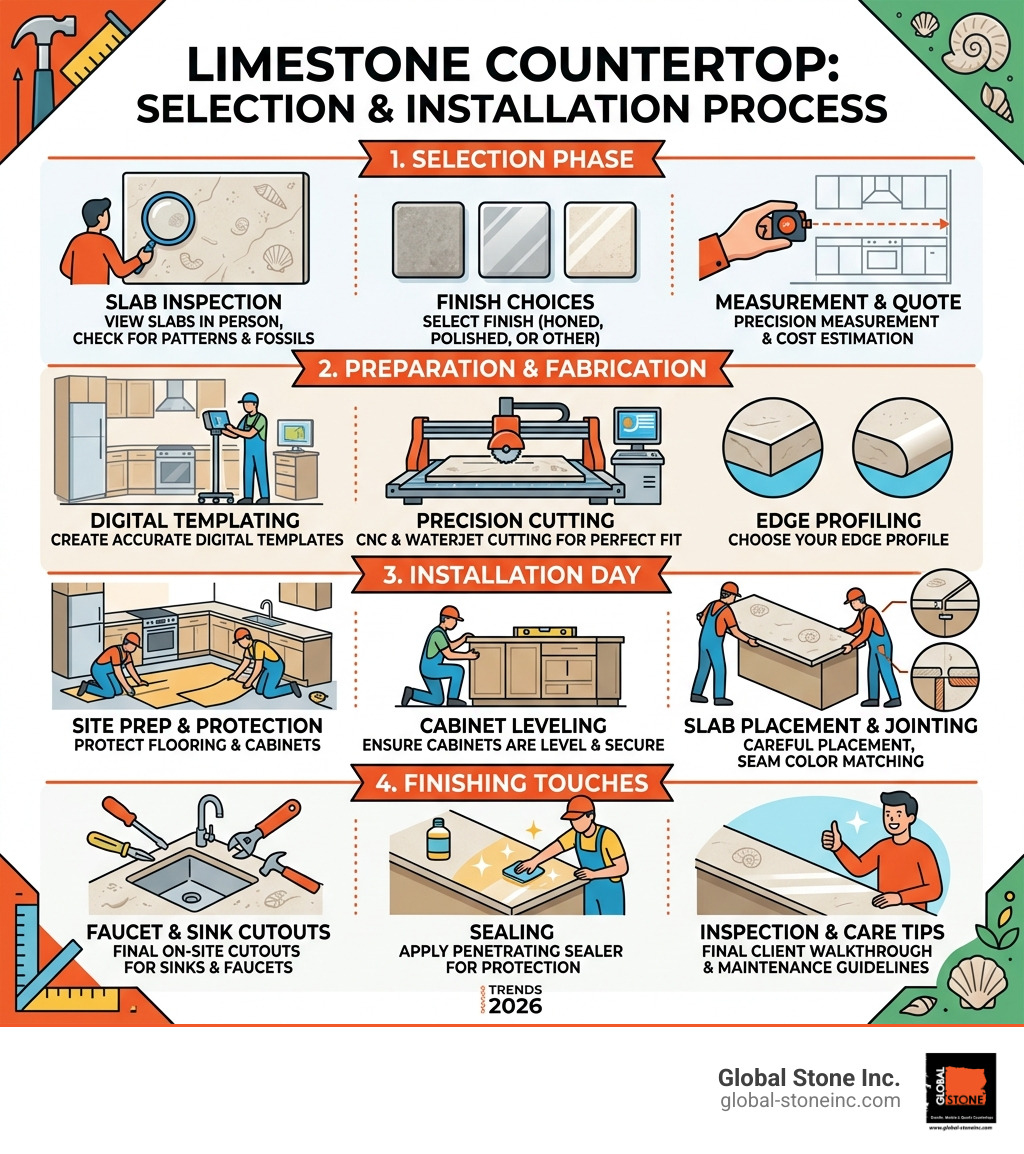
1. Sealing is Non-Negotiable
Because limestone is porous, you must apply a high-quality impregnating sealer. For a kitchen, we recommend professional sealing every 6 to 12 months. This doesn’t make the stone “waterproof,” but it gives you a crucial window of time to wipe up spills before they become permanent stains.
2. Use the Right Cleaners
Never, ever use Windex, bleach, or anything containing lemon or vinegar on your limestone. These will cause immediate etching. Instead, use a pH-neutral cleaner specifically designed for natural stone. Warm water and a drop of mild dish soap also work wonders for daily wipedowns.
3. Protect the Surface
- Cutting Boards: Limestone is soft. If you chop directly on it, you will leave scratches. (Plus, the stone is actually soft enough that it won’t dull your knives—but your counter will look like a mess!)
- Trivets: While heat-resistant, the thermal shock from a boiling pot can occasionally cause cracks or damage the sealer. Always use a hot pad.
- Coasters: Even a condensation ring from a glass of water can leave a mark if the sealer is worn down.
Frequently Asked Questions about Limestone Countertops
Are limestone countertops durable enough for high-traffic kitchens?
The honest answer? It depends on your lifestyle. If you are a “neat freak” who wipes up every crumb immediately, limestone is great. If you have young kids who might leave a puddle of orange juice on the counter overnight, you might find limestone frustrating. It is prone to edge chipping and scratching, so it’s often better suited for “secondary” surfaces like a kitchen island or a butler’s pantry rather than the main prep area.
How much do limestone countertops cost in 2026?
In the current Chicago market, limestone material prices generally range from $3.15 to $18.10 per square foot for the slabs themselves. However, fabrication and installation are separate costs. Factors like the number of cutouts (for sinks and cooktops), the edge profile (ogee vs. eased), and the complexity of the layout will affect the final price. On average, a fully installed limestone project in areas like Naperville or Hinsdale typically falls in the mid-to-high range of natural stone pricing.
Can you use limestone for outdoor kitchen surfaces?
We generally advise caution here. While limestone is used for exterior wall cladding and patio pavers, using it as a polished or honed countertop outdoors can be tricky. Chicago’s freeze-thaw cycles and intense UV exposure can cause the stone to weather and fade over time. If you do use it for an outdoor bar or BBQ surround, choose a very dense variety and be prepared to seal it at least twice a year.
Conclusion
Limestone countertops offer a timeless, organic beauty that simply cannot be matched by factory-made materials. They bring a sense of history and calm into the home, making them a top choice for discerning homeowners in 2026. While they do require more maintenance than quartz, many find that the unique fossil patterns and warm texture are well worth the extra effort.
At Global Stone Inc., we’ve spent over 20 years helping Chicago-area families transform their homes with high-quality stone. From our state-of-the-art facility in Elk Grove Village, our in-house team of designers, fabricators, and installers handles every step of the process. We are so confident in our craftsmanship that we offer a lifetime warranty on our installations.
Ready to see how limestone could look in your home? Schedule a consultation for your limestone project today, or visit us in Naperville or Chicago to browse our latest slab arrivals. Let’s build something beautiful together!