
Rock-Solid Design: Finding the Best Stone Worktops for Modern Kitchens
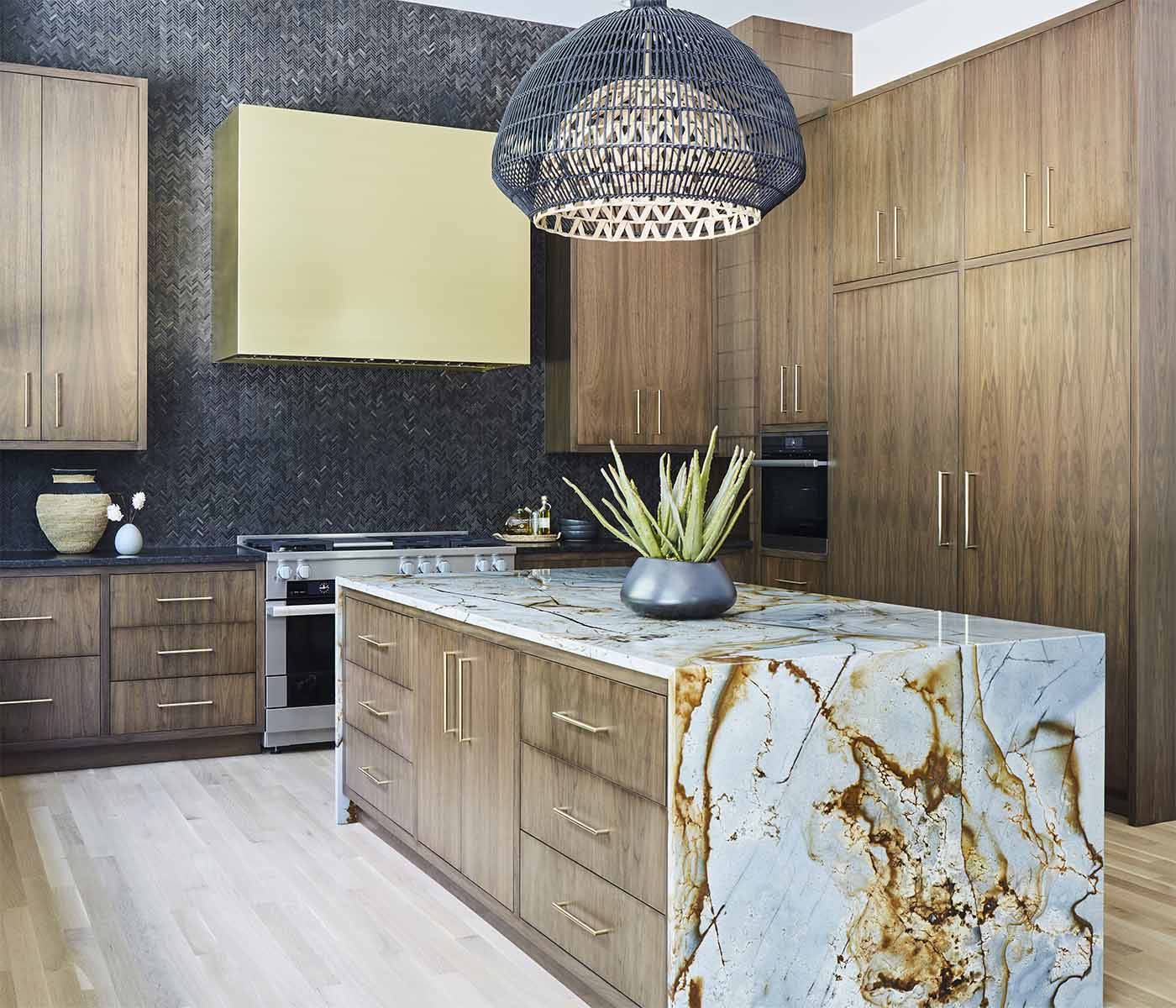
Designing Modern Kitchens with Stone Countertops: Materials Compared
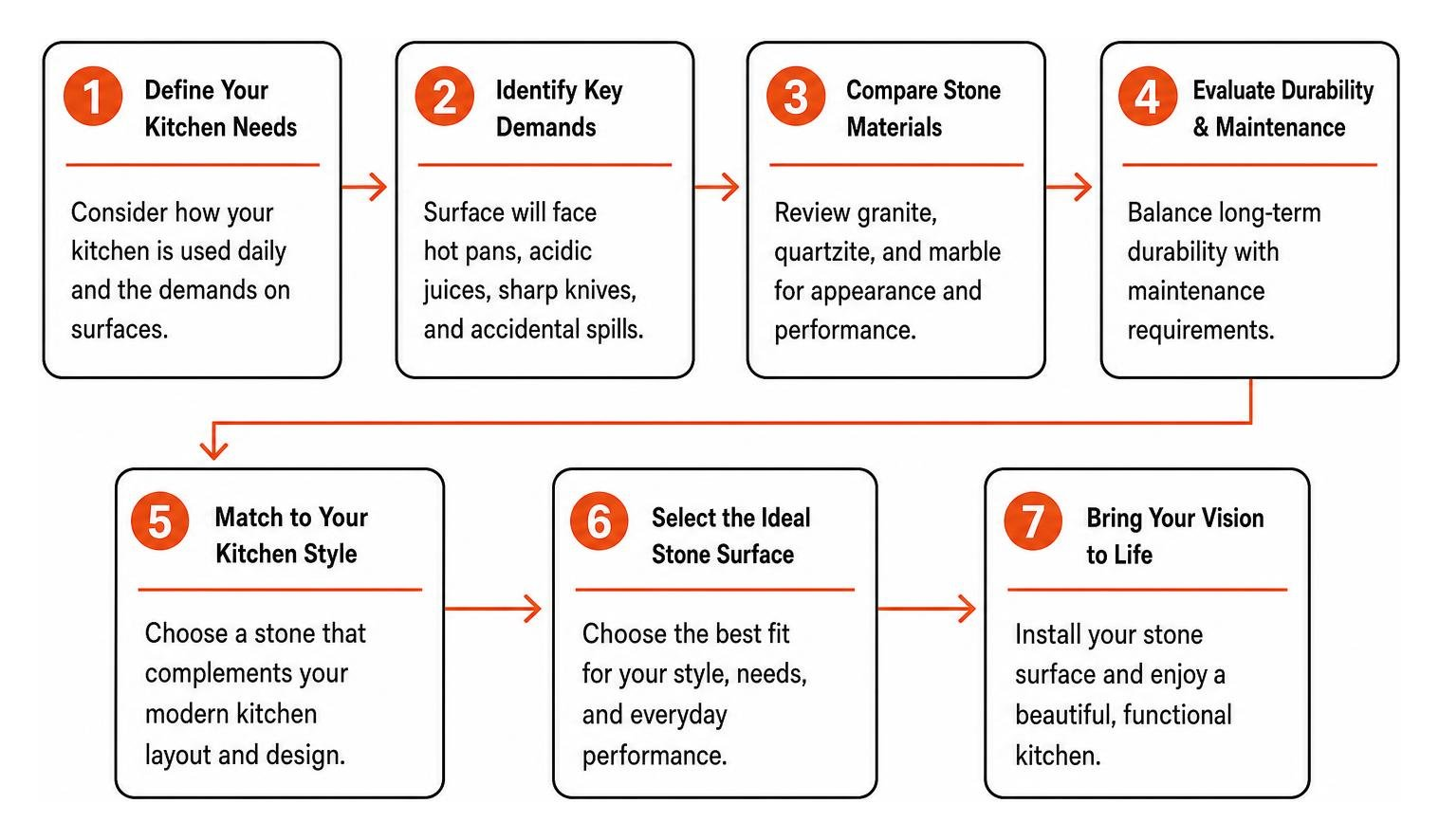
For most modern kitchens, the best stone countertop options are quartzite and granite for maximum heat and scratch resistance, quartz or porcelain for low-maintenance, non-porous surfaces, and marble for classic aesthetics with more involved care. Choosing a surface for your kitchen requires balancing visual texture with everyday performance. Whether you are prepping meals for a growing family or hosting weekend dinner parties, your surfaces will encounter hot pans, acidic juices, sharp knives, and accidental spills. To find the right fit, it helps to review a detailed countertop materials comparison to weigh long-term durability against maintenance needs.
Natural Stone Worktops: Granite, Quartzite, and Marble
Natural stone surfaces carry geological histories spanning millions of years, giving every slab a completely unique composition.
- Granite: Formed deep in the Earth’s crust under immense pressure and temperatures exceeding 2300°F, natural granite countertops offer exceptional heat tolerance and hardness. Granite’s natural speckled matrix also works as built-in camouflage, easily concealing minor surface dust and seams between slabs.
- Quartzite: Originating as pure quartz sandstone, quartzite undergoes intense heat and pressure beneath tectonic plates to become a dense metamorphic rock. Choosing authentic quartzite countertops gives you a surface with greater mineral density than granite, providing superior resistance to scratching, chipping, and moisture intrusion while showcasing flowing veining patterns.
- Marble: Renowned for classical elegance, marble countertops feature delicate calcite veins and a soft, luminous quality. Because marble is softer and chemically reactive to acids like lemon juice and tomato sauce, it requires diligent sealing and a homeowner who appreciates the natural patina that develops over years of culinary use.
Engineered Alternatives: Quartz and Porcelain Surfaces
Engineered options provide high performance with consistent, repeatable patterns:
- Quartz: Engineered quartz blends roughly 90% crushed natural mineral crystals with polymer resins and color pigments. As outlined in our guide to quartz countertops, this non-porous structure never requires topical sealers and resists staining from red wine, coffee, and cooking oils. However, the resin binders make quartz sensitive to direct thermal shock from hot cookware.
- Porcelain: Fabricated from refined clays and mineral pigments baked at temperatures above 2200°F, sintered porcelain slabs are non-porous and completely UV-stable. Porcelain can even handle outdoor kitchens without yellowing. In indoor kitchens, fabricators recommend 2 cm thick slabs with eased profiles to minimize edge chipping during daily use.
Durability Profiles for Kitchens with Stone Countertops
To understand how these surfaces perform under daily kitchen stress, compare their structural properties across hardness, thermal limits, and maintenance:
| Material | Mohs Hardness | Heat Tolerance | Porosity & Stain Risk | Recommended Maintenance |
|---|---|---|---|---|
| Granite | 6 – 7 | Very High (up to 1200°F) | Low to Medium; absorbs liquid if unsealed | Annual penetrative sealing; pH-neutral cleaners |
| Quartzite | ~7 | Very High (up to 1000°F) | Low; denser than granite | Periodic sealing; wipe spills promptly |
| Marble | 3 – 4 | Moderate (up to 400°F) | High; prone to acid etching and staining | Frequent sealing; immediate cleanup of acids |
| Quartz | 6 – 7 | Low to Moderate (up to 300°F) | Non-porous; highly stain-resistant | No sealing required; always use protective trivets |
| Porcelain | 7 – 8 | Extreme (up to 1500°F) | Non-porous; impervious to stains | Zero sealing; clean with standard household detergents |
Spotlight on Trending Stone Selections: From Taj Mahal to Fusion Dark
When selecting kitchen countertops, homeowners often choose between soft, serene backdrops and bold statement pieces that anchor the entire room.
Warm Elegance: Taj Mahal Quartzite and Neutral Veining
Taj Mahal quartzite remains one of the most sought-after natural stones in modern interior architecture. Quarried in Brazil, it features a creamy, soft beige background interwoven with warm amber, gold, and taupe striations. It delivers the airy elegance of Calacatta marble while offering the durability of a true metamorphic rock.
For homeowners interested in a softer, more tactile experience, a satin or leathered finish softens light reflection across the slab, highlighting the stone’s natural depth while minimizing visible fingerprints. As highlighted in this design feature on natural stone surfaces, natural quartzite bridges the gap between sculptural artwork and hardworking prep space.
Dramatic Statements: Fusion Dark Quartzite and Deep Tones
On the opposite end of the visual spectrum sits Fusion Dark Quartzite. Also sourced from Brazil, Fusion Dark features dynamic, directional movement with charcoal, slate gray, rust, and seafoam green waves flowing across the slab.
Ranking at approximately 7 on the Mohs hardness scale, Fusion Dark resists scratching from cutlery while delivering a striking, weather-swept aesthetic. When used on a large kitchen island, this dark stone functions as an artistic centerpiece that pairs naturally with both light and rich cabinet tones.
Architectural Integration: Slabs, Backsplashes, and Cabinetry
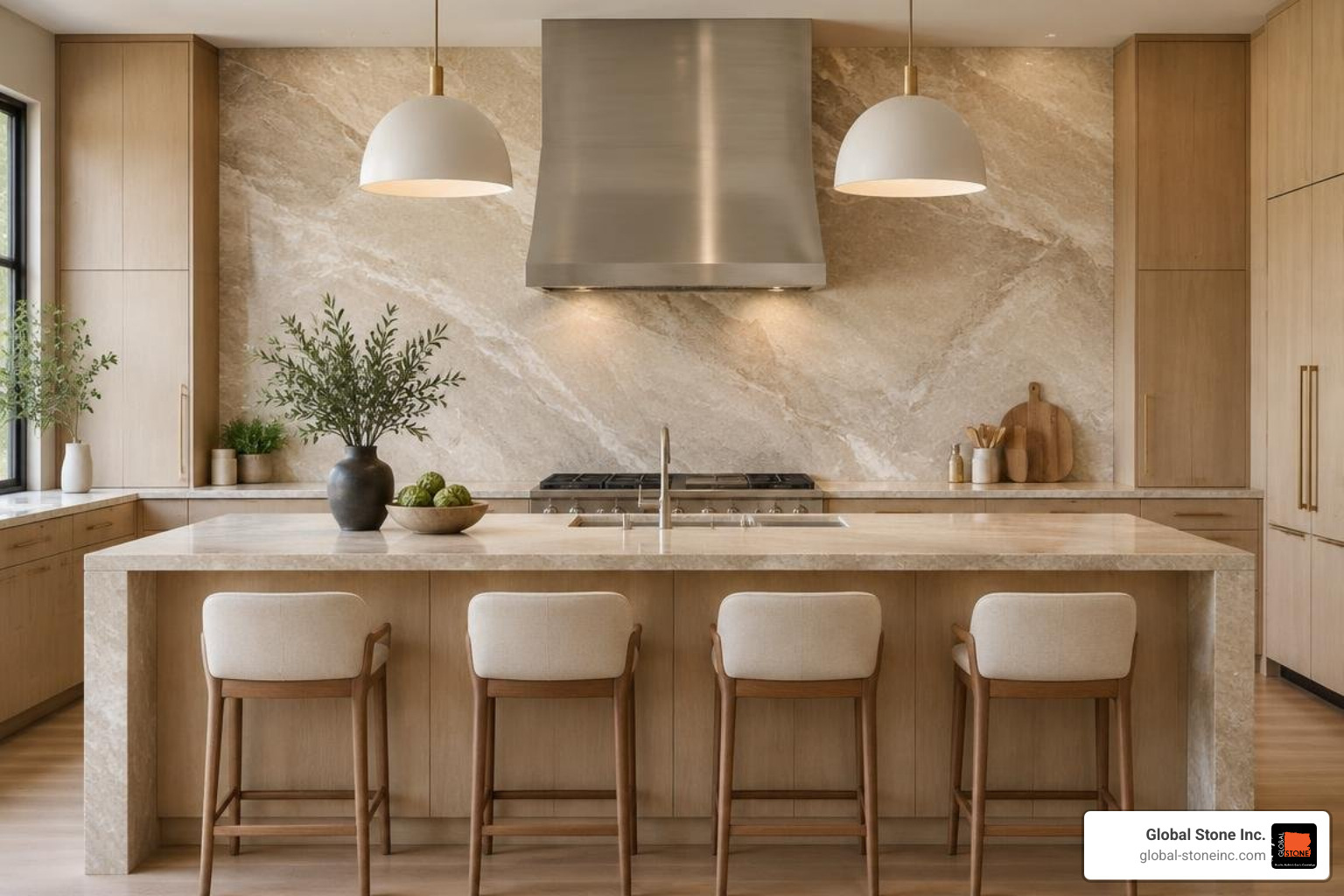
Modern luxury kitchens increasingly treat stone surfaces as continuous architectural elements rather than isolated horizontal worktops.
Full-Height Backsplashes and Waterfall Islands
One of the most effective ways to create a unified look is running the countertop material vertically up the wall. As detailed in our complete guide to backsplashes, full-height stone backsplashes eliminate grout lines and highlight the uninterrupted veining of the slab.
- Bookmatched Slabs: Fabricators align mirror-image slabs along vertical seams to create dramatic diamond and chevron patterns behind cooktops.
- Mitered Waterfall Edges: Precision-mitered 45-degree joints allow the stone pattern to flow over the island’s edge down to the floor, creating the look of a solid stone block.
- Range Hood Cladding: Experienced fabrication teams can clad custom range hoods in lightweight or structurally reinforced stone panels, securing hundreds of pounds of stone overhead for a striking focal point.
This seamless visual flow is illustrated in modern architectural stone interiors, where precise edge detailing and material continuity tie islands, worktops, and wall features into a single, cohesive design.
Pairing Cabinetry in Luxury Kitchens with Stone Countertops
Balancing the visual weight of stone with cabinetry keeps your kitchen design balanced and intentional:
- Dark Stone with Earth Tones: Fusion Dark Quartzite pairs well with deep forest green cabinetry, natural walnut, and warm copper or unlacquered brass hardware. The metallic warmth balances the stone’s cool charcoal tones.
- Warm Neutral Stone with Light Wood: Creamy stones like Taj Mahal quartzite complement rift-sawn white oak cabinets, soft greige millwork, and matte black fixtures.
- Contrast and Layering: Inset cabinetry profiles provide clean, architectural lines that let heavily veined stone slabs stand out without visual clutter.
Essential Maintenance and Long-Term Care for Stone Surfaces
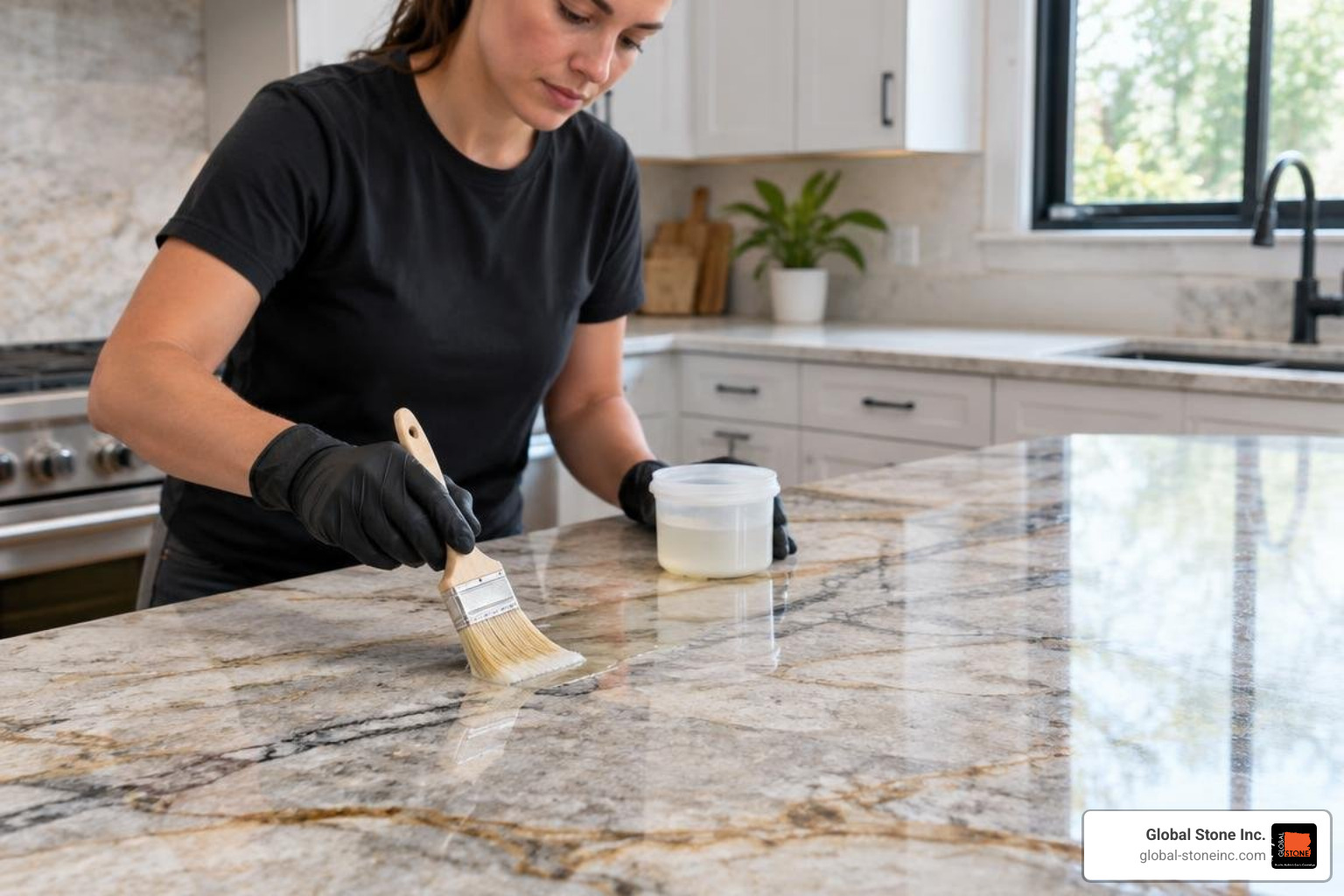
With proper care, a well-fabricated stone surface will easily last the lifetime of your home. Incorporating simple countertop maintenance routines keeps your surfaces looking fresh and protected:
- Penetrating Sealers: Natural stones like granite and quartzite feature microscopic pores. Applying a high-grade, solvent-based impregnating sealer fills these pores below the surface without altering the stone’s natural color or finish.
- Daily Cleaning: Clean surfaces using warm water, a soft microfiber cloth, and a dedicated pH-neutral stone cleaner. Avoid acidic sprays, bleach, vinegar, and abrasive scouring powders, which break down sealers and dull natural stone finishes.
- Thermal Protection: While granite and quartzite can handle high heat, rapid localized temperature shifts (thermal shock) can cause micro-fracturing. Engineered quartz resins will scorch or discolor around 300°F. Always set hot dutch ovens and roasting pans on protective trivets.
- Edge Protection: Keep heavy cast-iron skillets from banging against inside sink cutouts and mitered edges to prevent chipping along the stone’s perimeter.
Frequently Asked Questions About Stone Countertops
Is Quartzite More Durable Than Granite for Busy Kitchens?
Yes, in terms of mineral hardness and density. Quartzite ranks around a 7 on the Mohs scale, making it slightly harder than most granites and significantly harder than marble. It resists scratching, chipping, and acid etching from household items. However, like granite, quartzite is a natural stone that requires periodic sealing to guard against oil and moisture absorption.
How Often Do Natural Stone Countertops Need Sealing?
Most granite and quartzite surfaces benefit from resealing every 12 to 24 months, depending on use and stone porosity. You can check your surface using a simple water droplet test: place a few tablespoons of water on high-traffic prep areas. If the water darkens the stone or absorbs within 10 to 15 minutes, it is time to apply a fresh coat of penetrative sealer.
Can You Place Hot Pots Directly on Stone Kitchen Countertops?
While natural granite and quartzite can withstand direct contact with hot cookware, we always recommend using heat-resistant trivets or silicone pads. Concentrated heat can cause thermal expansion stress in natural stone slabs. For engineered quartz, trivets are essential, as sustained heat from hot pans or slow cookers will melt the polymer resins, causing permanent discoloration or cracking.
Conclusion
Choosing the right stone surface means balancing everyday durability, maintenance needs, and design character. From the speckled heat tolerance of classic granite to the soft, flowing veining of Taj Mahal quartzite and the bold drama of Fusion Dark, natural stone brings lasting beauty to modern kitchens.
At Global Stone Inc., our in-house designers, fabricators, and installers bring more than 20 years of hands-on experience to every project across the Chicago area. From initial slab selection at our Elk Grove Village facility to precision laser templating and lifetime-warranted installations, we ensure every detail of your kitchen is cut and fitted to perfection.
Ready to explore custom natural stone countertops for your home? Visit one of our showrooms or connect with our design team today to hand-select the perfect slab for your kitchen remodel.