
Step-by-Step Guide to Comparing Quartz Kitchen Countertop Options
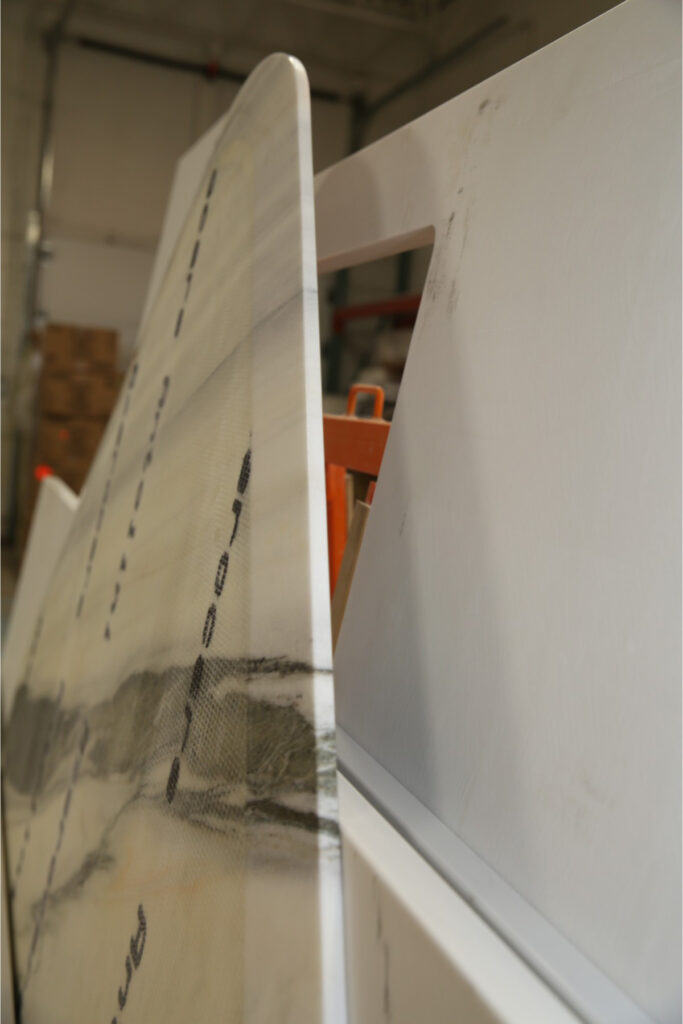
Understanding Quartz Kitchen Countertop Composition and Manufacturing
To compare quartz kitchen countertop options, start by evaluating material durability and porosity, then choose slab thickness, finish, and edge profile, review heat limits and daily maintenance, and finally budget for fabrication and installation. Quartz is an engineered stone made from roughly 90% to 95% ground natural quartz crystals blended with polymer resins and mineral pigments. This controlled manufacturing method removes the unpredictable fissures and internal voids often found in raw rock.
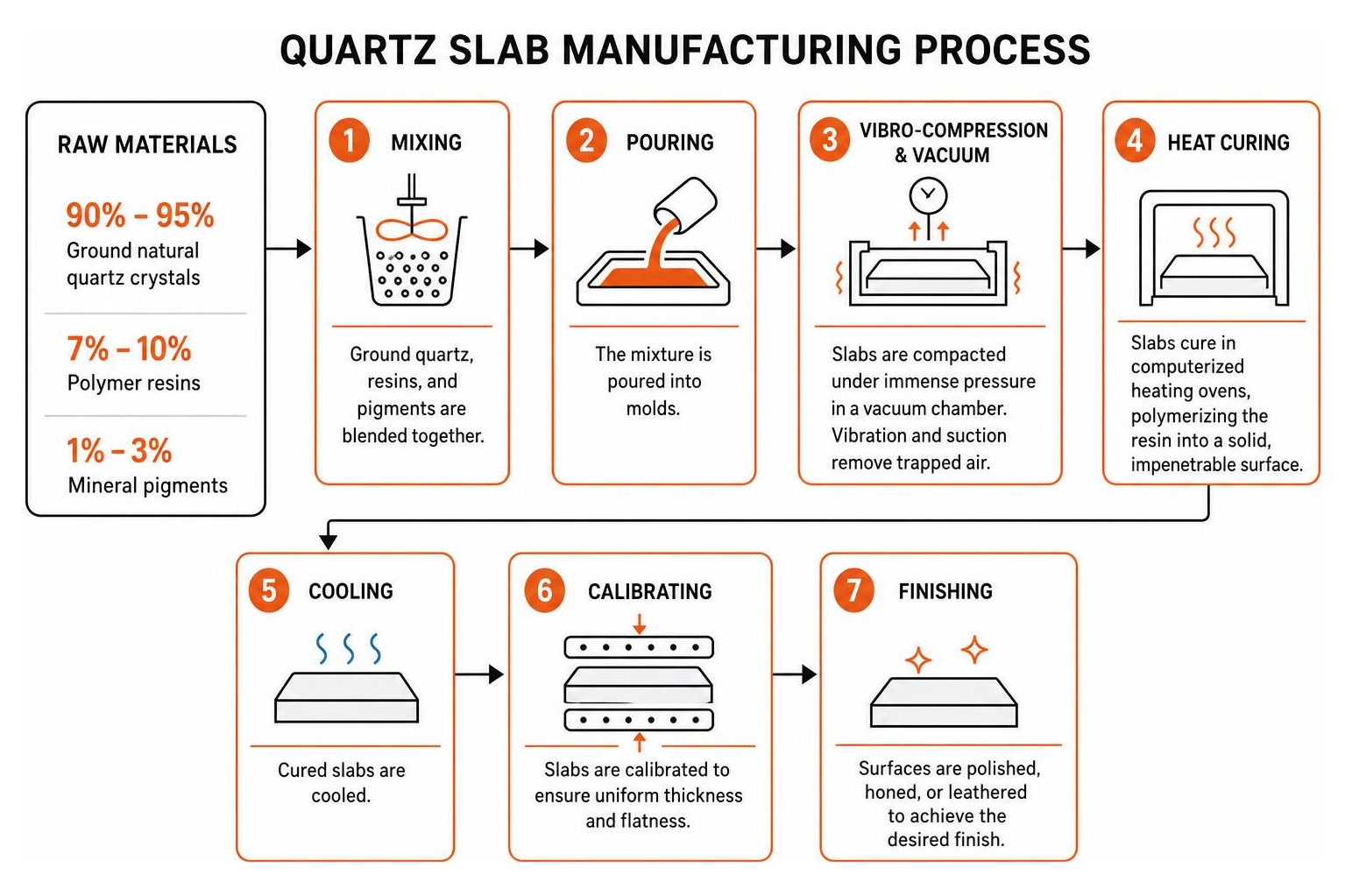
To explore the nuances of engineered materials and manufacturing processes, we look at the standard vibro-compression vacuum method. Ground quartz is combined with high-grade resins, poured into molds, and compacted under immense pressure in a vacuum chamber. This vibration and suction process removes trapped air pockets. The slabs then cure in computerized heating ovens, polymerizing the resin into a solid, impenetrable surface. The cured slabs are cooled and calibrated before receiving a polished, honed, or leathered finish. You can discover more about these fundamental qualities in our comprehensive quartz guide.
Raw Materials and Structural Engineering
The standard formula for quality quartz surfaces consists of approximately 90% to 95% ground natural quartz crystals by weight, blended with 7% to 10% polymer resins and 1% to 3% mineral pigments. Natural quartz rates a 7 on the Mohs hardness scale—outranking both standard carbon steel and natural granite.
The polymer resins act as a structural binder, granting the finished slab high flexural strength. While pure natural stone can crack under slight cabinet settling or uneven tension, the resin matrices in engineered quartz provide enough elasticity to resist structural stress during transportation, fabrication, and everyday home use.
Budget vs. Premium Quartz Slab Differences
Not all quartz slabs offer the same performance or visual quality. Cheaper quartz brands often cut corners with lower-grade resins, irregular aggregate grades, or uneven curing times. These shortcuts can lead to:
- Slab Warping: Inconsistent resin ratios can cause thin or uneven slabs that bow across long cabinet spans.
- Pigment Inconsistencies: Budget slabs frequently display pooling, blotches, or color shifts from one batch to the next.
- Superficial Veining: In lower-end products, patterns may appear printed solely on the surface rather than running through the slab’s body.
- Weak Warranties: Entry-level imports rarely provide robust customer support or transferrable warranties.
Premium quartz brands use pure crystalline sources, refined resins, UV stabilizers, and through-body veining techniques. Investing in top-tier brands ensures structural reliability, consistent coloration across multiple slabs, and reliable warranty backing.
Step 1: Evaluating Material Performance Across Surface Types
Selecting the best surface for your kitchen requires balancing daily durability, cleaning requirements, aesthetic goals, and total budget. Here is how leading countertop surfaces compare:
| Countertop Material | Mohs Hardness | Porosity & Sealing Needs | Heat Resistance | Average Installed Cost (Per Sq. Ft.) |
|---|---|---|---|---|
| Engineered Quartz | ~7.0 | Non-porous; never requires sealing | Moderate (damaged above 300°F) | $50 – $150 |
| Natural Granite | 6.0 – 7.0 | Porous; seal every 1–3 years | High (handles hot cookware well) | $40 – $120 |
| Natural Marble | 3.0 – 4.0 | Highly porous; etches easily; seal often | Moderate to High | $60 – $180 |
| Natural Quartzite | 7.0 – 8.0 | Low to moderate; seal annually | High (very heat tolerant) | $70 – $200 |
For a broader evaluation of performance parameters across various stone options, read our detailed comparison of countertop materials.
Comparing Quartz to Natural Granite, Marble, and Quartzite
When weighing quartz against natural stones, maintenance is usually the deciding factor. Natural marble provides classic elegance, but its calcium carbonate composition makes it prone to chemical etching from acids like lemon juice, vinegar, or wine. In an in-depth quartz versus marble comparison, quartz consistently wins for active households because it resists acid stains and does not require constant surface sealing.
Granite is naturally tough and handles direct pan heat better than quartz, but its porous structure requires periodic resealing every one to three years to prevent dark spots from water and oils.
Natural quartzite, a metamorphic rock quarried from fused sandstone, achieves a Mohs hardness around 7 to 8 and resists high temperatures. However, natural quartzite slabs—such as those seen in luxury designs featuring Brazilian Mont Blanc quartzite—remain porous natural stones that still require regular sealant applications to stay clean and stain-free.
Benchmarking Against Other Stone Surfaces
Comparing quartz against other natural stone options highlights distinct functional trade-offs:
- Porous Stones (e.g., Soapstone and Limestone): Softer stone options provide distinctive character, but they absorb liquids easily, scratch with moderate use, and require frequent oiling or specialized surface sealers.
- Dense Igneous and Metamorphic Stones: While ultra-hard stones resist deep gouges and high ambient heat, their natural micro-fissures still demand routine maintenance to prevent staining from oils and acidic spills.
Because engineered quartz is non-porous and resists bacteria, it delivers high hygiene and simple maintenance without the demanding upkeep of traditional natural stones.
Step 2: Selecting Aesthetics, Dimensions, and Custom Profiles
Modern manufacturing allows quartz to mimic classic natural stones while offering consistent, predictable patterns. Whether you prefer clean modern styles or detailed classic motifs, understanding colors, finishes, and slab profiles ensures your project turns out just as planned.
Marble-Look Styles, Color Palettes, and Surface Finishes
White quartz continues to lead kitchen renovations across the Chicago area, especially styles inspired by Italian Calacatta and Carrara marbles. Calacatta patterns feature warm white backdrops with bold, contrasting veins, while Carrara styles feature softer, feathery gray patterns.
Beyond marble styles, earth tones remain a dependable choice for classic cabinetry. Warm beige and greige surfaces work naturally with natural wood cabinets, while deep concrete-look grays and matte blacks suit sleek, industrial kitchens.
Finishes also shape the final look and feel of the room:
- Polished: A smooth, mirror-like gloss that deepens color contrast, resists stains exceptionally well, and wipes clean easily.
- Honed: A smooth, matte finish that minimizes surface glare and offers a soft, modern aesthetic (though it may show finger smudges more readily).
- Leathered / Textured: A tactile, lightly contoured surface that hides fingerprints and smudges while adding subtle dimension to darker slabs.
Selecting Slab Thickness and Edge Profiles for a Quartz Kitchen Countertop
Quartz slabs are generally manufactured in three standard thicknesses:
- 1.2 cm (approx. 1/2 inch): Best suited for vertical wall cladding, custom backsplashes, and shower surrounds.
- 2 cm (approx. 3/4 inch): Standard for bathroom vanity tops, smaller prep spaces, or laminated edge designs.
- 3 cm (approx. 1-1/4 inch): The preferred industry standard for residential kitchen countertops. It offers high structural strength, supports deeper overhangs, and eliminates the need for plywood underlayment.
Choosing the right edge profile completes your kitchen design. An eased edge delivers a clean, modern aesthetic at minimal fabrication cost. Beveled and bullnose edges soften corners to help prevent chipping, while ogee profiles complement traditional cabinetry.
For large islands, mitered aprons join two slabs at a 45-degree angle to create the look of a thick, monolithic stone block. To review edge styles in detail, check out our guide on edge finishing options.
Step 3: Assessing Real-World Maintenance, Durability, and Limitations
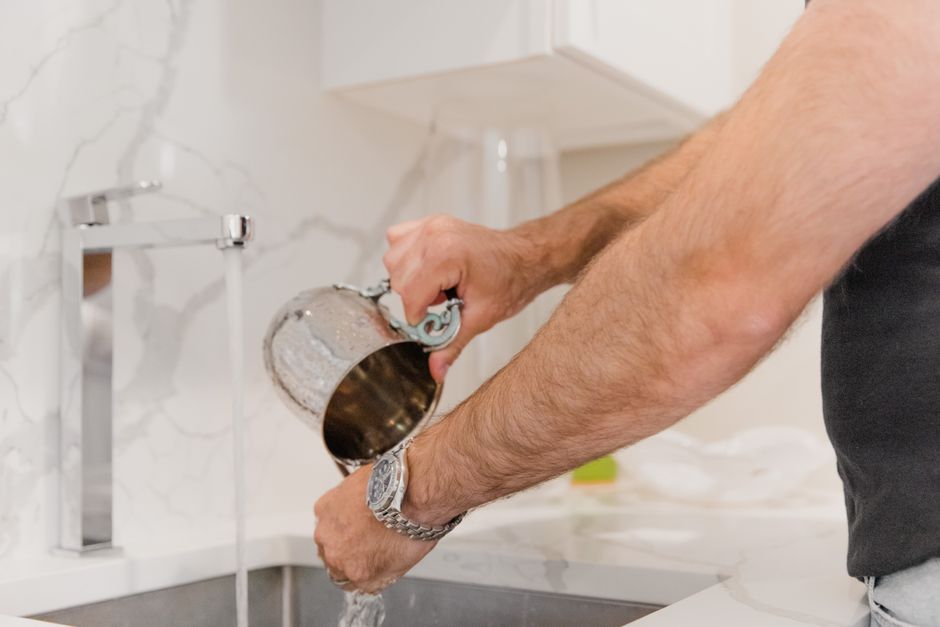
Quartz is built for busy, high-traffic kitchens, but knowing its practical limitations helps you prevent accidental damage and keep your surfaces looking new for decades.
Heat Sensitivity, Staining Risks, and Daily Care
The primary limitation of engineered quartz is its sensitivity to extreme heat. The resin binders that hold the crushed minerals together soften and scorch at temperatures between 300°F and 570°F (150°C to 300°C). Setting a hot cast-iron skillet, baking sheet, or crockpot directly on the surface can cause thermal shock, white discoloration, or hairline cracks. Always use a trivet or silicone heat pad.
For regular maintenance, stick to mild liquid dish soap, warm water, and a non-abrasive microfiber cloth. Avoid harsh chemical cleaners such as bleach, oven cleaners, drain openers, paint strippers, or high-pH degreasers, as strong chemicals can degrade the resin binder and dull the factory finish. Review our practical guide on proper quartz cleaning routines for dependable maintenance advice.
Outdoor Limitations, UV Degradation, and Seam Visibility
Quartz is engineered specifically for interior residential and commercial spaces. Prolonged exposure to direct outdoor sunlight breaks down polymer resins over time, turning bright white and light gray slabs yellow and causing darker slabs to fade. For outdoor kitchens and patio bars, choose UV-stable natural granite or natural quartzite instead.
Seam placement also requires careful planning. Experienced fabricators use CNC machines, vacuum seam-setters, and color-matched two-part epoxies to create tight, level joints. While seams on solid-color slabs are barely noticeable, slabs with bold veining require careful pattern matching at every joint. For deeper technical insights into layout prep and tooling, read this complete fabricator guide on quartz worktops.
Step 4: Budgeting, Timelines, and Resale Value
Careful budgeting helps prevent surprises during kitchen renovations. Beyond the basic cost of the raw slabs, your final quote reflects custom cutting, sink cutouts, edge polishing, delivery, and professional installation.
Cost Factors and Square Foot Pricing Breakdown
Most residential quartz installations range from $50 to $150 per square foot installed, with mid-range projects averaging $65 to $100 per square foot.
A standard 30-square-foot kitchen with an eased edge typically costs between $2,500 and $4,500. Upgrading that same kitchen footprint with premium bookmatched slabs, mitered waterfall gables, and specialty sink cutouts can reach $8,000 or more.
Key pricing variables include:
- Slab Tier and Rarity: Complex, through-body marble veining costs more than standard speckled patterns.
- Cutouts and Openings: Fabricating undermount sink openings, cooktop cutouts, and flush-mount electrical boxes requires extra bench time.
- Custom Edge Profiles: Simple eased edges are budget-friendly; mitered waterfall drop-downs require specialized cuts and assembly.
- Tear-Out and Leveling: Removing old countertops and shimming uneven cabinetry adds labor time.
For an itemized breakdown of fabrication and installation costs, see our stone countertop installation cost breakdown. Upgrading your surfaces also delivers strong long-term returns; kitchen remodels featuring quality stone consistently boost buyer interest. You can learn more about this in our guide on boosting home resale value with countertops.
Templating, Fabrication, and Installation Timelines
From initial slab selection to final installation, custom quartz projects typically take 3 to 6 weeks.
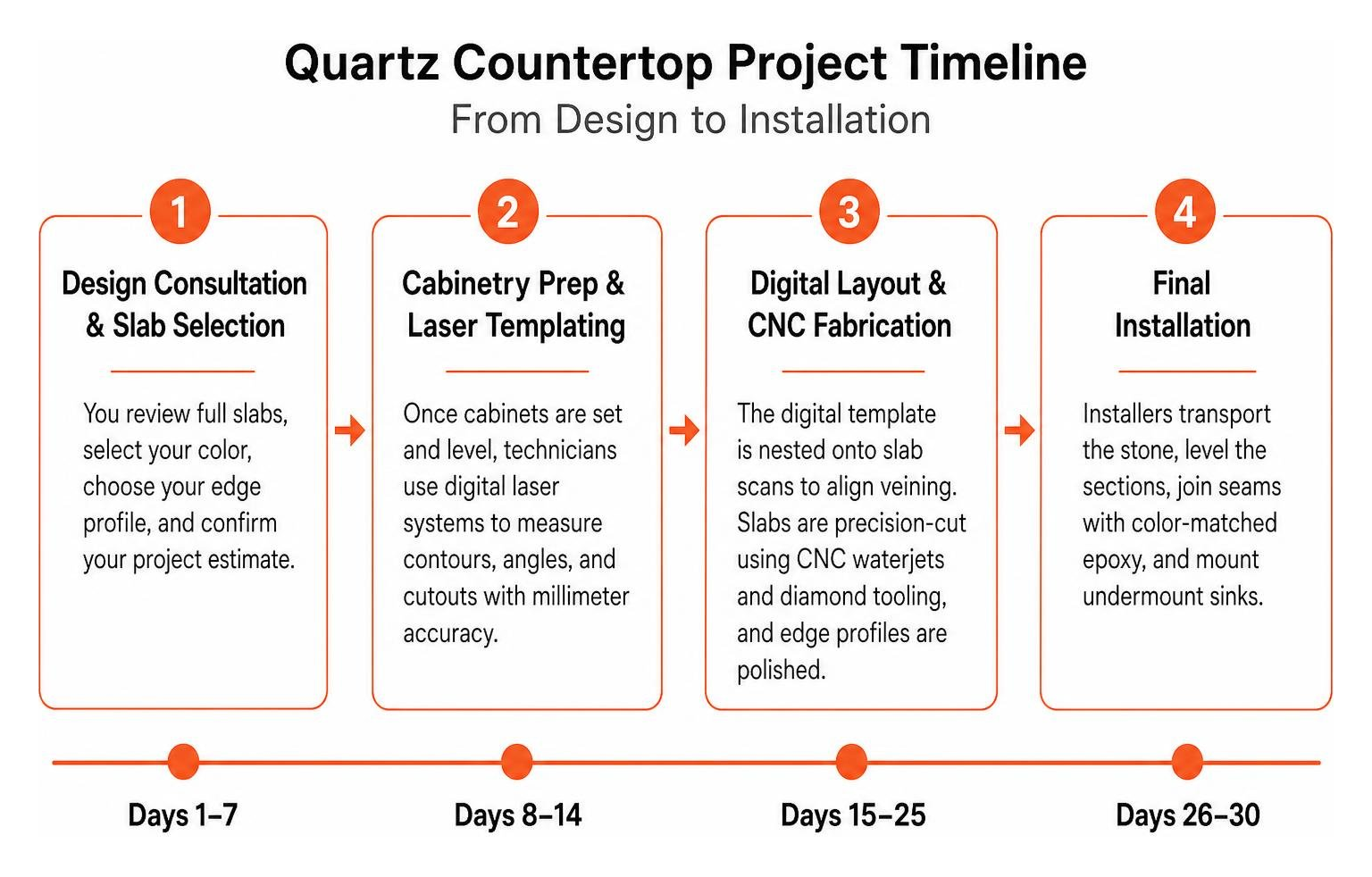
- Design Consultation and Slab Selection (Days 1–7): You review full slabs, select your color, choose your edge profile, and confirm your project estimate.
- Cabinetry Prep and Laser Templating (Days 8–14): Once the base cabinets are permanently set and level, technicians use digital laser systems to measure wall contours, angles, and cutouts with millimeter accuracy.
- Digital Layout and CNC Fabrication (Days 15–25): The digital template is nested onto slab scans to align veining. Slabs are precision-cut using CNC waterjets and diamond tooling, and edge profiles are polished.
- Final Installation (Days 26–30): Professional installers transport the stone (which weighs roughly 18 to 20 pounds per square foot in 3 cm thickness), level the sections, join seams with color-matched epoxy, and mount undermount sinks.
Frequently Asked Questions About Quartz Countertops
Can Hot Cookware Be Placed Directly on a Quartz Kitchen Countertop?
No. While natural quartz crystals resist high temperatures, the polymer resins binding them together soften or discolor when exposed to sustained temperatures above 300°F. Placing hot pans directly on the surface can cause permanent thermal shock marks. Always use a trivet or silicone hot pad.
Do Quartz Kitchen Countertops Ever Require Sealing?
No. Because quartz is compacted under intense vacuum pressure during manufacturing, the resin fully seals the quartz crystals. The resulting surface has near-zero porosity and never requires penetrating sealers or surface refreshers throughout its lifespan.
Can Chipped or Cracked Quartz Slabs Be Repaired?
Yes. Minor chips—most common along sink rims or sharp edges—can be filled with a color-matched epoxy or acrylic resin, cured, and carefully polished level with the surface. Major structural cracks caused by cabinet shifting or extreme thermal shock can often be stabilized, though the repair line may remain faintly visible.
Conclusion
Choosing the right surface for your kitchen comes down to balancing daily practicality, aesthetic preferences, and budget goals. Engineered quartz delivers a compelling mix of non-porous stain resistance, high mineral hardness, and consistent styling, making it an ideal choice for busy households that want the beauty of natural stone without the regular sealing routine.
Working with an experienced, fully integrated fabrication team ensures your countertops fit precisely and look stunning for years to come. At Global Stone Inc., we combine in-house digital templating, precision fabrication, and professional installation backed by a lifetime warranty. Visit our Elk Grove Village showroom or connect with our team today to start designing your dream kitchen.