
The Ultimate Guide to Marble vs Quartz Countertops
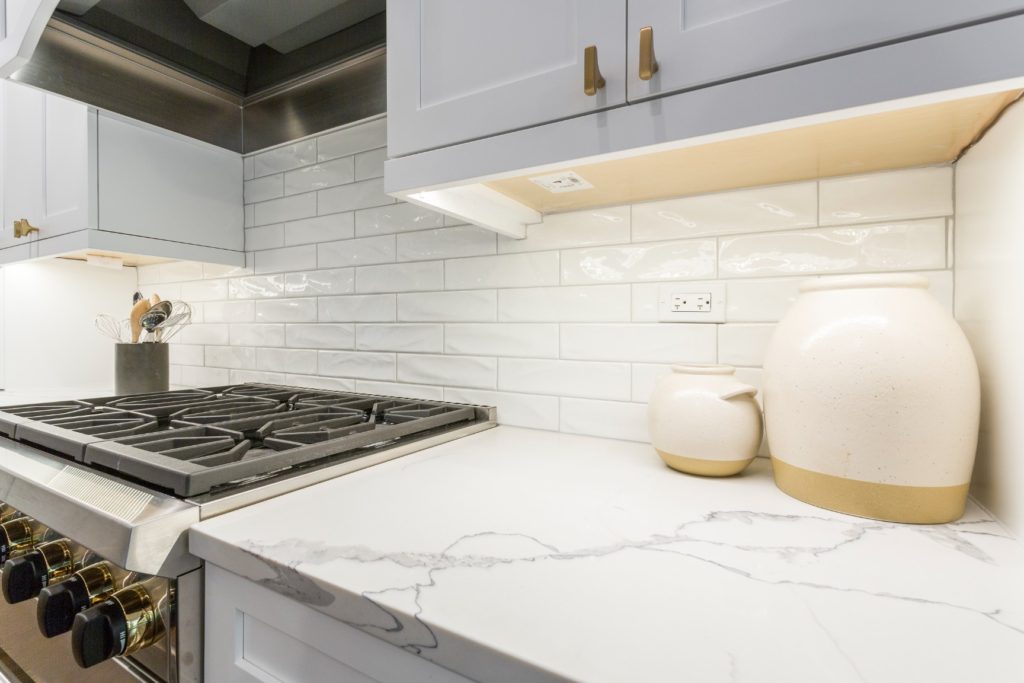
Understanding Marble Quartz Countertops: Composition and Manufacturing
If you want the classic look of luxury stone without the constant worry of stains and scratches, installing marble quartz countertops is the single best decision you can make for your home remodel in 2026.
Engineered quartz gives you the breathtaking veining of natural Italian marble, but with none of the high-maintenance headaches.
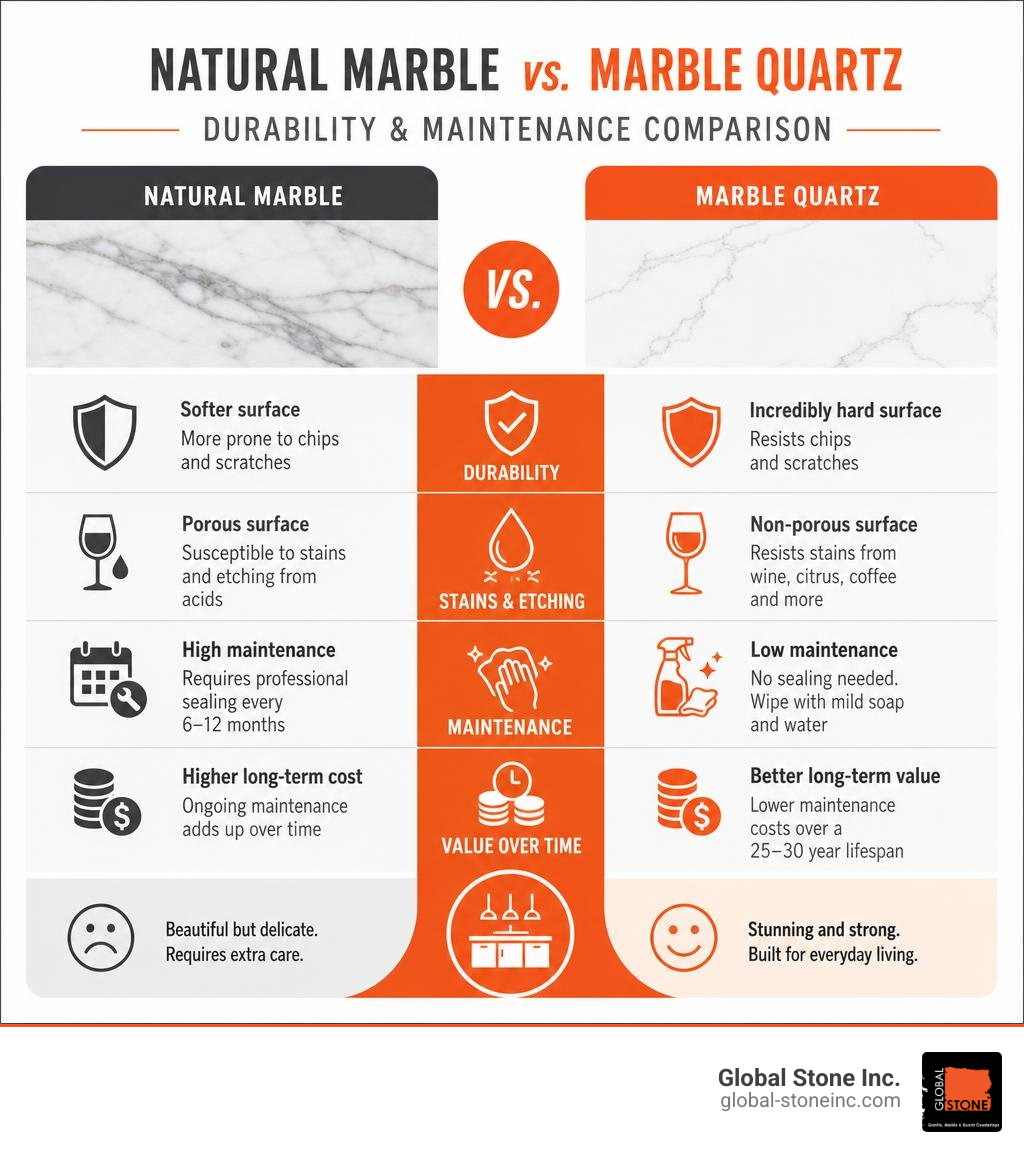
Here is a quick look at how the two materials compare for everyday use:
- Durability: Quartz is incredibly hard (7 on the Mohs scale) and resists chips and scratches. Natural marble is much softer (3 to 4 on the Mohs scale) and damages easily.
- Stains & Etching: Quartz is non-porous. It easily resists red wine, lemon juice, and coffee. Marble reacts chemically with acids, leaving dull, permanent spots called “etch marks.”
- Maintenance: Quartz never needs to be sealed. You simply wipe it down with mild soap and water. Marble requires professional sealing every 6 to 12 months.
- Value over Time: While quartz has a slightly higher upfront cost than entry-level marble, it saves you thousands of dollars in maintenance fees over its 25-to-30-year lifespan.
As the founder of Global Stone Inc., I have spent over 20 years helping Chicago homeowners select, fabricate, and install the perfect marble quartz countertops for their space. My team and I use the latest laser-measuring technology to ensure your custom stone fits flawlessly, backed by our lifetime warranty.
When we talk about marble quartz countertops, we are referring to engineered stone surfaces designed to replicate the timeless beauty of natural marble. Unlike natural slabs quarried directly from the earth, quartz is a highly sophisticated manufactured product.
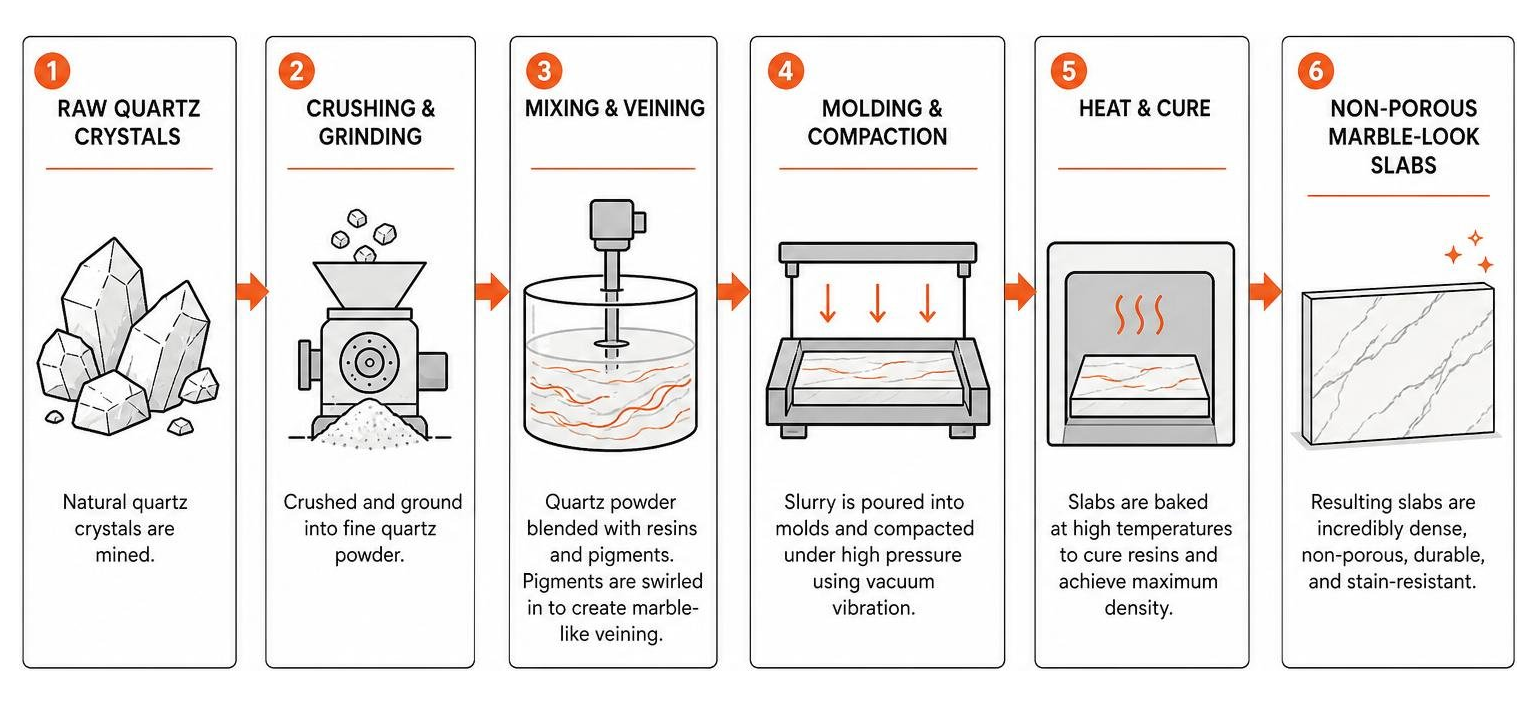
These slabs are composed of roughly 90% to 95% ground natural quartz crystals—one of the hardest minerals on earth. The remaining 5% to 10% consists of high-quality polymer resins, pigments, and binders. This mixture is poured into a mold, compacted under immense pressure using specialized vacuum systems, and baked at high temperatures.
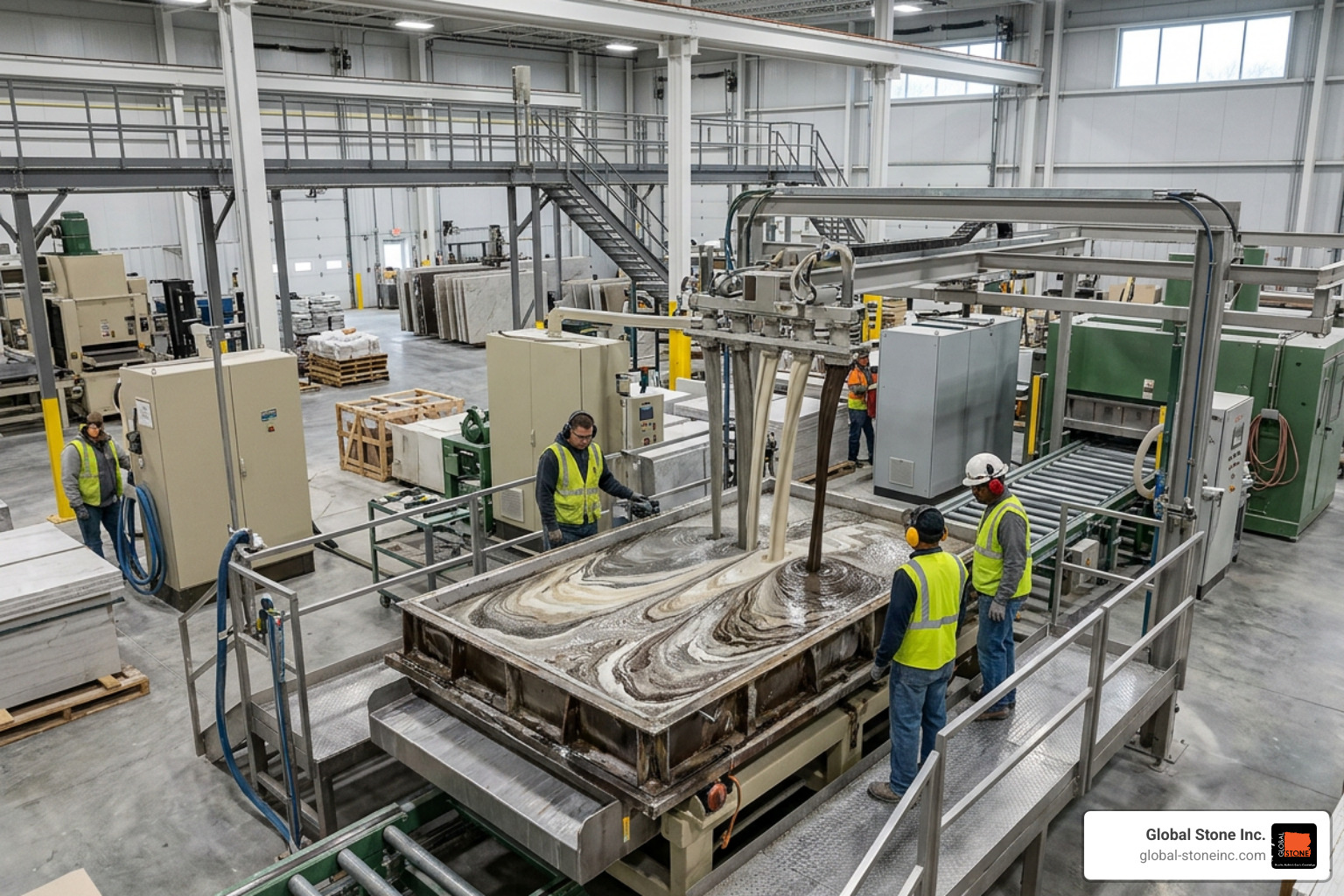
This process, often utilizing patented Bretonstone technology, results in an incredibly dense, non-porous slab. During the mixing phase, pigments are carefully swirled into the slurry to create the elegant, flowing veining patterns characteristic of high-end Italian marbles like Calacatta and Carrara.
The major advantage here is design consistency. While natural stone can have unpredictable fissures, large color shifts, or weak points, engineered quartz offers predictable patterns. This makes it much easier for our in-house fabricators to plan seamless transitions across seams, especially on large kitchen islands or full-height backsplashes. For a deeper look into how these surfaces are made, check out the ultimate guide to quartz countertops.
Marble vs. Quartz: The Ultimate Kitchen Showdown
Selecting the right surface is one of the most important decisions you will make during a kitchen remodel. It defines the look, feel, and daily usability of your space for the next 15 to 20 years.
To help you visualize the differences, we have put together a side-by-side comparison of how natural marble and engineered quartz hold up under daily household use:
| Feature | Natural Marble | Marble-Look Quartz |
|---|---|---|
| Composition | 100% natural metamorphic limestone | 90-95% quartz crystals, 5-10% resin |
| Mohs Hardness | 3 to 4 (Soft) | 7 (Very Hard) |
| Porosity | Highly porous (absorbs liquids) | Non-porous (hygienic and stain-resistant) |
| Sealing Required | Every 6 to 12 months | Never |
| Acid Resistance | Poor (susceptible to permanent etching) | Excellent (impervious to household acids) |
| Lifespan | 50 to 100+ years (with high maintenance) | 25 to 30 years (virtually maintenance-free) |
| Estimated Cost | $65 to $250+ per sq. ft. installed | $50 to $150 per sq. ft. installed |
For a deeper dive into how these two heavyweights stack up in the cooking arena, read our detailed quartz countertops vs marble countertops kitchen showdown.
Why Quartz Wins the Durability Battle
In a busy household, the kitchen is a high-traffic battleground. Keys get thrown on the counter, heavy cast-iron pans slide across the surface, and kids inevitably drop cups and utensils. This is where the durability gap between the two materials becomes widest.
Quartz rates a solid 7 on the Mohs hardness scale, making it highly scratch-resistant. Marble, on the other hand, rates a mere 3 to 4. Because marble is composed primarily of calcium carbonate, it is incredibly soft. Something as simple as sliding a ceramic plate with a bit of grit underneath can act like sandpaper on a polished marble surface.
Additionally, the polymer resins used in quartz give the material a slight degree of flexibility. This makes quartz significantly more impact-resistant than marble, which has natural cleavage planes and a crystalline structure that can easily crack or chip when struck by a heavy pot. If you want a surface that can survive the daily wear and tear of a bustling household, it is easy to see why quartz usually wins the durability battle against marble.
The Aesthetic Appeal of Marble Quartz Countertops
For many years, purists argued that engineered stone could never match the depth and soul of natural marble. However, manufacturing technology in 2026 has advanced to the point where premium marble quartz countertops are virtually indistinguishable from real stone at a normal viewing distance.
Manufacturers can now replicate the specific, sought-after characteristics of legendary Italian stones:
- Calacatta Quartz: Replicates the bold, dramatic, and wide-open veining patterns of natural Calacatta marble. These designs often feature striking gray and gold veins twisting across a crisp white background, making them perfect for waterfall islands.
- Carrara Quartz: Mimics the classic, softer, and more delicate feathery blue-gray veining of Carrara marble. It provides a bright, airy, and understated elegance that complements transitional and traditional designs.
By choosing engineered options, you can enjoy stunning white quartz countertops for your kitchen without the constant fear of ruining them. You can even pair these slabs with matching full-height backsplashes to create a clean, modern aesthetic. For inspiration on how to style these patterns, take a look at these 7 stunning backsplash ideas for your calacatta quartz countertops.
Cost and Maintenance: Real-World Economics in 2026
When planning your remodeling budget, it is important to look beyond the initial sticker price and calculate the total cost of ownership.
While entry-level marble can sometimes be found at prices comparable to mid-range quartz, the long-term maintenance costs tell a very different story. According to industry cost estimates, a real marble kitchen costs an estimated $2,936 to $3,436 more than quartz over just a five-year period when factoring in professional sealing and specialized stone cleaners.
At Global Stone Inc., we believe in transparent pricing. If you are wondering about the initial investment, we break down the numbers in our guide: is 3k a fair price for your new quartz countertops.
How to Clean and Maintain Marble Quartz Countertops
One of the greatest joys of choosing marble quartz countertops is the effortless daily cleanup. Because quartz is non-porous, bacteria, mold, and viruses cannot penetrate the surface, making it an incredibly hygienic choice for food preparation.
To keep your quartz looking brand new, follow these simple steps:
- Daily Cleaning: Simply wipe the surface with a soft microfiber cloth, warm water, and a few drops of mild dish soap.
- Avoid Harsh Chemicals: Never use highly acidic or alkaline cleaners (like bleach, oven cleaners, or window sprays), as they can break down the chemical bonds of the resins.
- No Abrasive Pads: Use a soft sponge rather than steel wool or abrasive scouring pads to prevent dulling the polished finish.
For more detailed care tips, read our complete guide on how to clean quartz countertops.
Real Marble Maintenance and Sealing Costs
Natural marble requires a high level of commitment. Because it is highly porous, any spilled liquid—especially red wine, coffee, or olive oil—can seep deep into the stone and leave a permanent stain if not wiped up immediately.
More importantly, marble is highly sensitive to acids. When an acidic substance like lemon juice, vinegar, or tomato sauce comes into contact with marble, a chemical reaction occurs that dissolves the calcium carbonate on the surface. This leaves a dull, matte spot known as an “etch mark.”
To minimize these risks, natural marble must be professionally sealed every 6 to 12 months. This service typically costs between $200 and $400 per application. Over 15 to 20 years, these recurring costs can easily add $5,000 to $10,000 to your initial investment. To understand what is required to protect natural stone, review these 4 essential marble countertop maintenance tips.
Popular Styles and Design Options for Your Home
The design versatility of engineered quartz is unmatched. Today’s market offers an incredible array of styles, ranging from classic bright whites to dark, high-contrast options like Marquina Midnight, which features dramatic white veins on an onyx-black background.
You can explore beautiful design options such as Marbella White or other popular marble-look patterns. If you are in the Chicago area, we highly recommend visiting regional showcases such as the MSI Chicago Countertops and Tile Flooring facility to view full-size slabs under natural lighting.

Furthermore, you can choose between different finishes to match your home’s style:
- Polished Finish: The most popular option, offering a high-gloss, reflective shine that highlights the depth of the veining and makes small kitchens feel larger.
- Honed Finish: A smooth, matte surface that feels soft to the touch. It offers a more casual, organic look and is excellent at hiding fingerprints and water spots.
Strategic Material Selection for Chicago Renovations
If you are planning a renovation in the Chicago area, you don’t necessarily have to choose just one material. A popular modern design trend is the “hybrid layout.”
In this setup, we install highly durable, low-maintenance marble quartz countertops on the high-traffic perimeter counters where most of the heavy chopping and cooking takes place. Then, we install a stunning natural marble slab on a central kitchen island or a dedicated baking station, where the stone’s natural ability to stay cool can be utilized for rolling out pastry dough.
To help you source and visualize these materials locally, you can visit our local showrooms or explore regional design centers. No matter which design route you choose, we specialize in providing affordable quartz countertops chicago residents love.
Frequently Asked Questions About Marble and Quartz
Do marble quartz countertops yellow over time?
While quartz is incredibly durable, the polymer resins used to bind the stone are sensitive to ultraviolet (UV) light. If quartz is exposed to direct, intense sunlight over many years, the resins can slowly yellow or discolor. For this reason, engineered quartz should never be installed in outdoor kitchens or uncovered patio bars. Indoors, standard window glass filters out most harmful UV rays, making yellowing extremely rare in typical home kitchens.
Why is natural marble more expensive than quartz?
Natural marble pricing reflects the high costs of quarrying solid stone blocks out of the earth, transporting heavy materials internationally, and a lower yield per block. Additionally, natural marble has a higher waste and breakage rate during fabrication (typically 12% to 18%) compared to engineered quartz (8% to 12%). This makes the entire fabrication process more labor-intensive and expensive.
Can you put hot pans directly on quartz countertops?
No. While quartz is highly heat-resistant, it is not completely heatproof. The polymer resins inside the slab can sustain thermal shock, scorch, or discolor if exposed to temperatures above 300°F. Always use trivets, hot pads, or wooden boards under hot pots, pans, slow cookers, and toaster ovens to protect your investment.
Conclusion
The choice between marble and quartz comes down to your lifestyle and design preferences. If you love the organic, unpredictable beauty of natural stone and are willing to commit to a strict cleaning and sealing routine, natural marble is an exquisite addition to any home.
However, if you want a worry-free, highly durable surface that stands up to kids, spills, and heavy cooking without sacrificing a shred of luxury style, marble quartz countertops are the undisputed champion.
At Global Stone Inc., we are proud to be the premier countertop contractor chicago families trust. With over 20 years of experience, our in-house designers, fabricators, and installers handle your project from start to finish at our Elk Grove Village facility. We back our craftsmanship with an industry-leading lifetime warranty.
Ready to start your kitchen or bathroom transformation? Search for countertop installation near me and let us help you design your dream space. You can also read more about our services on our Global Stone – Granite, Marble & Quartz Countertops page or browse our premium marble countertops selection today!