A Quick Start Guide to Comparing Stone Countertop Options
How to Choose a Stone Countertop
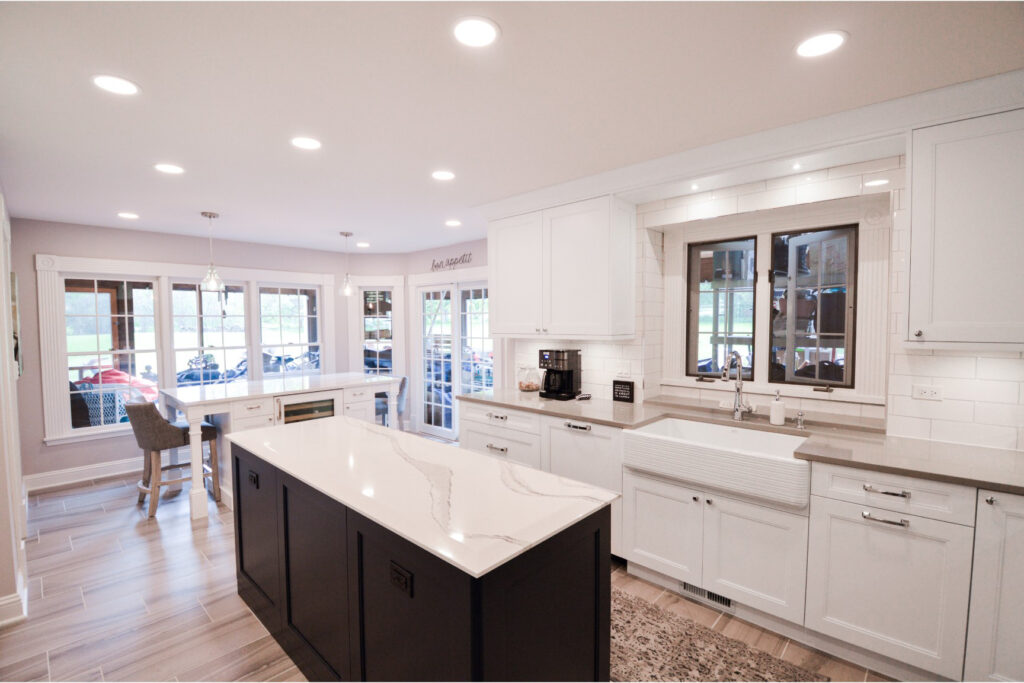
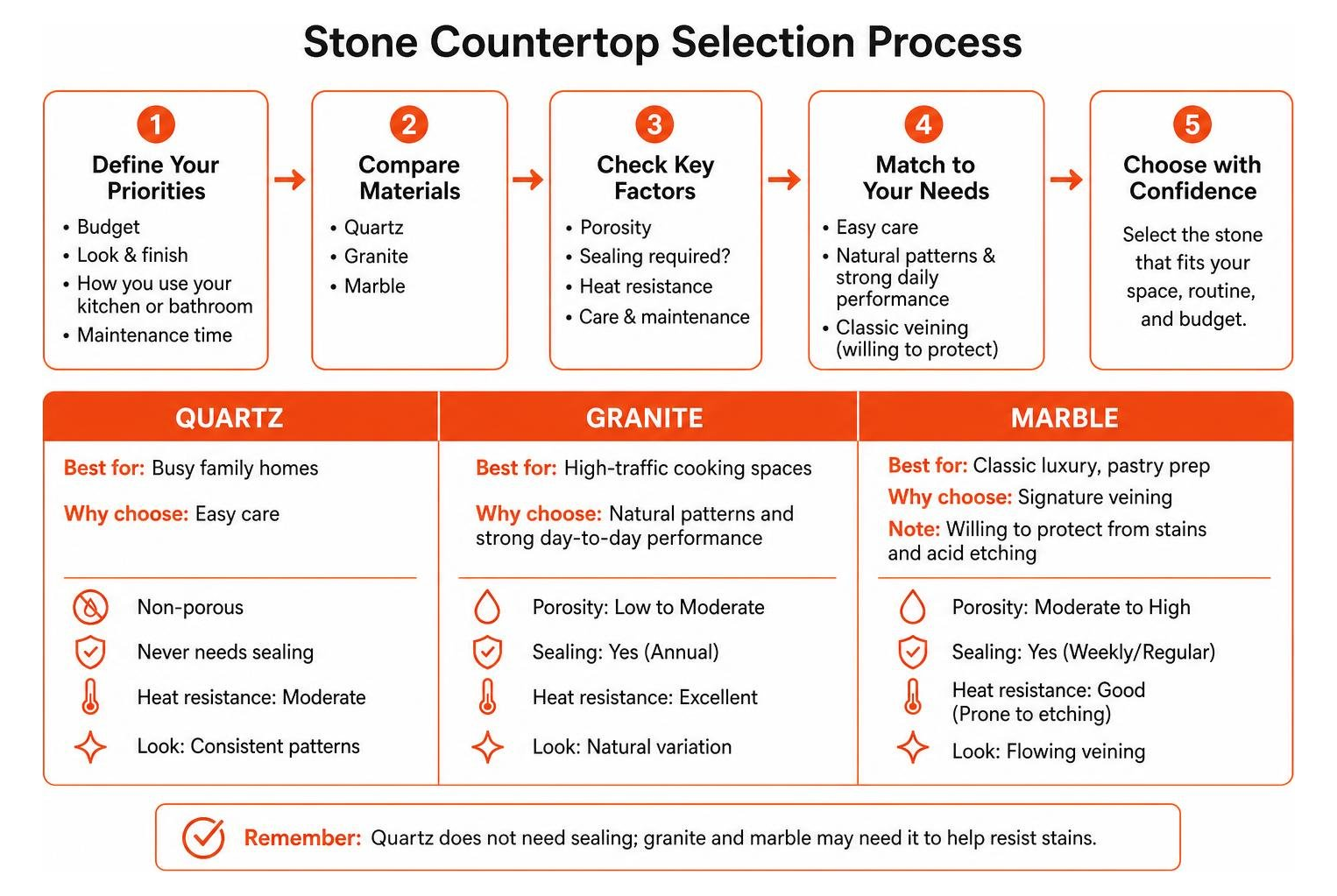
Choose quartz for easy care, granite for natural patterns and strong day-to-day performance, or marble if you love its veining and are willing to protect it from stains and acid etching. A stone countertop choice also depends on your budget, the finish you want, and how you use your kitchen or bathroom. Quartz does not need sealing; granite and marble may need it to help resist stains.
I’m Greg Zamarski of Global Stone Inc., where our team has fabricated and installed stone countertops for Chicago-area homes for more than 20 years. Let’s look at the trade-offs so you can choose a surface that fits your space and routine.
Popular Stone Countertop Materials Compared
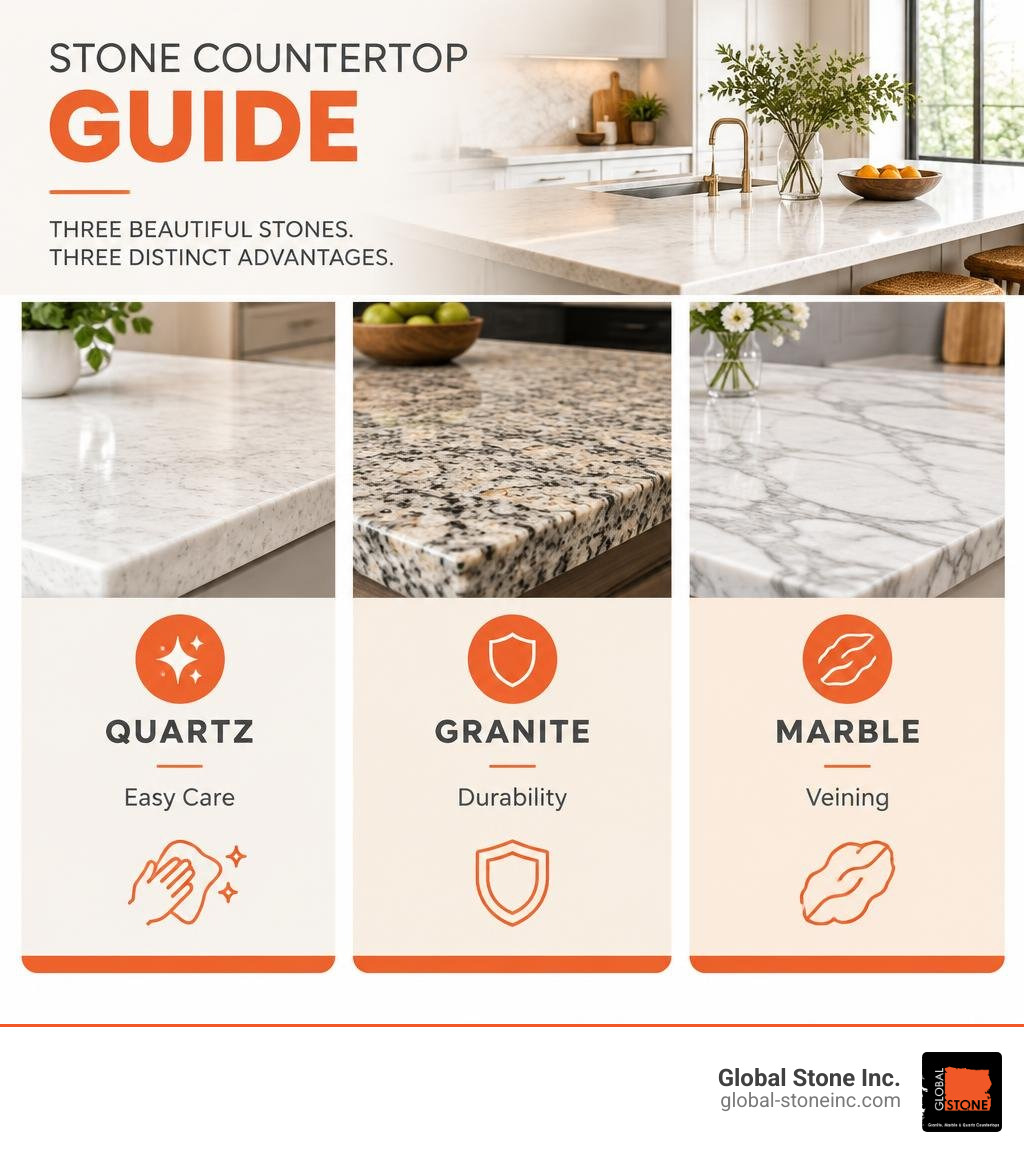
Selecting the right kitchen or bathroom surface involves balancing aesthetics, daily habits, and ongoing maintenance. As you review our countertop materials compared overview, you will find that each material brings distinct functional benefits and trade-offs to your space.
To see how these options stand up side-by-side, consider this summary of key characteristics:
| Material | Average Cost (Installed) | Porosity | Sealing Required? | Heat Resistance | Best For |
|---|---|---|---|---|---|
| Granite | $40 – $200 / sq. ft. | Low to Moderate | Yes (Annual) | Excellent | High-traffic cooking spaces |
| Marble | $1,000s – $15,000+ / slab | Moderate to High | Yes (Weekly/Regular) | Good (Prone to etching) | Classic luxury, pastry prep |
| Quartz | $50 – $150 / sq. ft. | Non-porous | Never | Moderate (Resin burns) | Busy family homes |
As detailed in The Pros and Cons of Every Kitchen Countertop Material | The Kitchn, every material has its unique strengths and vulnerabilities. The right decision depends on how much time you want to spend maintaining your kitchen work surface and what aesthetic best matches your cabinetry and flooring.
Natural Stone Countertop Varieties: Granite and Marble
Earth-formed stones bring unmatched authenticity into residential interiors. Exploring natural stone countertops reveals distinct structural differences between igneous and metamorphic rocks:
- Granite: Formed through intense subterranean heat and pressure, granite is composed of quartz, feldspar, and mica. This geological pedigree makes it resilient against hot pans, scratching, and rough kitchen utility. No two slabs are identical, offering dynamic mineral flecks, crystalline depth, and organic patterns that cannot be fully replicated by synthetic alternatives.
- Marble: A metamorphic stone formed from crystallized limestone, marble delivers signature, flowing veining and a smooth, cool touch. From affordable Carrara quarried in Italy to ultra-luxurious Arabescato or Viola, marble provides a timeless aesthetic. Because it consists of calcium carbonate, it reacts chemically with household acids like lemon juice, vinegar, and tomato sauce, which creates a living patina over time.
Engineered Stone Countertop Solutions: Quartz
Engineered quartz combines roughly 90% crushed natural quartz crystals with 10% polymer resins and pigments. This manufacturing process produces an exceptionally durable, non-porous slab that mirrors the look of organic stone without natural fissures or microscopic cavities. Because the manufacturing process is tightly controlled, quartz offers consistent pattern distribution across multiple slabs, making seamless transitions across large kitchen layouts, waterfall islands, and extensive perimeter runs much simpler to achieve.
Comparing Stone Surfaces by Practical Needs
Homeowners who cook frequently with heavy cast iron or hot cookware often favor granite for its natural heat tolerance and rugged scratch resistance. If your goal is zero-fuss maintenance and maximum stain defense against spilled juice, coffee, or wine, engineered quartz serves as a reliable workhorse for busy modern kitchens. For those who prioritize soft patinas, tactile cooling properties, and historical elegance, marble remains a premier luxury choice.
Cost Breakdown: Pricing Tiers and Installation Factors
Understanding your overall budget requires looking at both raw material pricing and the labor involved in cutting, polishing, and setting the slabs. Reviewing a detailed stone countertop installation cost breakdown helps illustrate how slab geometry, sink cutouts, edge profiles, and leveling shape the final estimate.

Material Price Ranges from Budget to Luxury
Countertop surfaces span broad pricing tiers based on rarity, manufacturing complexity, extraction origins, and slab thickness (standard 2 cm versus heavy 3 cm):
- Quartz Tiers:
- Builder-Grade: $50 to $70 per square foot (simple uniform speckled patterns and standard neutral tones).
- Mid-Level: $70 to $100 per square foot (natural veining imitations, subtle marble looks, and rich earth tones).
- Specialty: $100 to $150 per square foot (complex translucent depth, bold dramatic veining, and custom designer hues).
- Granite Ranges: Standard entry-level varieties run $40 to $80 per square foot installed, while rare, exotic slabs featuring vibrant blues, greens, or heavy crystalline movement can reach $150 to $200 per square foot.
- Marble Investment: Entry-level Carrara slabs start in the low $1,000s per slab, whereas rare imported varieties like Calacatta Gold or Arabescato Viola exceed $15,000 per slab before fabrication and custom edge detailing.
Long-Term Value and Return on Investment
A natural stone installation represents a permanent upgrade to your home. Highlighting natural stone beauty and durability during a home sale often translates to higher property valuations and immediate buyer interest. Natural granite and marble structures routinely endure for decades without requiring replacement, delivering an exceptional return on investment over standard countertop surfaces.
Durability, Porosity, and Maintenance Requirements
A countertop’s longevity depends on its internal porosity and its daily chemical interactions with food, heat, and cleaning agents. Deciding is natural stone right for your kitchen comes down to how comfortable you are with regular surface sealing and straightforward preventive maintenance.
Porous vs. Non-Porous Surface Performance
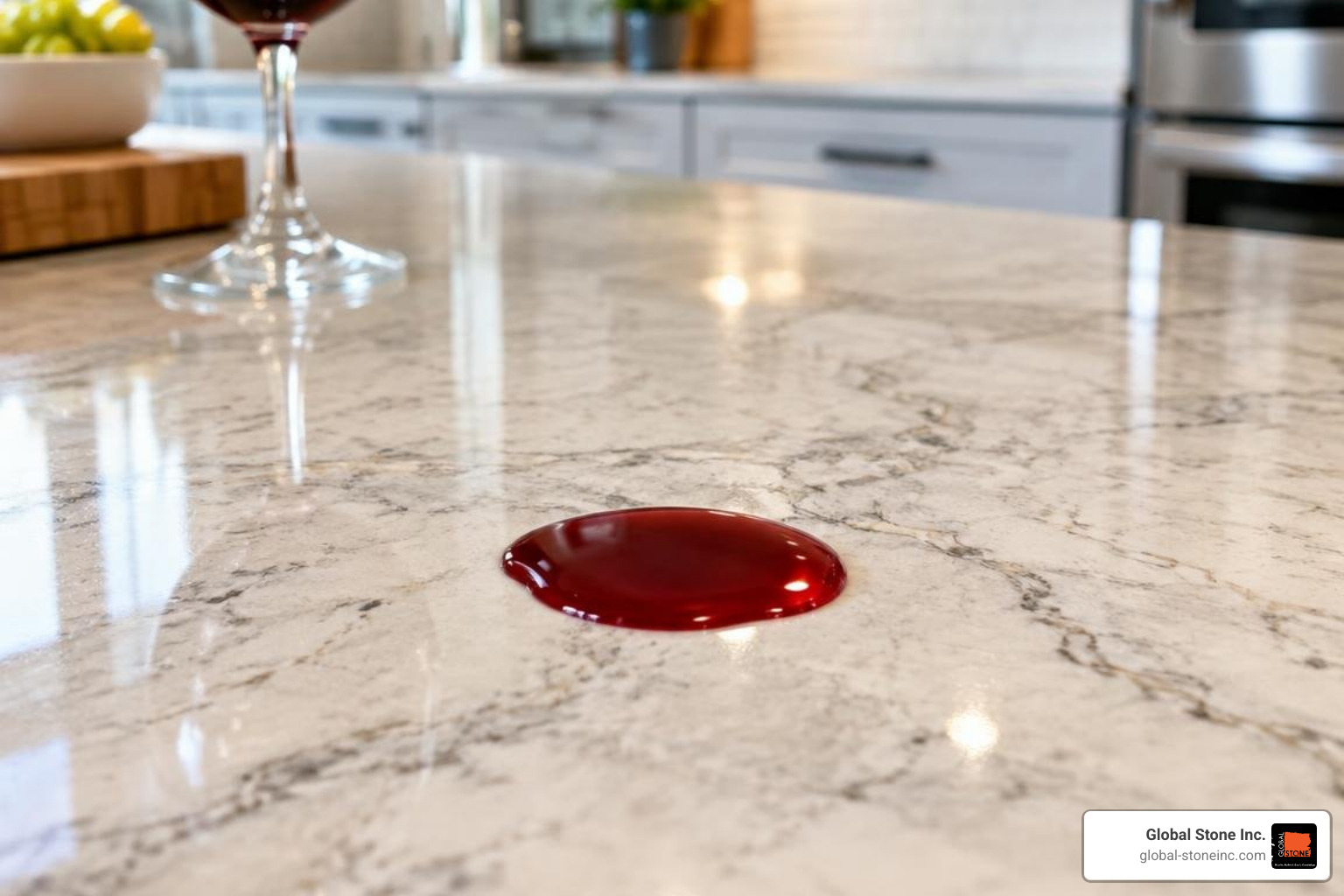
- Porous Surfaces (Marble, Granite, Quartzite): Natural stone contains microscopic capillaries formed during geological development. Unsealed granite or marble absorbs standing liquids over time, leading to deep discoloration from cooking oils, red wine, or dark sauces. Acidic liquids cause “etching” on marble—a chemical reaction with calcium carbonate that dulls polished surfaces even when sealed.
- Non-Porous Surfaces (Quartz): Polymer-bound quartz has no surface pores, preventing liquid penetration, bacteria buildup, and deep staining without ever needing a topical or impregnating sealer.
Daily Cleaning and Routine Sealing Guidelines
Establishing the right cleaning habits will keep your counters looking pristine for decades:
- Granite: Wash daily with warm water and mild dish soap or a dedicated natural stone spray. Apply an impregnating stone sealer roughly once a year to keep water, oils, and sauces beading on the surface rather than soaking in.
- Marble: Wipe acidic spills immediately using a soft microfiber cloth. Clean weekly using specialized, pH-neutral stone cleaner, and apply a fresh coat of high-grade penetrating sealer on a regular schedule to protect against staining and deep discoloration.
- Quartz: Wash with standard dish soap and warm water. Avoid abrasive scouring pads, oven cleaners, and harsh chemical degreasers that could damage the polymer resin binders.
Choosing the Right Surface Finishes and Aesthetics
Surface texture influences both the appearance of stone and how visible fingerprints, dust, and water spots are over time. Fabricators apply distinct mechanical treatments to customize the final sheen and tactile feel of each slab.
Polished, Honed, and Leathered Finishes
- Polished: A glossy, highly reflective finish that highlights the stone’s color richness, high-contrast veining, and crystalline depth. It provides maximum stain resistance by tightening surface micro-fissures, though it shows surface scratches and etching more readily under direct lighting.
- Honed: A smooth, matte, low-sheen finish achieved by stopping the polishing process early. Honed marble softens the visual contrast of acid etching and light scratches, making it a favorite for classic European-style kitchens, historic homes, and modern minimalist spaces.
- Leathered: A textured finish created by running diamond-tipped brushes across the stone surface. It leaves a subtly undulating, tactile surface that conceals fingerprints, water spots, and daily smudges, making it an excellent choice for dark granites and active family islands.
Matching Countertops to Household Lifestyles
Busy family kitchens benefit most from the stain-repellent, no-sealing characteristics of engineered quartz. Avid culinary enthusiasts who bake frequently often appreciate the naturally cool thermal mass of marble for rolling pastry dough and delicate confectionery work. For outdoor kitchens, high-heat cooking zones, and heavy cook spaces, heat-proof, UV-stable natural granite remains unmatched in raw performance and enduring durability.
Frequently Asked Questions
Which countertop material is the easiest to maintain?
Engineered quartz requires the least maintenance. It is completely non-porous, resists stains without topical sealers, and cleans up easily with everyday soap and water.
How often do natural stone surfaces require sealing?
Most granite installations need sealing once a year. Marble often requires regular sealing applications due to its higher porosity and sensitivity to kitchen acids. A quick way to test your seal is to splash a few droplets of water on the surface: if they do not bead up after five minutes, it is time to reseal.
Can damaged stone surfaces be repaired?
Yes. Minor chips along sink edges or seams can be filled with color-matched epoxy and buffed smooth. Dull etching and fine scratches on marble or granite can be resurfaced and restored by professional stone restoration technicians.
Conclusion
Choosing the right kitchen worktop comes down to matching your aesthetic tastes with your daily maintenance preferences. Whether you select the organic patterns of natural granite, the timeless veining of marble, or the carefree durability of engineered quartz, our team at Global Stone Inc. brings over two decades of local fabrication and installation expertise to your project. We manage every step in-house across our Elk Grove Village facility, Chicago, and Naperville locations, backed by our lifetime warranty protection.
Ready to find the perfect slab for your upcoming renovation? Explore custom stone countertop options with our design team today.