
Engineered Stone Countertop vs Natural Slab: Costs, Durability, and Style
Engineered Stone Countertop vs. Natural Slab: Which Fits Your Kitchen?
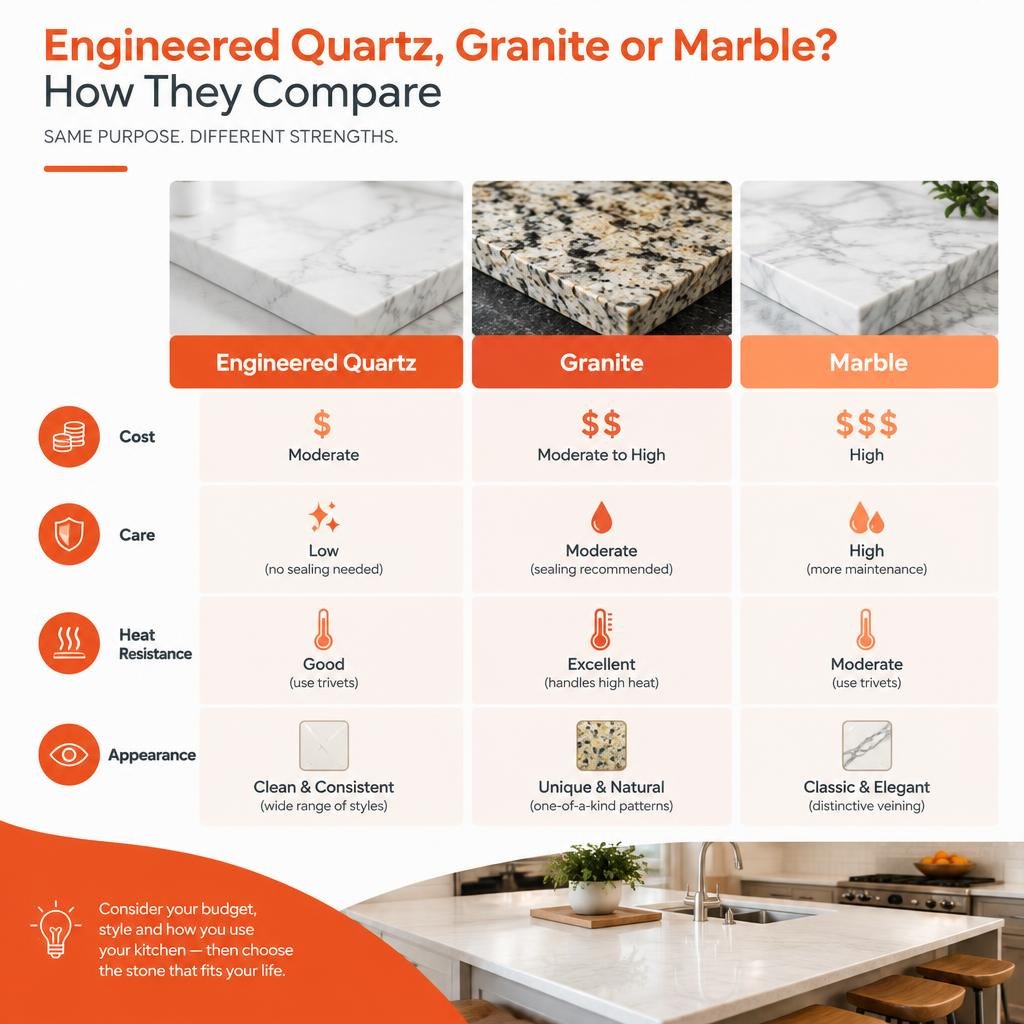
An engineered stone countertop is a good fit if you want a stone look with little upkeep. Quartz-based slabs resist stains and do not need sealing. Granite offers one-of-a-kind patterns and better heat tolerance, while marble offers a classic look but needs more care. Engineered quartz material typically costs $50-$100 per square foot, before installation. Compare the installed price, the look of the actual slab, and how you use your kitchen before choosing.
One more factor matters: cutting stone can expose workers to harmful silica dust. Ask any fabricator how they control dust before you place an order.
I’m Greg Zamarski, and I’ve worked with the Global Stone Inc. team, which has fabricated and installed quartz, granite, and marble countertops in the Chicago area since 2004. That experience helps me explain where an engineered stone countertop makes sense—and where a natural slab may serve you better.
What Is an Engineered Stone Countertop and How Is It Made?
Homeowners often ask is quartz actually natural stone when planning a remodel. The short answer: it starts with natural minerals, but the finished slab is an engineered composite.
While granite and marble are quarried directly from the earth in massive blocks and sliced into slabs, engineered stone is manufactured. It blends roughly 90% to 97% crushed natural quartz aggregate with 3% to 10% high-purity polyester or acrylic polymer resins and mineral color pigments.
Composition and Manufacturing Process
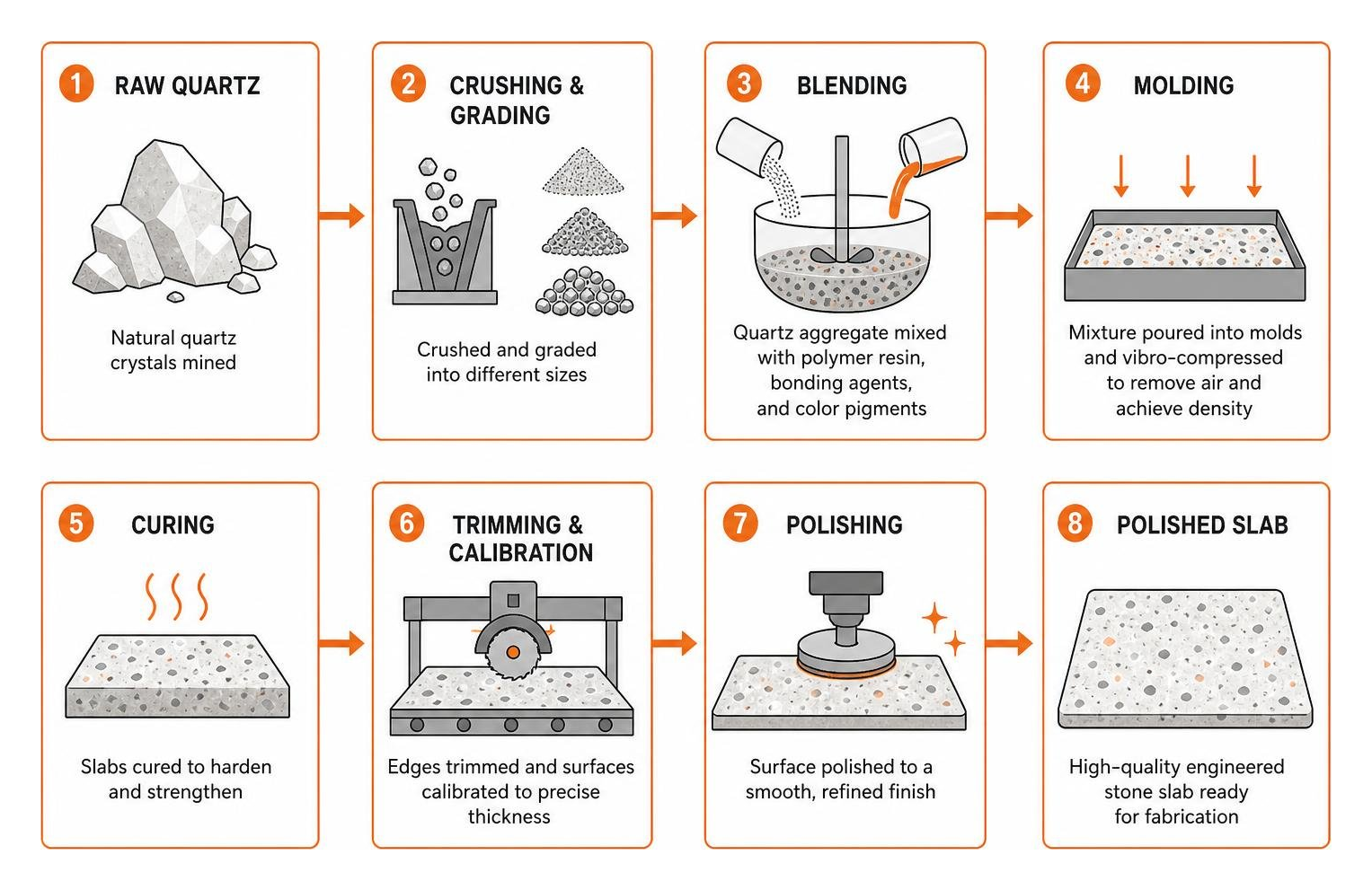
The production of modern engineered stone relies primarily on Bretonstone vibro-compression technology:
- Mineral Blending: Natural quartz crystals are crushed, graded by size (from fine powders to larger decorative granules), and blended with polymer resins, bonding agents, and pigments.
- Vacuum Compaction: The loose aggregate mix is poured into a slab mold and moved into an industrial vacuum chamber. Here, high-tonnage hydraulic presses apply intense pressure while vibrating the mixture to eliminate microscopic air pockets.
- Curing: The compressed slab passes through a curing kiln heated to approximately 100°C (212°F), hardening the polyester resin into a solid matrix.
- Gauging and Polishing: Once cooled, the slabs are calibrated for uniform thickness (standard sizes include 15 mm, 20 mm, and 30 mm) and polished to a high-gloss, honed, or textured finish.
This process yields large-format slabs (such as standard 3200×1600 mm or jumbo 3500×2000 mm sheets) that display consistent structural strength from end to end. Slabs featuring delicate marble patterning or deep emerald green statement surfaces demonstrate how advanced manufacturing combines natural mineral density with distinct aesthetic control.
Why Understanding the Engineered Stone Countertop Composition Matters
Knowing what goes into an engineered stone slab helps you understand its practical strengths and limitations. Because the resin completely fills all microscopic voids between the crushed quartz crystals, the resulting surface has a water absorption rate of just 0.02%. That is practically non-porous. It will not absorb wine, citrus juice, coffee, or cooking oils.
The composition also delivers a flexural strength of roughly 80 MPa, making engineered quartz far more resistant to chipping and cracking during transport and installation than brittle natural slabs. For a deeper breakdown of structural features, check out our comprehensive guide to quartz countertops.
However, the polymer resin binder creates two specific constraints:
- Outdoor UV Exposure: Prolonged exposure to direct ultraviolet radiation can cause the resin binders to yellow or degrade over time. As a result, standard engineered quartz is designed for indoor applications.
- Direct Heat Sensitivity: While the quartz mineral itself can withstand extreme heat (up to 1300°C), the resin binder softens at much lower temperatures (around 150°C / 300°F). Setting a red-hot cast-iron pan directly on the counter can leave a permanent scorch mark or cause thermal shock cracking.
Head-to-Head Comparison: Engineered Quartz vs. Natural Granite and Marble
Choosing between engineered quartz, granite, and marble comes down to balancing durability, maintenance routines, and visual preferences.
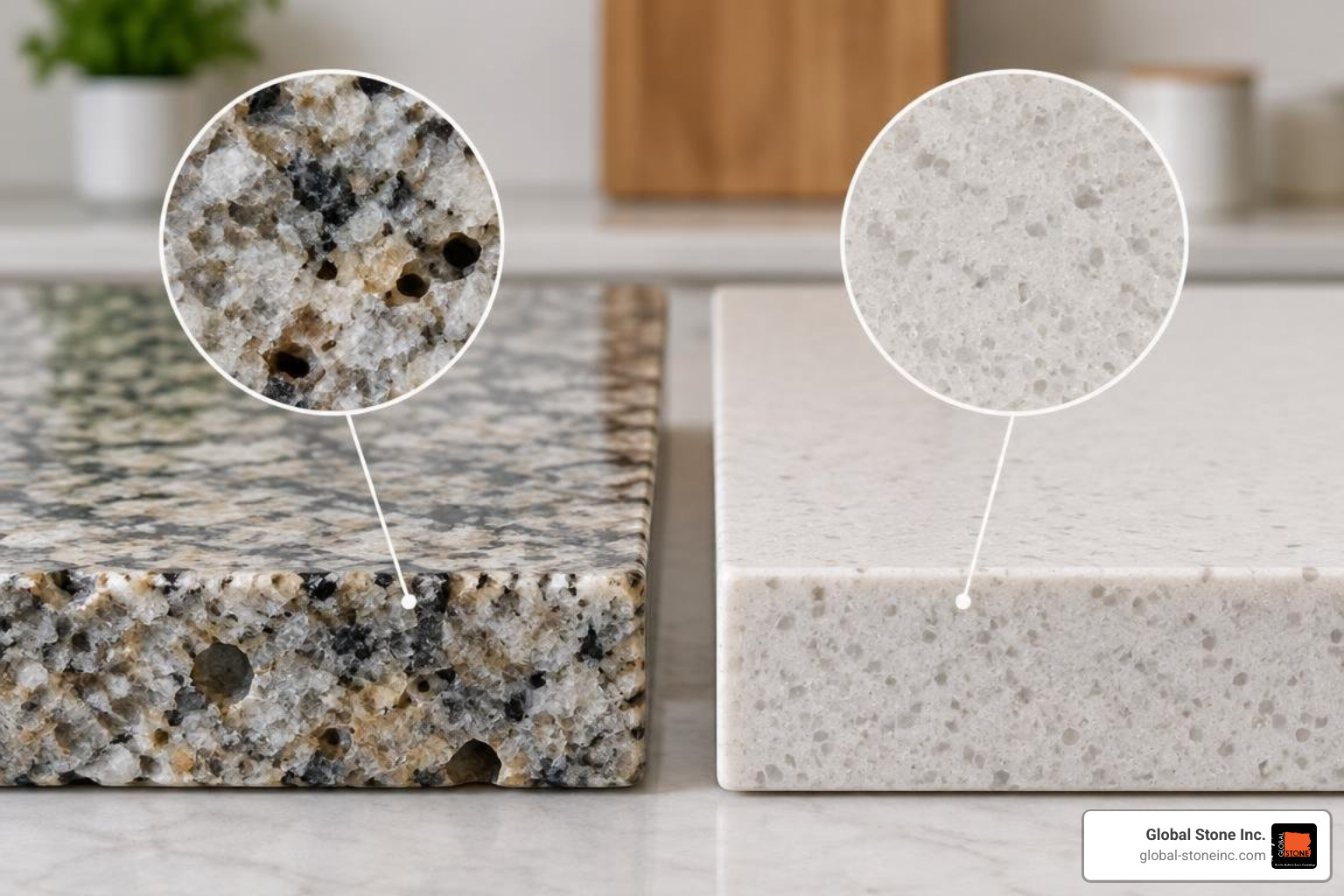
When comparing stone countertop options, looking at technical metrics side by side clarifies why each material performs the way it does:
| Feature / Metric | Engineered Quartz | Natural Granite | Natural Marble |
|---|---|---|---|
| Material Cost (per sq. ft.) | $50 – $100 | $40 – $100+ | $60 – $150+ |
| Mohs Hardness | 6 – 7 | 6 – 7 | 3 – 4 |
| Porosity & Water Absorption | Non-porous (0.02%) | Low (0.1% – 0.5%) | Moderate to High (0.5% – 2.0%) |
| Sealing Required? | Never | Yes (Every 1–2 years) | Yes (Every 6–12 months) |
| Acid / Stain Resistance | Exceptional | High (when sealed) | Vulnerable to etching |
| Heat Resistance | Up to ~300°F (Needs trivets) | Up to ~1200°F | Up to ~900°F |
| Flexural Strength | ~80 MPa (Impact: ~14 J) | ~10–18 MPa | ~7–15 MPa |
| Expected Lifespan | 15–30+ years | 30–50+ years | 20–50+ years |
Durability, Porosity, and Flexural Strength
Engineered stone ranks between 6 and 7 on the Mohs hardness scale, matching the scratch resistance of granite and far outperforming marble (which sits at a soft 3 to 4). In our quartz countertops vs marble countertops guide, we frequently highlight how household acids like lemon juice, tomato sauce, and vinegar permanently etch the calcite in natural marble within minutes.
Because engineered quartz has a non-porous resin structure and high impact resistance (14 J), it handles heavy, busy family kitchens without requiring defensive cooking habits.
Maintenance, Heat Tolerance, and Lifecycle Costs
The primary trade-off between granite and engineered quartz lies in heat tolerance versus maintenance labor:
- Granite can tolerate hot pans directly from the stove because it formed under extreme volcanic heat (withstanding up to 1200°F). However, its natural capillary channels mean you must reseal it every 12 to 24 months to block moisture and bacteria.
- Engineered Quartz eliminates recurring chemical sealers and maintenance downtime entirely. Over a 15- to 30-year lifecycle, you save hundreds of dollars in sealing supplies and labor. You simply need to use trivets or hot pads beneath hot cookware to protect the resin binder from thermal shock.
Aesthetic Range and Design Versatility
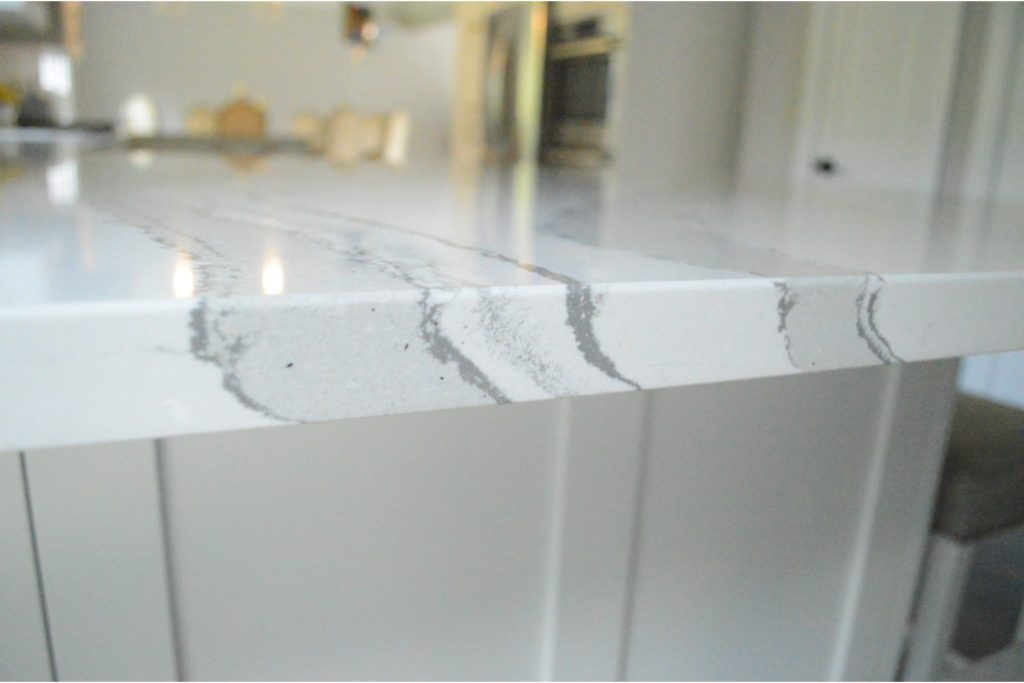
Natural stone patterns are determined entirely by geology—what you see in the quarry is what you get. Engineered quartz gives you deliberate design control. Slabs with Calacatta-style patterning reproduce the dramatic grey veining and crisp white base of rare Italian marble without the fragile, porous characteristics of the real thing.
Engineered stone also allows for tighter color consistency across multiple slabs. If you are building an expansive kitchen island with a waterfall edge or spanning a multi-slab layout, engineered slabs make bookmatching and seam concealment much simpler.
Occupational Safety, Silicosis Risks, and Global Regulations
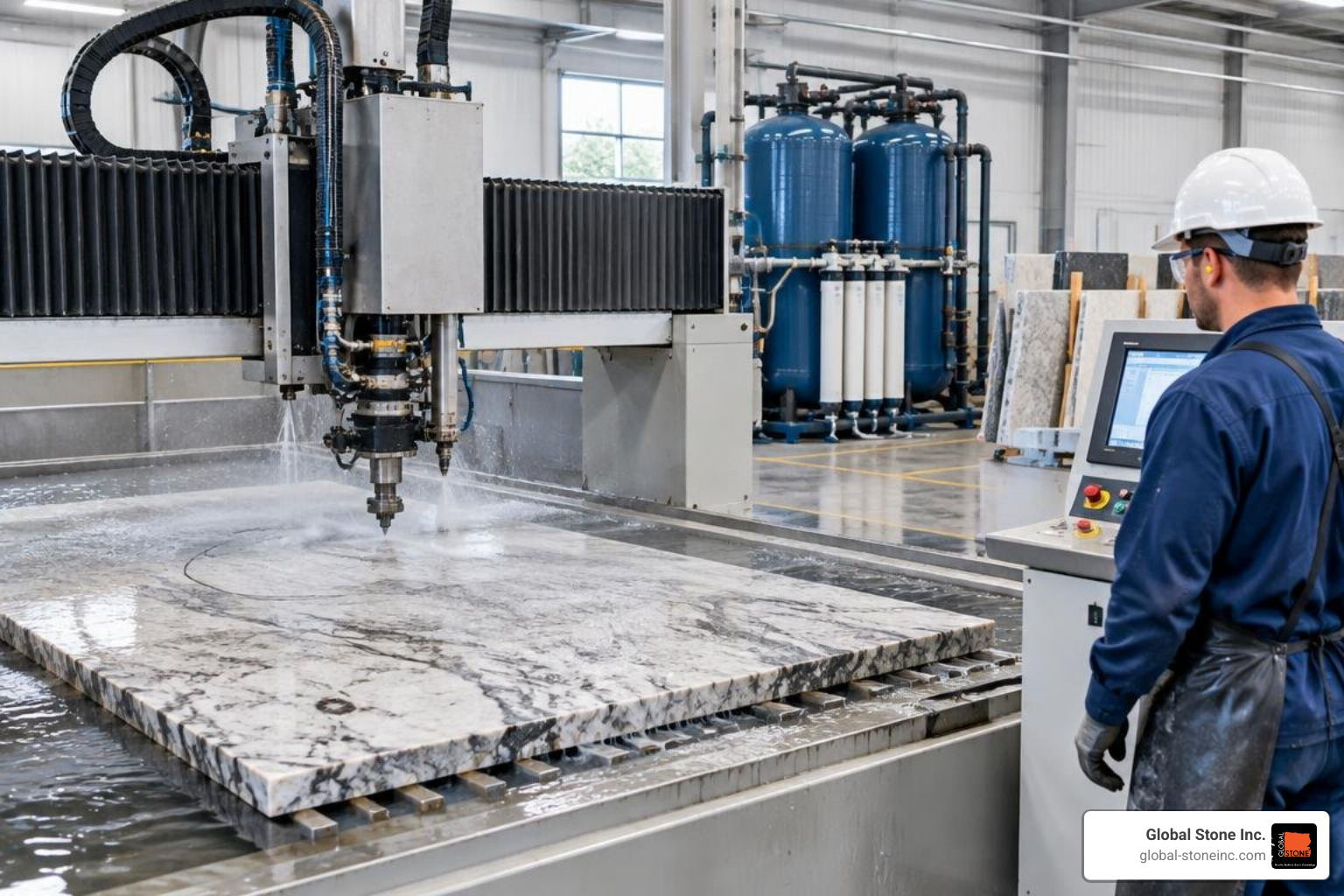
While finished engineered stone countertops installed in your home are completely non-toxic and inert, the process of cutting, grinding, and polishing them dry creates occupational health hazards for unprotected shop workers.
Crystalline Silica Hazards and Global Regulations
Engineered stone slabs contain up to 90%+ crystalline silica, compared to roughly 20% to 45% in granite and under 5% in natural marble. When workers dry-cut or grind quartz slabs without proper dust suppression, microscopic respirable crystalline silica (RCS) particles enter the air.
Inhaling these fine particles causes silicosis, an irreversible, incurable, and potentially fatal lung disease that leads to progressive scarring and reduced lung capacity.
Because of high silicosis rates linked to improper dry-cutting methods:
- Australia enacted a nationwide ban on the manufacture, import, and installation of high-silica engineered stone countertops.
- The United States enforces strict Permissible Exposure Limits (PEL) for respirable crystalline silica at 50 micrograms per cubic meter (50 µg/m³) over an 8-hour workday. OSHA regulations mandate engineered dust controls, full-flood wet-cutting machinery, and specialized respiratory personal protective equipment (PPE).
Choosing a Responsible Fabricator for Your Engineered Stone Countertop
As a homeowner, you have an ethical role to play in supporting worker safety. The silica hazard occurs only during active fabrication (cutting and edge-profiling), never when the finished stone sits in your kitchen.
When selecting an installer or reviewing countertop installation services in the Chicago and Naperville area, always ask your fabricator about their shop safety practices:
- Do they use 100% wet-cutting machinery? Reputable fabricators utilize bridge saws and CNC routers flooded with water, preventing dust particles from ever becoming airborne.
- Do they maintain dedicated dust-collection and water-recycling systems? Professional facilities capture stone slurry and filter ambient shop air through industrial HEPA filtration systems.
- Are fabricators provided with NIOSH-approved respirators? Ensure the company enforces strict PPE protocols for all indoor shop personnel.
At Global Stone Inc., our fabrication facility in Elk Grove Village, IL operates with wet-processing systems and safety-first ventilation protocols. This ensures our craftsmen work in a clean environment while fabricating your surfaces.
Long-Term Maintenance and Care Protocols for Engineered Surfaces
Engineered stone is one of the easiest interior surfaces to look after. Because it never needs to be stripped, sealed, or reconditioned, routine care requires only basic household supplies.
Daily Cleaning and Stain Removal Best Practices
To keep your countertops in top condition:
- Daily Cleaning: Wipe down the counters using warm water, a mild dish soap, and a soft microfiber cloth. For detailed step-by-step guidance, read our guide on how to clean quartz surfaces.
- Handling Dried Residue: If sticky residue or dried food hardens on the surface, avoid metal razor blades or steel wool. Instead, use a plastic putty knife held flat against the counter to lift the debris, then wipe clean with a neutral pH surface spray.
- Chemicals to Avoid: Never clean engineered stone with high-alkaline or harsh acidic chemicals, such as bleach, oven cleaners, drain openers, paint strippers, or abrasive scouring powders. These chemicals can break down the bond between the polymer resin and quartz aggregate, leaving dull, unfixable patches.
- Scratch and Heat Prevention: While quartz rates 6–7 on the Mohs scale, always use a cutting board. Chopping directly on stone will dull your kitchen knives and can leave metal transfer marks. Keep trivets and silicone hot pads next to the range for hot pots and pans.
- Minor Chip Repairs: If a heavy pot strikes an edge and knocks out a small chip, a professional installer can fill the void with a color-matched, UV-cured acrylic epoxy resin, buffing it flush with the original profile.
Frequently Asked Questions About Stone Countertops
Is engineered stone more heat resistant than natural granite?
No. Natural granite is significantly more heat resistant than engineered stone. Granite formed in magma chambers under intense heat and pressure, allowing it to withstand temperatures up to 1200°F without scorching.
Engineered quartz consists of roughly 7% polymer resins, which can discolor, warp, or crack when exposed to temperatures exceeding 300°F. Always use heat-resistant pads or trivets beneath hot cookware on engineered stone surfaces.
Why has Australia banned engineered stone while other regions regulate it?
Australia implemented a total ban following high rates of silicosis among workers, largely driven by small, unmonitored fabrication shops dry-cutting high-silica materials without dust suppression or proper respirators.
In North America and Europe, regulators like OSHA have addressed this risk through strict workplace safety rules. By mandating full-flood wet cutting, closed-loop water filtration, local exhaust systems, and strict airborne particulate limits, fabricators can safely shape engineered slabs without exposing workers to dangerous dust levels.
What is the typical lifespan and return on investment for engineered quartz?
Engineered stone countertops have an expected lifespan of 15 to 30+ years in residential and commercial settings. Because they require no periodic sealing, chemical sealants, or specialized restoration, their lifecycle operating cost is virtually zero.
From an ROI perspective, quality engineered quartz consistently recoups 60% to 80% of its installed cost at home resale, making it an appealing upgrade for modern kitchens and bathrooms.
Conclusion
Both engineered stone countertops and natural stone slabs bring valuable qualities to a kitchen remodel. If you value unique organic veining, maximum heat tolerance, and traditional character, natural granite or marble remains a great option.
If you prefer a surface that never needs sealing, resists stains effortlessly, and delivers consistent color and pattern from slab to slab, an engineered stone countertop is hard to beat.
Before ordering, verify that your chosen contractor fabricates responsibly using wet-cutting methods and proper safety controls. If you are planning a project in the greater Chicago, Elk Grove Village, or Naperville areas, reach out to our team at Global Stone Inc.
With over 20 years of local fabrication and installation experience, an Elk Grove Village facility, and a lifetime warranty on our craftsmanship, we are here to help you find the perfect slab.
Explore our full selection of premium countertop fabrication and installation options to get started on your kitchen or bathroom today.