
Stop the Wobble: How to Secure Your Bathroom Vanity Top
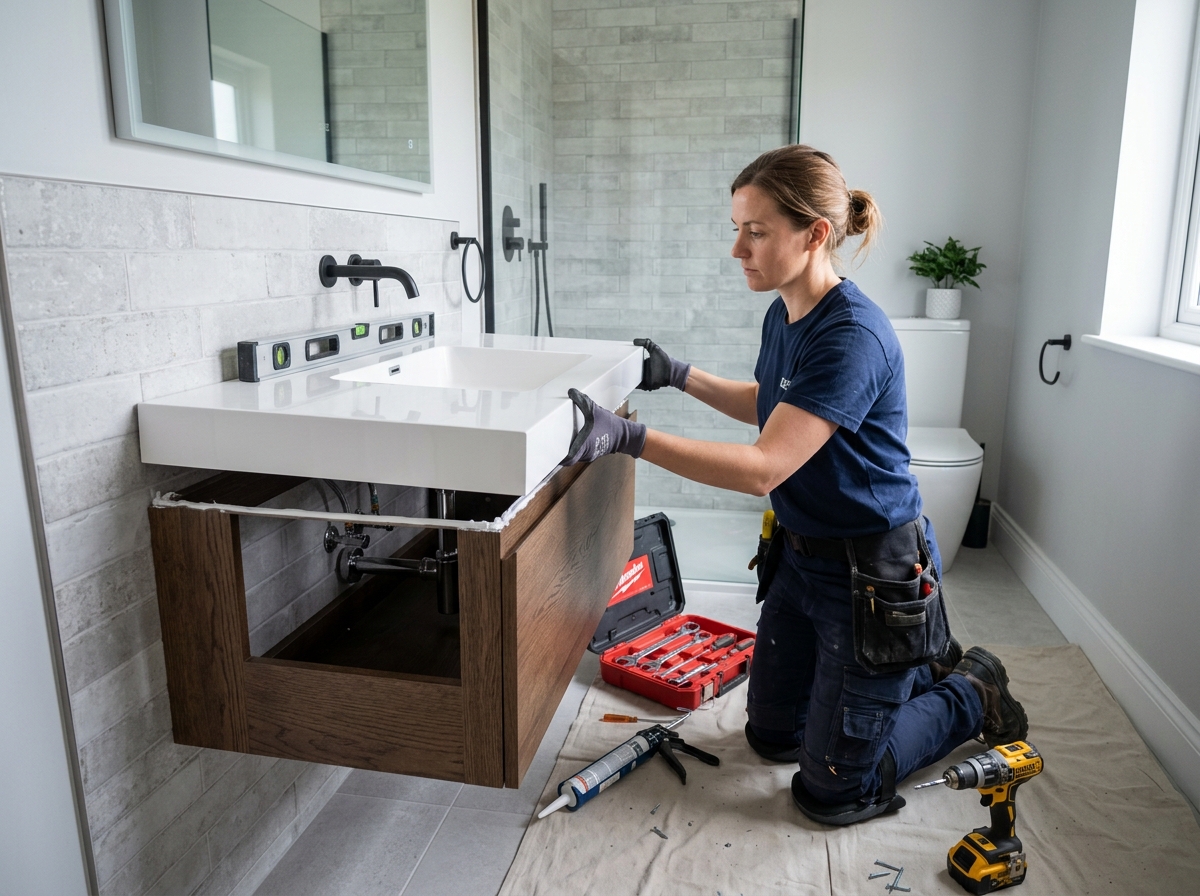
A Wobbly Vanity Top Is More Than Just Annoying — Here’s How to Fix It
Bathroom vanity top installation is a straightforward DIY project most homeowners can complete in a single day with basic tools and a little patience.
Quick answer — here’s the process at a glance:
- Measure your vanity base and buy a top that fits (typically 1 inch wider and 1 inch deeper than the cabinet)
- Gather tools: level, tape measure, caulk gun, adjustable wrench, shims, and silicone caulk
- Turn off the water supply and disconnect all plumbing
- Remove the old vanity top
- Level the vanity base using shims
- Dry-fit the new top to check alignment and overhang
- Apply a bead of 100% silicone caulk to the cabinet edges and set the top in place
- Reconnect plumbing, caulk the seams, and test for leaks
A wobbly or cracked vanity top is one of the most common bathroom complaints — and one of the most fixable. Whether your current top is cracked, stained, or just dated, swapping it out is one of the highest-impact upgrades you can make. Bathroom remodeling adds real value to your home, and the vanity is front and center every single morning.
The good news? A pre-made vanity top can go from box to basin in as little as 30 minutes for the countertop itself, with another 20 minutes to reconnect the faucet. Even a full replacement with custom stone runs just a few hours for most homeowners.
The key is doing it right the first time — a poorly secured top can rock, crack, or leak, turning a simple upgrade into a costly repair.

Preparation: Tools and Measuring for Your New Countertop

Before we dive into the heavy lifting, we need to make sure we’re working with the right numbers. At Global Stone Inc., we’ve seen many DIY projects hit a snag simply because the measurements were off by a fraction of an inch.
Getting the Dimensions Right
When you are learning How to Measure Countertops, the most important rule to remember is the overhang. A standard bathroom vanity top isn’t the same size as the cabinet it sits on; it needs to be slightly larger to protect the cabinet doors from drips.
- Width: Measure the width of your vanity cabinet. Your new top should typically be 1 inch wider than the cabinet (allowing for a 1/2-inch overhang on each side).
- Depth: Measure from the back wall to the front of the cabinet. Add 1 inch to this measurement to allow for a front overhang.
- Faucet Holes: Check if your new top comes pre-drilled. Standard patterns include single-hole, 4-inch centerset, or 8-inch widespread. Knowing this ahead of time prevents you from buying a beautiful faucet that literally won’t fit your stone.
Your DIY Shopping List
Don’t be that person who has to run to the hardware store three times in one afternoon. Gather these essentials first:
- Safety Gear: Safety glasses and gloves are non-negotiable. Stone can be sharp, and old adhesive can fly when you’re prying things apart.
- Level: A 2-foot or 4-foot level is your best friend.
- Shims: Plastic or wood shims to fix any “wobble” in the base.
- Silicone Caulk and Caulk Gun: We recommend 100% silicone for its mold resistance and flexibility.
- Adjustable Wrench and Pliers: For those stubborn plumbing connections.
- The “Bucket of Doom”: A small bucket and some old towels to catch the residual water left in the P-trap.
Step-by-Step Bathroom Vanity Top Installation
Now that the prep work is done, it’s time for the actual bathroom vanity top installation. If you’re nervous, don’t be! Just take it one step at a time.
Out with the Old
First, we need to clear the deck. Empty the vanity cabinet completely so you have room to move.
- Shut off the Water: Turn the handles on the hot and cold supply valves clockwise until they stop.
- Relieve Pressure: Open the faucet to let out any remaining water and air.
- Disconnect Plumbing: Use your wrench to disconnect the water supply lines and the P-trap (the J-shaped pipe under the sink). This is where your bucket comes in handy!
- Break the Seal: Use a utility knife to carefully cut the caulk seal between the old backsplash and the wall.
- Remove the Old Top: Look for any metal clips or screws holding the top to the cabinet. Once those are gone, you might need a putty knife to pry the old adhesive loose. If it’s a heavy stone top, grab a buddy!
Prepping the Base
The most common reason for a wobbly top is an unlevel cabinet. Floors in the Chicago area—especially in older homes—are rarely perfectly flat.
Place your level across the top of the vanity base, both side-to-side and front-to-back. If you see a gap, slide a shim under the bottom of the vanity cabinet (not between the top and the cabinet) until it’s perfectly level. Once level, ensure the vanity is securely anchored to the wall studs using 3-inch screws. A vanity that shifts will eventually break the silicone seal on your countertop.
The Dry-Fit
Before you reach for the adhesive, do a “dry-fit.” Lift the new top onto the vanity. Check that it sits flat, the overhang is even on both sides, and the plumbing lines up with the sink cutout. This is your chance to identify if the wall is out of square. If there’s a massive gap at the back, you might need to “scribe” the backsplash or use a thicker bead of caulk later.
Professional Tips for Bathroom Vanity Top Installation
We’ve been doing this for over 20 years, and if there’s one “pro secret” that makes life easier, it’s bench assembly.
Trying to tighten faucet nuts while lying on your back inside a dark, cramped cabinet is a special kind of torture. Instead, set your new vanity top on a pair of sawhorses (protected with rags) and install the faucet and drain assembly before you put the top on the cabinet.
- The Two-Person Lift: Stone and quartz are heavy and surprisingly brittle if twisted. Always have two people lift the top, carrying it vertically (on its edge) like a sheet of glass rather than flat. This prevents the weight of the sink from cracking the stone at the narrowest points.
- Centering: Once you lower the top onto the base, check your overhang consistency one last time. You have about 5 to 10 minutes to nudge it into place before the silicone starts to “skin over.”
Securing the Top to the Vanity Base
Once you are happy with the dry-fit and the faucet is attached, it’s time to make it permanent. Lift the top back up (or have your partner hold one side).
Apply a generous bead of 100% silicone caulk along the entire top edge of the vanity cabinet. Don’t be stingy, but don’t go overboard—you don’t want it oozing down the front of your nice cabinets.
Carefully lower the top into its final position. If a corner seems to lift slightly, you can place a heavy object (like a stack of books or a gallon of paint) on that corner overnight to ensure it bonds flat. For more detailed advice on local standards, check out our Countertop Installation Near Me Guide.
Selecting Your Stone Vanity Top Material
Choosing the right material is just as important as the installation itself. In the humid environment of a bathroom, you want something that can handle splashes, toothpaste, and the occasional dropped curling iron.
| Material | Durability | Maintenance | Best For… |
|---|---|---|---|
| Quartz | Extremely High | Very Low | Busy family bathrooms; no sealing required. |
| Granite | High | Moderate | Natural beauty; requires annual sealing. |
| Marble | Moderate | High | Luxury primary suites; prone to etching from acids. |
| Porcelain | High | Low | Modern looks; highly stain and scratch resistant. |
We always suggest looking for nonporous surfaces. Quartz is a top contender here because it doesn’t require sealing and is virtually immune to staining. If you’re struggling to decide, our guide on 5 Tips for Choosing Bathroom Countertops That Radiate Style can help you match your stone to your aesthetic.
Plumbing and Finishing Touches
With the stone secured, we’re in the home stretch. Now we just need to make sure the water stays inside the pipes.
- The Sink Flange: Apply a ring of plumber’s putty or a silicone gasket under the sink flange. Drop it into the drain hole and tighten the lock nut from underneath.
- Supply Lines: Connect your flexible supply lines to the faucet shanks. Hand-tighten them first, then give them a quarter-turn with a wrench. Do not overtighten, or you risk cracking the plastic nuts or stripping the threads.
- The P-Trap: Reconnect the tailpiece to the J-trap. Use plumber’s tape (Teflon tape) on the threaded metal connections to ensure a watertight seal.
- The Leak Test: This is the moment of truth. Turn the water supply back on slowly. Run the faucet for at least 30 seconds while feeling the connections with your hand. If your hand comes away dry, you’re a hero!
Avoiding Common Mistakes in Bathroom Vanity Top Installation
Even experienced DIYers can fall into these traps. Here is how to avoid them:
- Uneven Walls: Walls are almost never perfectly straight. If you have a gap between your backsplash and the wall, don’t just fill it with a massive “caulk canyon.” Instead, use painter’s tape to create a clean line, apply the silicone, and smooth it with a wet finger or a caulking tool.
- Overtightening: We see this a lot in Countertop Installation Near Me service calls. Overtightening a drain can actually crack a porcelain sink or a stone top.
- Skipping the Side Splash: If your vanity is in a corner, always install a side splash. It prevents water from running down the side of the cabinet and causing wood rot over time.
Frequently Asked Questions about Vanity Installation
How long should I wait for the caulk to cure before using the sink?
While some “quick-dry” silicones claim to be ready in 30 minutes, we strongly recommend a 24-hour window. The weight of the water in a full sink and the vibration of the pipes can disturb the bond before it’s fully cured. Patience now prevents a leak later.
Should I install the faucet before or after placing the countertop?
Always, always, always install the faucet before placing the countertop (the bench assembly method). It allows you to ensure the gaskets are centered and the mounting hardware is tight without straining your back. It also prevents cross-threading, as you can see exactly what you are doing.
What is the best way to handle gaps between the countertop and an uneven wall?
For minor gaps (less than 1/8 inch), a clean bead of silicone is sufficient. For larger gaps, you may need to “scribe” the back of the stone (a professional task) or install a tiled backsplash over the stone backsplash to hide the variance. Using a color-matched caulk also makes gaps much less noticeable.
Conclusion
Installing a new vanity top is a rewarding way to refresh your bathroom without the cost of a full gut renovation. By taking the time to level your base, dry-fit your stone, and follow proper plumbing techniques, you can ensure a professional-grade result that lasts for decades.
At Global Stone Inc., we take pride in helping Chicago homeowners achieve their dream bathrooms. With over 20 years of experience and a facility right in Elk Grove Village, we handle everything from fabrication to installation. Whether you’re looking for the timeless elegance of marble or the rugged durability of quartz, our in-house designers are ready to help. Plus, we stand by our work with a lifetime warranty.
Ready to upgrade? Explore our wide selection of Countertops or visit us at our Elk Grove Village or Naperville locations to find the perfect piece of stone for your home!