
How to Choose the Right 22 inch Vanity Top
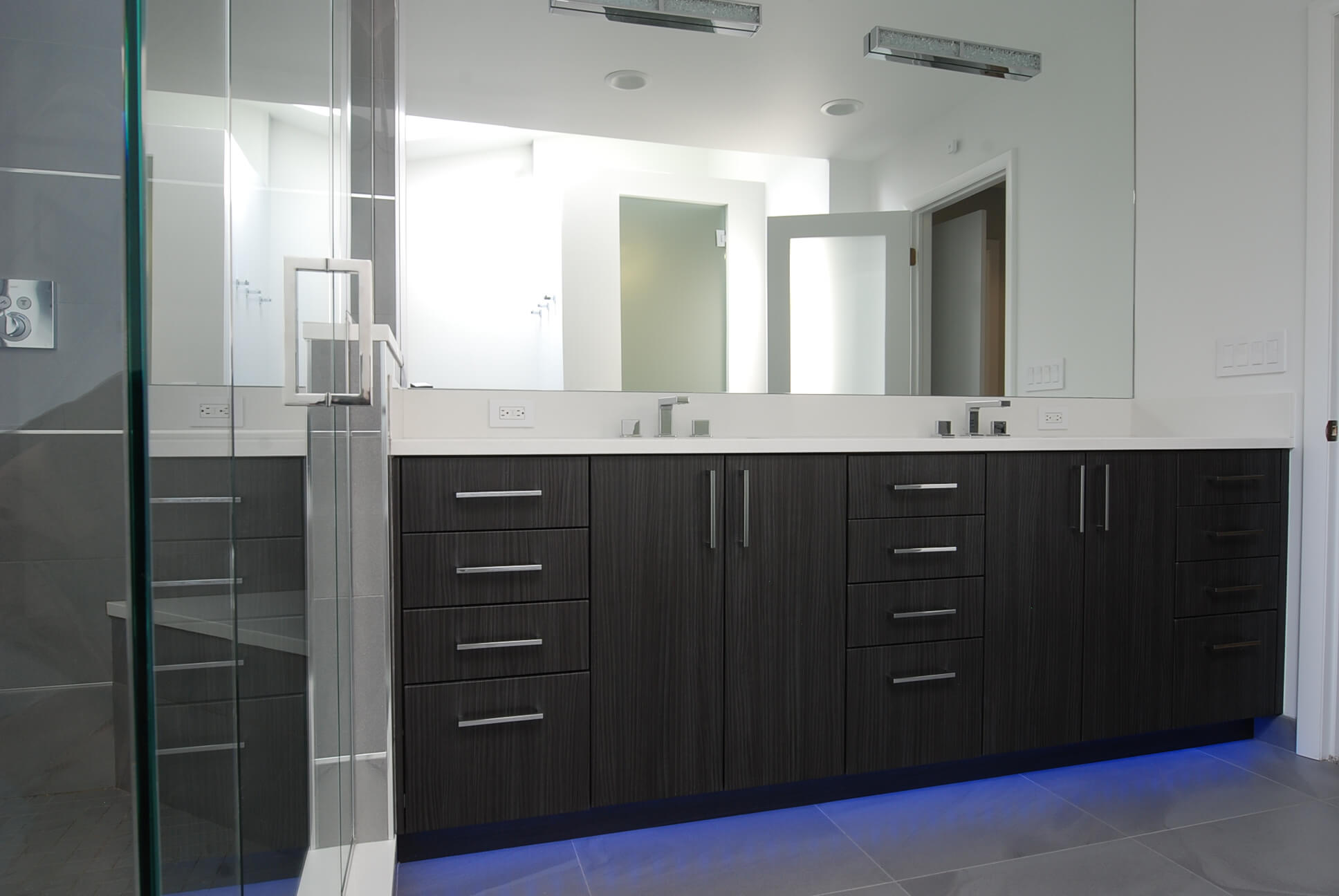
Why the Right 22 Inch Vanity Top Makes or Breaks Your Bathroom Remodel
A 22 inch vanity top is the standard depth for most bathroom vanities — and choosing the right one can be the difference between a bathroom that feels polished and one that feels like an afterthought.
Here’s a quick overview of what you need to know:
| Factor | Key Details |
|---|---|
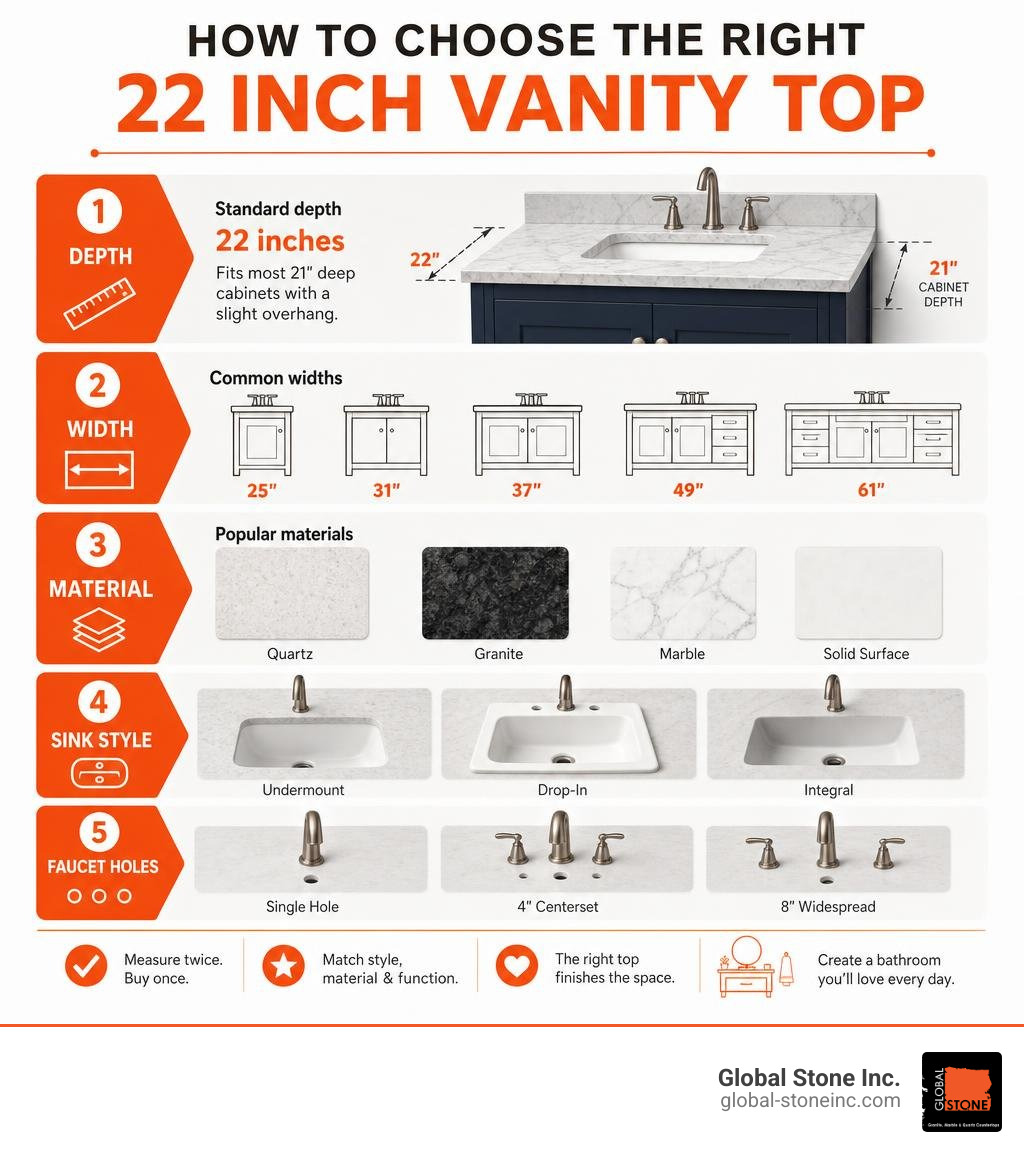
| Standard depth | 22 inches (fits most 21-inch deep cabinets with a slight overhang) |
| Common widths | 25″, 31″, 37″, 49″, 61″ |
| Popular materials | Quartz, granite, marble, solid surface |
| Sink styles | Undermount, drop-in, integral |
| Faucet hole options | Single hole, 4″ centerset, 8″ widespread |
| Typical price range | ~$288 (granite) to $1,600+ (premium solid surface) |
Whether you’re replacing a worn surface or starting a full bathroom renovation, the choices in material, sink style, and faucet configuration all matter — and they can feel overwhelming fast.
That’s exactly what this guide is here to solve.
I’m Greg Zamarski, and with over 20 years of experience fabricating and installing natural stone countertops — including countless 22 inch vanity tops in granite, marble, and quartz — I’ve seen every common mistake and how to avoid it. Let’s walk through everything you need to make a confident decision.
22 inch vanity top definitions:
Understanding Dimensions and Depth for a 22 Inch Vanity Top
When shopping for bathroom upgrades, you will constantly see the number “22” pop up. Why is that?
In bathroom design, 22 inches is the golden standard for vanity top depth (the distance from the front edge to the back wall). This depth provides the ideal balance: it is deep enough to comfortably house a standard-sized sink basin and leave room for your soap dispenser, yet shallow enough to fit comfortably in standard residential bathrooms without blocking your foot traffic.
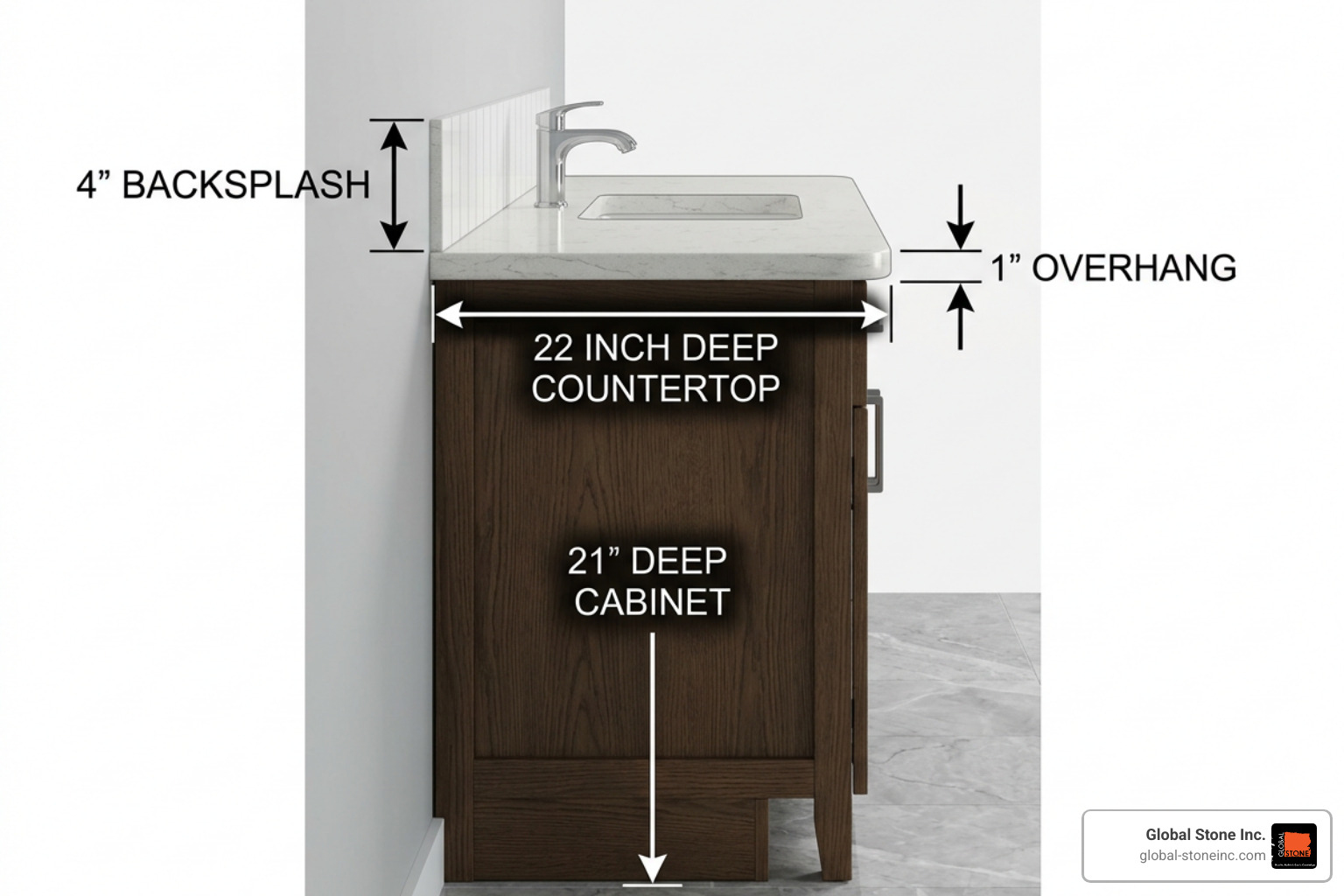
Most standard vanity cabinets are built to a depth of 21 inches. A 22 inch vanity top is designed specifically to pair with these cabinets, providing a crucial 1-inch overhang at the front. This overhang isn’t just for looks; it prevents water spills from running directly down the front of your wood cabinetry, saving you from costly water damage over time.
For a deeper dive into how these dimensions work in standard bathroom layouts, check out The Homeowner’s Guide to the 37 x 22 Bathroom Vanity Top.
Standard Widths for a 22 Inch Vanity Top
While the depth remains a consistent 22 inches, the width of your vanity top can vary dramatically depending on your bathroom’s layout and cabinet size. Here are the most common standard widths you will encounter:
- 25-Inch Width: Perfect for small powder rooms, cozy guest bathrooms, or tight half-baths where floor space is at a premium.
- 31-Inch Width: A popular step up that offers a bit more elbow room and counter space for daily essentials.
- 37-Inch Width: The sweet spot for mid-sized family bathrooms, offering plenty of room for morning routines.
- 49-Inch Width: A spacious single-sink option that gives you generous countertop space on both sides of the basin.
- 61-Inch and 73-Inch Widths: Designed for double-sink vanities, allowing couples or siblings to share the bathroom without bumping elbows.
If you are dealing with slightly less common sizes, such as a 54-inch setup, you can learn how to navigate those specific dimensions in our Countertop Chronicles: Choosing Your 54 Inch Bathroom Vanity Top.
Measuring Your Cabinet for a 22 Inch Vanity Top
Before you fall in love with a specific stone pattern, you must take precise measurements of your existing vanity cabinet. Never measure your old countertop to determine the size of your new one—always measure the cabinet base itself.
- Measure the Cabinet Width: Measure across the front of the cabinet from the far-left outer edge to the far-right outer edge.
- Measure the Cabinet Depth: Measure from the back wall to the front face of the cabinet door or drawer fronts.
- Account for Walls: Is your vanity nestled into a corner or between two walls? If so, you will need a flat-edge top with no side overhangs. If your vanity stands free, you will want a top that extends roughly 1/2 inch to 1 inch past the cabinet sides for a balanced look.
- Check Your Plumbing: Ensure your existing water supply lines and drain pipes align correctly with the sink cutout of your chosen top.
For more layout tips and size options, read our guide on how to Upgrade Your Space: The Best 54 Inch Vanity Top Options.
Comparing Vanity Top Materials: Durability, Maintenance, and Cost
Choosing the right material for your 22 inch vanity top is a decision that balances aesthetics, daily wear-and-tear, and your project budget. Let’s look at how the most popular options stack up:
| Material | Durability | Maintenance Required | Average Cost | Best Suited For |
|---|---|---|---|---|
| Quartz | Extremely High | Very Low (No sealing needed) | Moderate to High | Busy family bathrooms |
| Granite | High | Low (Requires annual sealing) | Moderate | Traditional & rustic styles |
| Marble | Moderate | High (Prone to etching/staining) | High | Master suites & powder rooms |
| Solid Surface | High | Low (Scratches can be buffed) | Low to Moderate | Modern, seamless designs |
To help you choose a material that fits your aesthetic vision, check out our 5 Tips for Choosing Bathroom Countertops That Radiate Style.
Natural Stone vs. Engineered Stone
Natural stones like granite and marble bring unmatched character to your bathroom. Because every slab is quarried from the earth, no two vanity tops will ever look exactly alike. Granite offers incredible heat resistance (hot curling irons won’t faze it) and excellent scratch resistance. Marble, while undeniably elegant with its classic veining, is a softer, more porous stone. It requires dedicated care to prevent staining from makeup, toothpaste, or acidic bathroom cleaners.
Engineered stone, primarily quartz, has become the dominant force in bathroom remodeling. Quartz vanity tops are made by combining pulverized natural stone with polymer resins. This process creates an incredibly dense, non-porous surface. Quartz resists stains, scratches, and bacteria growth without ever requiring sealer. For busy households where toothpaste spills might sit on the counter all day, quartz is often the smartest choice.
Solid Surface and Composite Options
If you are looking for a seamless, ultra-hygienic option, solid surface materials (like acrylic or polyester composites) are excellent contenders. High-quality solid surface vanity tops feature color and pattern that run all the way through the material. This unique characteristic means that if you accidentally scratch or nick the surface, you can easily buff it out with a mild abrasive pad.
Solid surface tops often feature integrated sink basins, meaning the countertop and the sink are molded together as a single, continuous piece. This eliminates the seam between the sink and the counter, leaving absolutely nowhere for dirt, grime, or mold to hide.
Selecting Sink, Faucet, and Installation Configurations
Your vanity top isn’t just a flat piece of stone; it is the functional hub of your daily routine. How your sink, faucet, and backsplash integrate into the top will dictate how easy it is to use and clean.
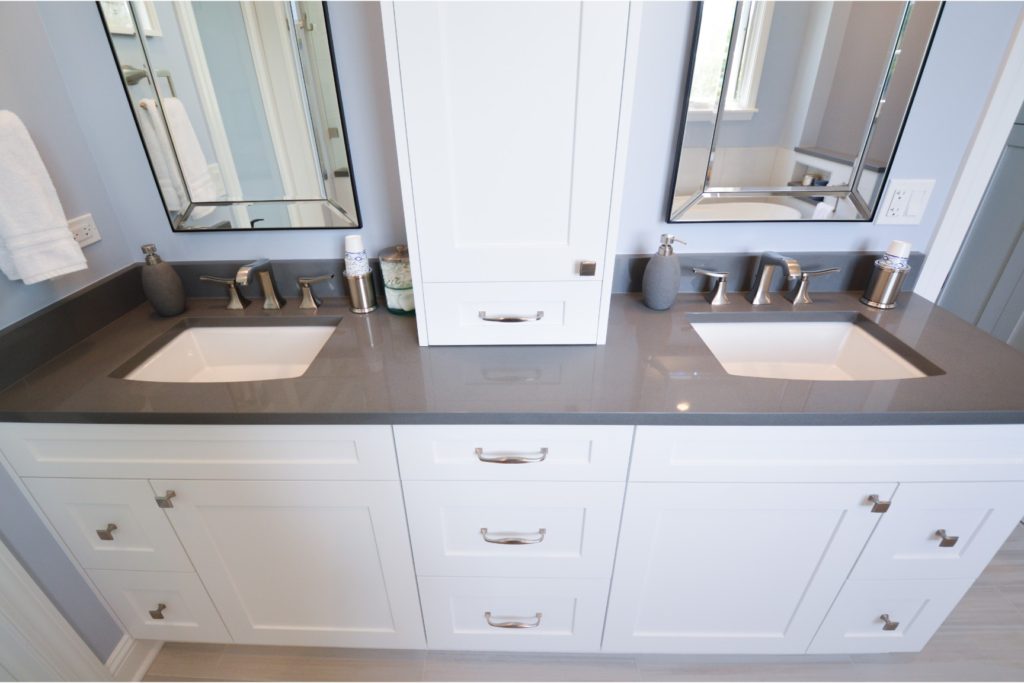
Sink Styles: Undermount, Drop-In, and Integral
The way your sink attaches to your 22 inch vanity top changes both the look of your bathroom and your cleaning routine:
- Undermount Sinks: Mounted beneath the countertop, these sinks create a clean, modern look. Because there is no lip on the counter, you can wipe water and debris straight from the countertop directly into the sink basin.
- Integral Sinks: Molded directly into the countertop material, these offer a seamless transition with zero joints.
- Drop-In Sinks: Also known as self-rimming sinks, these rest on top of a cutout in the counter. While they are the easiest to install for DIYers, the raised lip can catch dust and grime over time.
While bathroom and kitchen sinks serve different purposes, understanding the mechanics of sink design can help you make a better choice. You can read more about various sink configurations in The Complete Guide to Kitchen Sinks.
Faucet Hole Spacing and Compatibility
Faucets are not one-size-fits-all. When buying a pre-drilled 22 inch vanity top, you must match the top’s hole configuration to your chosen faucet:
- Single-Hole: Designed for modern single-handle faucets. This minimalist setup is incredibly easy to clean around.
- 4-Inch Centerset: Features three holes drilled close together, spanning 4 inches from the hot valve to the cold valve. This is common for smaller vanity tops.
- 8-Inch Widespread: Features three separate holes spaced 8 inches apart. This layout accommodates larger, more traditional, or high-end luxury faucets.
If you are planning a bathroom remodel in the Chicago area, you can learn more about professional plumbing integration in our article on New Bathroom Sink Installation in Chicago.
Backsplashes and Installation Considerations
A matching backsplash is your wall’s best friend. Standard vanity backsplashes range from 3.5 to 4 inches in height. They protect your drywall from water splashes, soap scum, and moisture damage. If your vanity sits in a corner, you will also want to install a matching side splash.
During installation, a bead of high-quality, 100% silicone sealant must be applied along the top edge of the cabinet base and where the backsplash meets the wall. This ensures a completely watertight seal that prevents mold growth.
To learn more about the step-by-step process of professional fitting, read about Bathroom Countertop Installation. Additionally, to ensure your vanity remains rock-solid for decades, check out our guide on how to Stop the Wobble: How to Secure Your Bathroom Vanity Top.
Frequently Asked Questions About 22-Inch Vanity Tops
What is the standard depth of a bathroom vanity top?
The standard depth of a bathroom vanity top is 22 inches. This size is designed to fit perfectly on standard 21-inch deep vanity cabinets, leaving a 1-inch overhang at the front to protect the cabinet doors and drawers from water damage.
Can I install a 22-inch vanity top on a 21-inch deep cabinet?
Yes, absolutely! In fact, a 22-inch top is the exact size recommended for a 21-inch deep cabinet. The extra inch of depth provides the necessary front overhang that keeps water from dripping onto your cabinet face.
How do I maintain a natural stone vanity top?
Natural stone vanity tops, like granite and marble, should be cleaned daily with a pH-neutral stone cleaner and a soft microfiber cloth. Avoid harsh, acidic, or abrasive cleaners (like bleach or vinegar), which can etch the stone’s surface. To prevent stains, granite should be sealed once a year, while marble may require more frequent sealing depending on use.
To understand how different stone surfaces react to wear and sealers, you can check out our resource on The Ultimate Guide to Comparing Stone Kitchen Tiles.
Conclusion
Choosing the right 22 inch vanity top is all about combining the right dimensions, a durable material that fits your lifestyle, and a design that makes you smile every morning.
At Global Stone Inc., we have spent over 20 years helping homeowners across the Chicago area turn their bathroom dreams into reality. From our state-of-the-art fabrication facility in Elk Grove Village to our showrooms in Naperville and Chicago, we handle everything in-house. Our expert designers, fabricators, and installers work together to deliver custom-cut stone tops backed by our industry-leading lifetime warranty.
Ready to find the perfect stone for your bathroom remodel? Explore Custom Countertops with us today and let’s build something beautiful together.