
The Homeowner’s Guide to the 37 x 22 Bathroom Vanity Top
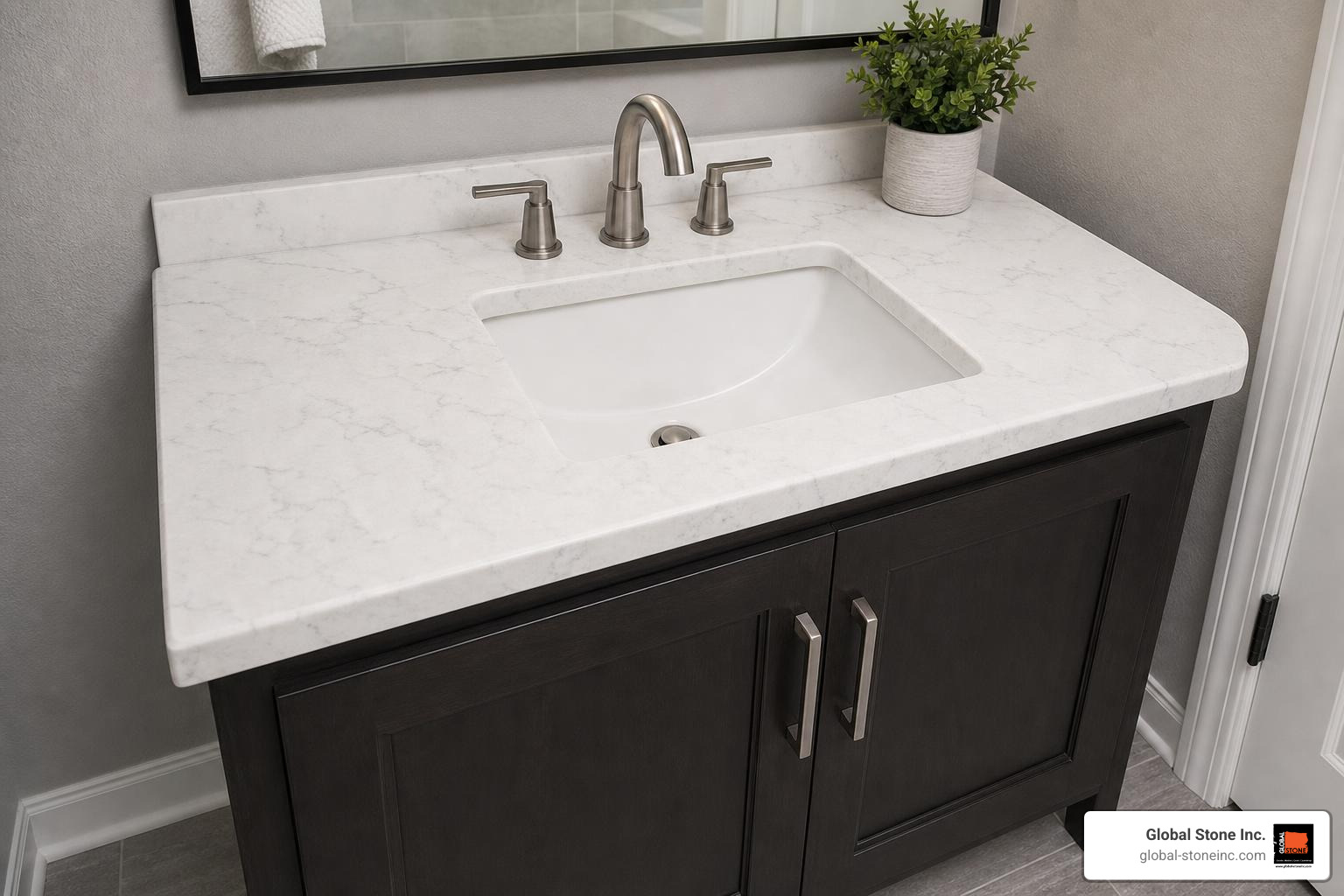
The Most Important Facts About a 37 x 22 Bathroom Vanity Top
Choosing the right 37 x 22 bathroom vanity top is one of the most impactful decisions in any bathroom remodel. Here’s what you need to know at a glance:
| Feature | Details |
|---|---|
| Fits | Standard 36-inch vanity cabinets |
| Overhang | ~1 inch on each side, ~1 inch at front |
| Common materials | Quartz, granite, marble, quartzite, cultured marble |
| Typical price range | $139 (cultured marble) to $1,400+ (premium quartz/stone) |
| Sink styles | Undermount rectangular, undermount oval, integrated recessed bowl |
| Faucet configurations | Single-hole, 4-inch centerset, 8-inch widespread |
| Typical weight | 28–80 lbs depending on material |
| Installation | Two-person lift recommended; professional install advised for natural stone |
The 37 x 22 size is the most widely used single-sink vanity top dimension in residential bathrooms — and for good reason. It sits flush and proportional on a standard 36-inch cabinet, leaves enough room for a comfortable sink, and works with nearly every faucet style on the market.
Whether you’re replacing a worn cultured marble top or upgrading to a custom-cut granite or quartz slab, this guide covers everything you need to make a confident decision — from material comparisons and pricing to sink styles, finishes, and installation tips.
I’m Greg Zamarski, and with over 20 years of experience fabricating and installing custom stone countertops — including countless 37 x 22 bathroom vanity tops — at Global Stone Inc. in the Chicago area, I’ve seen what makes the difference between a vanity top that lasts a lifetime and one that needs replacing in a few years. Let’s get into everything you need to know before you buy.
Terms related to 37 x 22 bathroom vanity top:
Why a 37 x 22 Bathroom Vanity Top Fits Most 36-Inch Vanities
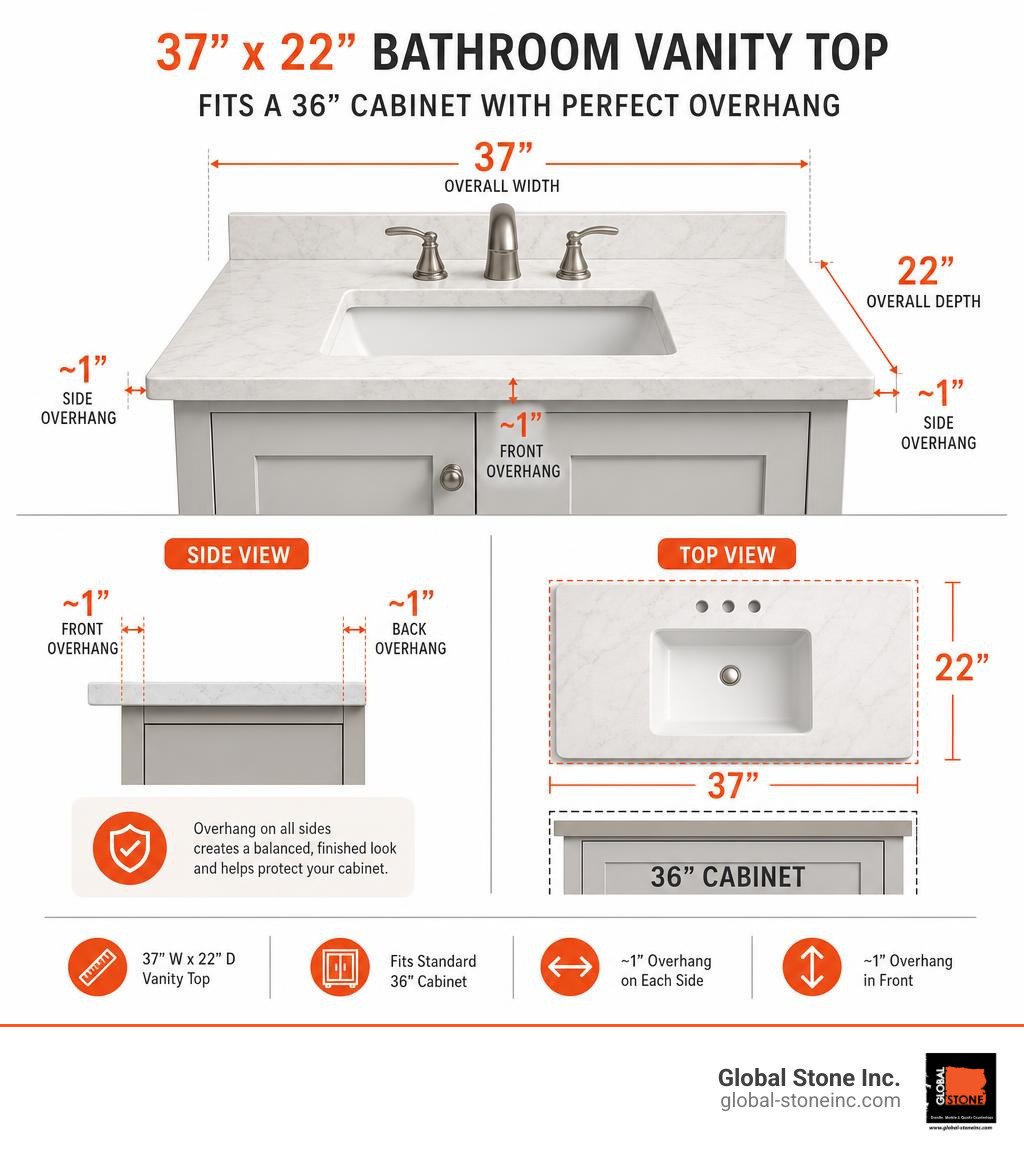
A 37-inch by 22-inch top is designed around the standard 36-inch bathroom vanity cabinet. Most 36-inch vanity bases are about 36 inches wide and 21 inches deep. The extra width and depth give the top a small overhang, which protects the cabinet, improves the look, and makes the finished vanity feel intentional instead of squeezed in.
Think of the vanity cabinet as the cake and the countertop as the frosting. You want just enough frosting to cover the edges. Too little looks unfinished. Too much becomes messy. The 37 x 22 size is the sweet spot.
This size is especially common for:
- Hall bathrooms
- Guest bathrooms
- Primary bathroom single vanities
- Powder rooms with extra wall space
- Replacement projects where the cabinet is staying in place
For custom stone fabrication, the 37 x 22 footprint gives us enough room to plan a sink cutout, faucet holes, backsplash, side splash, and edge detail without crowding the surface.
How the 37-Inch Width Works
A 37-inch top usually gives a 36-inch vanity cabinet about 1/2 inch of overhang on each side if the cabinet is centered. In many bathrooms, one side may sit against a wall, which changes how that overhang is handled.
Before ordering, check:
- Is the cabinet exactly 36 inches wide?
- Is one side against a wall?
- Are both side walls square?
- Will a side splash be needed?
- Is there enough clearance for nearby trim, doors, or drawers?
For a freestanding cabinet, centered overhang is usually best. For a cabinet against a side wall, the top may need to be templated so the exposed side has the proper overhang while the wall side fits cleanly.
This is one reason custom measurement matters. A “standard” 37-inch top can work beautifully, but bathrooms are not always standard. Walls bow. Corners lean. Cabinets sit slightly out of square.
Why 22 Inches Is the Standard Depth
Most standard bathroom vanity cabinets are about 21 inches deep. A 22-inch top creates a front overhang of about 1 inch. That front overhang helps protect cabinet doors and drawers from water drips and daily use.
The 22-inch depth also allows room for:
- A comfortable sink bowl
- Faucet placement behind the sink
- Drain and plumbing alignment
- A backsplash against the wall
- Drawer clearance inside the cabinet
If the vanity top is too shallow, the faucet and sink can feel cramped. If it is too deep, it may interfere with bathroom traffic or door swings. The 22-inch depth balances function and space.
Installation Checks Before You Buy
Before buying or fabricating a 37 x 22 bathroom vanity top, inspect the installation area. It can save a lot of frustration later.
Check these items first:
- The cabinet is level from side to side and front to back.
- The cabinet is securely fastened to the wall.
- The top of the cabinet is flat and free of high spots.
- Walls behind and beside the vanity are reasonably square.
- The drain location lines up with the new sink.
- Faucet holes match your faucet style.
- The backsplash has enough wall clearance.
- The top can physically be carried into the bathroom.
- There is room for two people to lift and set the top safely.
Most stone tops should be set with silicone adhesive, not construction adhesive. Silicone holds well but allows a future professional to remove the top if needed without destroying the cabinet.
For more help with a secure fit, see our guide on how to secure your bathroom vanity top or our overview of bathroom countertop installation.
Best Stone Materials for a 37 x 22 Bathroom Vanity Top
The most popular materials for this size are quartz, granite, marble, quartzite, engineered stone, and cultured marble. Cultured marble is often the lowest-cost ready-made option. Natural stone and engineered quartz usually offer a more premium look, better long-term value, and more customization.

| Material | Durability | Maintenance | Appearance | Typical 2026 Price Range |
|---|---|---|---|---|
| Cultured marble | Moderate | Easy, but can scratch or yellow over time | Smooth, molded, often solid white or faux marble | About $139 to $399 |
| Quartz | High | Very low; no sealing | Consistent patterns, modern colors | Often $389 to $1,400+ depending on product and fabrication |
| Granite | High | Periodic sealing recommended | Natural movement and mineral variation | Varies by stone, edge, sink, and installation |
| Marble | Moderate to high | Needs sealing and pH-neutral cleaning | Classic veining and luxury look | Often mid to premium range |
| Quartzite | Very high | Sealing recommended | Dramatic natural veining, premium look | Usually premium range |
Quartz and Engineered Quartz: Durable, Non-Porous, and Modern
Quartz is one of the easiest bathroom vanity materials to live with. It is engineered from natural quartz minerals, resins, and pigments. Because it is non-porous, it resists staining better than many natural stones and does not require sealing.
Quartz is a strong choice if you want:
- Low maintenance
- Consistent color
- White, gray, beige, or marble-look patterns
- A modern bathroom style
- Good resistance to moisture and everyday staining
- A custom undermount sink cutout
In a bathroom, quartz handles toothpaste, soap, cosmetics, and splashes well. It still should not be attacked with harsh chemicals or abrasive pads, but daily cleaning is simple: mild soap, water, and a soft cloth.
Many pre-made quartz and engineered stone tops in this size are sold with undermount bowls and faucet holes already cut. For custom work, we can place the sink and faucet exactly where they make sense for your cabinet and plumbing.
Granite: Natural Stone Strength with Unique Movement
Granite is a natural stone known for strength, heat resistance, and one-of-a-kind mineral patterns. No two slabs are exactly alike. That is part of the charm.
Granite works well for homeowners who want:
- Natural variation
- Strong scratch resistance
- Long-term durability
- A polished or honed finish
- Light, dark, or dramatic stone movement
- A vanity top that does not look mass-produced
Granite should be sealed periodically, depending on the stone and sealer used. In a bathroom, sealing helps protect against water, cosmetics, hair products, and hard-water residue. Granite is generally less sensitive than marble, making it a practical natural stone choice for busy bathrooms.
For a custom 37 x 22 bathroom vanity top, granite gives you flexibility with sink shape, faucet drilling, edge profile, and backsplash details.
Marble: Classic Luxury with Natural Veining
Marble has a timeless look that is hard to imitate. Carrara-style veining, soft white backgrounds, and natural movement can make a small vanity feel elegant and high-end.
Marble is best for homeowners who love the look and understand the care. It is more porous and more chemically sensitive than quartz or granite. Acidic products can etch the surface, which means they can dull the finish. Common bathroom items like some cleaners, perfumes, and even certain toothpaste formulas can leave marks if ignored.
Marble care basics include:
- Seal the stone regularly.
- Use pH-neutral cleaners.
- Wipe spills quickly.
- Avoid abrasive pads.
- Expect natural patina over time.
A polished marble vanity top looks bright and refined. A honed marble top has a softer, more relaxed appearance and may hide small etches better, though it can show oils or residue differently.
Quartzite: Premium Natural Stone for Distinctive Bathrooms
Quartzite is a natural stone that often resembles marble but is generally harder and more resistant to wear. It can feature dramatic veining, layered movement, and premium color variation.
Quartzite is a good fit when you want:
- Natural stone character
- A high-end bathroom design
- Better hardness than marble
- Dramatic veining
- A polished or honed finish
- Custom fabrication
Like granite and marble, quartzite should be sealed. Properly sealed quartzite can perform very well in bathrooms, but it is still natural stone. That means it benefits from gentle cleaning and routine care.
For homeowners in Chicago, Naperville, and Elk Grove Village who want a vanity top that feels special without using a common off-the-shelf look, quartzite is one of our favorite premium options.
Sink, Faucet, Finish, and Edge Options to Compare
The material is only one part of the decision. Sink style, faucet drilling, finish, edge profile, and backsplash details all affect how your vanity looks and functions every day.
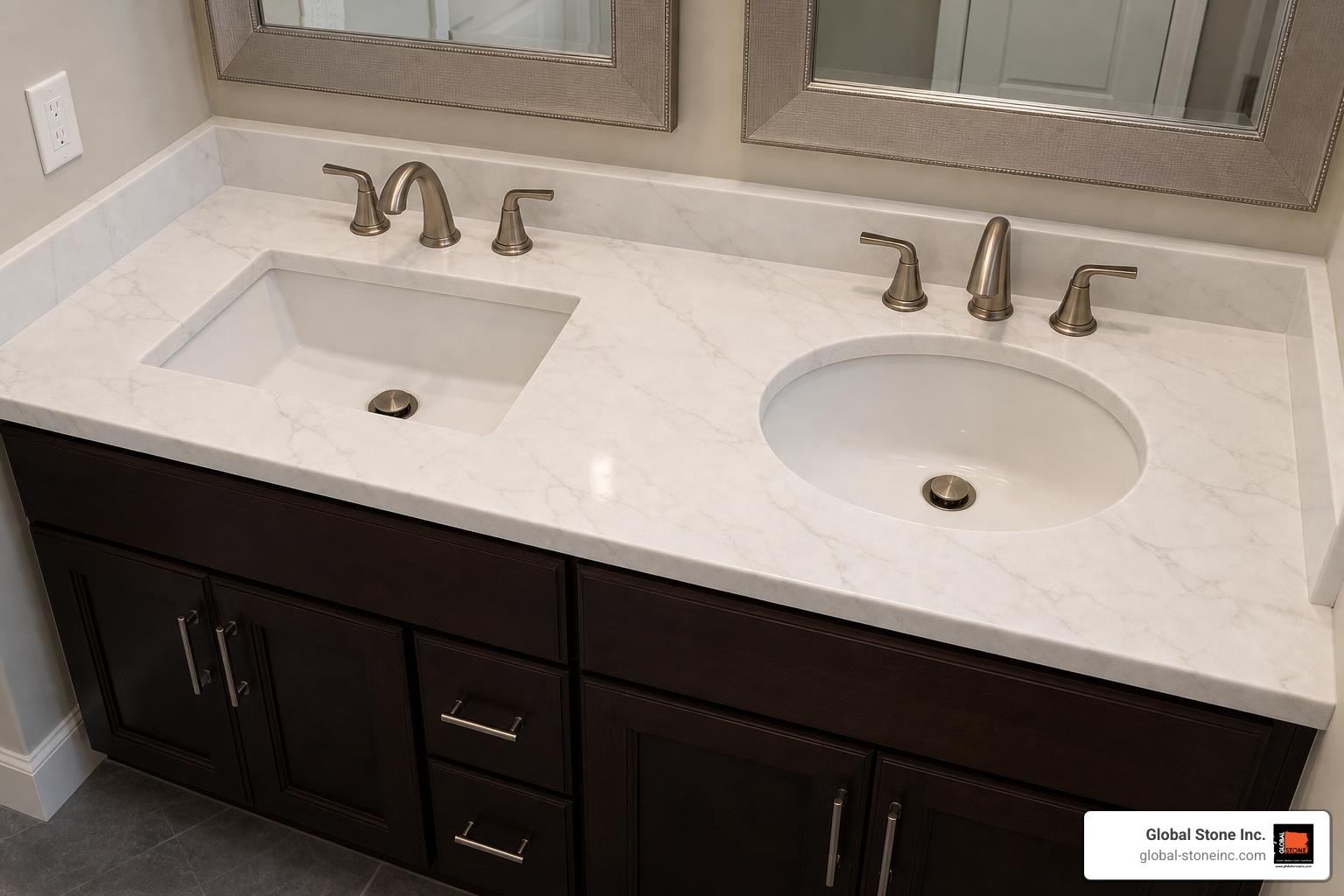
Undermount Bowls for a 37 x 22 Bathroom Vanity Top
Undermount sinks are very popular for stone vanity tops. The sink is mounted below the countertop, leaving a clean stone edge around the bowl. This creates a smooth, modern look and makes cleaning easier because there is no raised sink rim catching grime.
Common undermount bowl shapes include:
- Rectangular bowls
- Oval bowls
- Soft-rectangle bowls
Rectangular undermount sinks are popular in modern bathrooms because they look crisp and architectural. Oval bowls feel softer and more traditional. Both work well in a 37 x 22 top as long as the bowl size fits the cabinet and leaves room for faucet holes.
With custom fabrication, we plan the sink cutout carefully so the bowl is centered, the faucet has clearance, and the drain lines up with the cabinet opening. If you are updating the sink as part of the project, our guide to new bathroom sink installation in Chicago explains what to consider.
Common Faucet Configurations
Most 37 x 22 vanity tops use one of three faucet layouts:
| Faucet Type | Hole Layout | Best For |
|---|---|---|
| Single-hole | One centered hole | Modern faucets, compact designs |
| 4-inch centerset | Three holes close together | Traditional compact faucets |
| 8-inch widespread | Three holes spread wider apart | Higher-end, classic, or transitional faucets |
A pre-drilled top must match the faucet you buy. If you purchase a top drilled for an 8-inch widespread faucet, a 4-inch centerset faucet will not fit correctly. Custom drilling solves this problem because the holes are made for the exact faucet.
Also check:
- Drain opening size
- Overflow compatibility
- Faucet reach
- Handle clearance
- Backsplash clearance
- Distance between faucet and sink bowl
Faucet placement sounds simple until a handle hits the backsplash. Then it becomes a tiny bathroom tragedy. We prefer to avoid tiny bathroom tragedies.
Finish Choices: Polished, Honed, and Matte
The finish changes both the look and the maintenance of the vanity top.
Polished finish
A polished finish is glossy and reflective. It makes colors look richer and can help a small bathroom feel brighter. Polished quartz, granite, marble, and quartzite are all common. Polished surfaces are often a little easier to wipe clean because they are smoother.
Honed finish
A honed finish is smooth but not shiny. It creates a softer, more natural look. Honed marble and honed quartzite are especially beautiful, but they may show water marks, oils, or residue more easily than polished surfaces.
Matte finish
Matte finishes are popular in modern bathrooms. They reduce glare and create a calm, understated look. However, matte surfaces can sometimes show fingerprints, soap residue, or streaks more than polished tops, depending on the material and color.
If style is your main focus, our article on choosing bathroom countertops that radiate style can help you compare colors, finishes, and design direction.
Edge Profiles and Backsplash Details
For a 37 x 22 vanity top, simple edge profiles usually work best. The top is not huge, so the edge should look clean without overpowering the cabinet.
Popular edge profiles include:
- Eased edge
- Squared edge
- Small bevel edge
- Mitered edge for a thicker look
A 1-inch to 1.25-inch edge is common on many vanity tops. Thicker mitered edges can look more substantial, especially on floating or furniture-style vanities.
Backsplashes are usually 3.5 to 4 inches high. A backsplash protects the wall from water and makes cleaning easier. A side splash may be needed when the vanity touches a side wall. For custom stone, we can fabricate the backsplash and side splash from matching material for a cleaner, more finished result.
Price Ranges and Buying Considerations in 2026
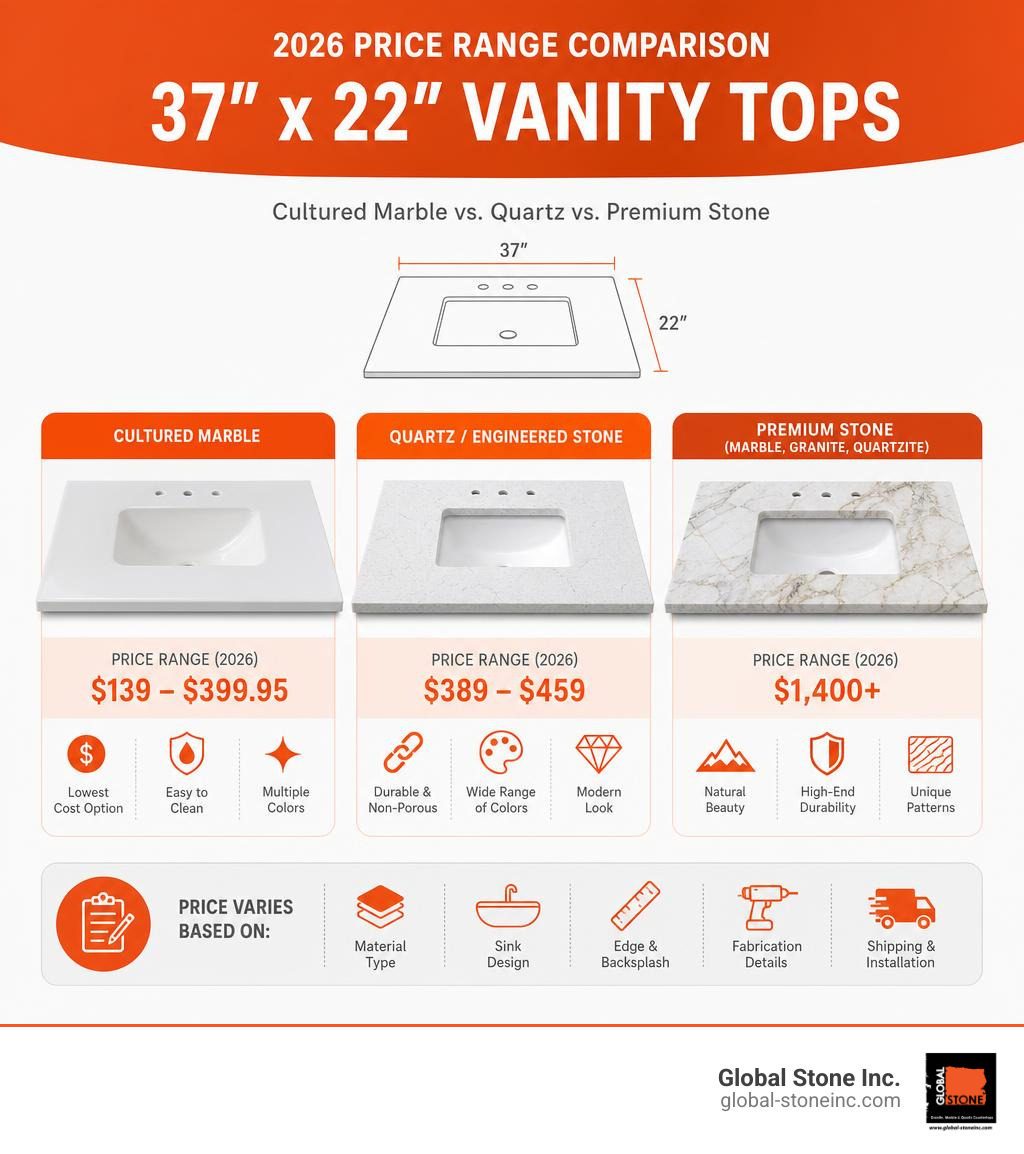
As of May 2026, prices for a 37 x 22 vanity top vary widely by material, sink type, fabrication, and installation. Ready-made cultured marble tops are usually the lowest-cost option. Premium quartz, marble, granite, and quartzite cost more, but offer better customization and a more upscale finish.
Market examples show cultured marble tops in this size commonly ranging from about $139 to $399.95. Quartz and engineered stone promotional prices often fall around $389 to $459 for select pre-made configurations, while premium quartz products can exceed $1,400 depending on brand, design, included sink, and shipping weight. Use these figures for broad budgeting, not as a substitute for a quote based on your space, material, sink, faucet layout, and installation needs.
For layout context, the National Kitchen and Bath Association is also a helpful resource for homeowners thinking through bathroom planning and clearances before ordering a vanity top.
Typical Cost Factors for a 37 x 22 Vanity Top
The final cost depends on more than the rectangle of stone. Important price factors include:
- Material type and slab color
- Stone thickness
- Sink cutout and sink type
- Faucet drilling
- Edge profile
- Backsplash and side splash
- Delivery and installation labor
- Plumbing coordination if needed
Quartz and granite are often strong value choices because they balance durability, appearance, and maintenance. Marble and quartzite may cost more but can create a more distinctive look. Cultured marble is budget-friendly but offers less customization.
What Is Usually Included in a Custom Vanity Top Project
A custom vanity top project typically includes:
- Material selection
- Measurement or templating
- Sink cutout and faucet hole planning
- Edge profile selection
- Backsplash or side splash planning
- Fabrication, delivery, and installation
- Warranty details
At Global Stone Inc., our in-house designers, fabricators, and installers help keep the project coordinated from selection through installation.
Weight, Handling, and Scheduling
A 37 x 22 vanity top may be small compared with a kitchen island, but stone is still heavy. Many tops in this size weigh about 53 to 80 pounds, while some premium assembled tops can weigh more.
Because of the weight, we recommend:
- Two-person handling
- Careful transport and protecting corners
- Inspecting the top before installation
- Confirming the cabinet can support the load
- Scheduling installation after the cabinet is fully secured
Do not try to carry a stone vanity top alone just because it looks manageable. Stone has a way of reminding people that confidence is not the same thing as grip strength.
When Custom Fabrication Is Worth It
Custom fabrication is worth it when you want a better fit, better material, or a more specific design than a ready-made top can provide.
Choose custom fabrication if:
- Your walls are not square.
- You need an offset sink.
- Your cabinet is nonstandard.
- You want a specific granite, marble, quartz, or quartzite slab.
- You need a matching backsplash or side splash.
- You want a premium edge profile.
- Your faucet placement must be exact.
- You want professional installation and warranty support.
Custom work is especially valuable in older Chicago-area homes, where bathroom walls and floors may have settled over time. A ready-made top assumes the room is perfect. Custom templating assumes the room is real.
How to Install and Maintain a 37 x 22 Bathroom Vanity Top
Installation and maintenance determine how well your vanity top performs over time. A beautiful slab can still fail if it is installed on an uneven cabinet or cleaned with the wrong product.
Installation Steps Homeowners Should Understand
Here is the general installation flow:
- Remove the old vanity top, sink, and faucet as needed.
- Inspect the cabinet for level, strength, and damage.
- Dry fit the new top before applying adhesive.
- Confirm the sink, drain, and faucet alignment.
- Apply silicone adhesive to the cabinet rails.
- Set the top carefully with two people.
- Attach backsplash and side splash with silicone.
- Caulk seams where stone meets wall.
- Allow silicone to cure as directed.
- Connect faucet, drain, and plumbing.
Common installation mistakes to avoid:
- Installing on an unlevel cabinet
- Forgetting to dry fit first
- Using too much adhesive
- Using construction adhesive instead of silicone
- Ignoring wall gaps
- Choosing the wrong faucet hole layout
- Setting the top before checking drain alignment
- Lifting the top by the sink bowl
- Skipping backsplash caulk
- Connecting plumbing before the top is secure
If plumbing needs to be disconnected or moved, coordinate that work before installation day.
Maintenance by Material
Different materials need different care.
Quartz
Clean with mild soap and water. Avoid harsh chemicals, bleach, abrasive pads, and high heat. Quartz does not need sealing.
Granite
Wipe daily with a soft cloth and pH-neutral cleaner. Seal periodically depending on the stone and sealer. Avoid acidic or abrasive cleaners.
Marble
Use pH-neutral cleaner only. Wipe spills quickly. Seal regularly. Avoid acidic products, vinegar, lemon-based cleaners, abrasive powders, and harsh bathroom chemicals.
Quartzite
Clean like natural stone. Use pH-neutral soap, avoid harsh chemicals, and reseal as recommended.
Cultured marble
Use non-abrasive cleaners. Avoid scouring pads and harsh chemicals. The gel coat can scratch or dull if treated aggressively.
Preventing Damage Over Time
Bathroom vanity tops deal with more abuse than people realize. Water, cosmetics, toothpaste, razors, curling irons, hair dye, and hard-water minerals all show up for the party.
Protect your vanity top by:
- Wiping standing water daily
- Using trays under cosmetics and soaps
- Avoiding hair dye spills
- Keeping hot tools on a heat-safe mat
- Cleaning toothpaste residue promptly
- Maintaining bathroom ventilation
- Resealing natural stone when needed
- Checking caulk lines once or twice a year
- Avoiding abrasive pads
- Using pH-neutral cleaners
Good maintenance is not complicated. It is mostly about being gentle, consistent, and not letting mystery liquids sit overnight.
Frequently Asked Questions About 37 x 22 Bathroom Vanity Tops
Does a 37 x 22 bathroom vanity top fit a 36-inch cabinet?
Yes, in most cases. A 37 x 22 bathroom vanity top is designed to fit a standard 36-inch vanity cabinet with a small overhang. The 37-inch width usually gives about 1/2 inch of overhang on each side, while the 22-inch depth works with a standard 21-inch-deep cabinet.
Always check wall clearance, cabinet level, backsplash fit, and side splash needs before ordering.
Is an undermount sink a good choice for a 37 x 22 bathroom vanity top?
Yes. An undermount sink is one of the best choices for a stone vanity top. It creates a clean look, makes the countertop easier to wipe, and works well with quartz, granite, marble, and quartzite.
The main requirement is proper cutout planning. The bowl must fit inside the cabinet, align with the drain, and leave enough room for the faucet.
How heavy is a 37 x 22 bathroom vanity top?
Weight depends on material, thickness, sink type, and backsplash. Many 37 x 22 cultured marble, marble, granite, and engineered stone tops fall somewhere between about 28 and 80 pounds, though some premium assembled tops can weigh more.
Because stone is awkward to lift and easy to damage at the corners, two-person handling is strongly recommended. Professional installation is best for natural stone and custom quartz tops.
Should I choose quartz, granite, marble, or quartzite for a bathroom vanity top?
Choose based on your priorities:
- Choose quartz if you want low maintenance and consistent color.
- Choose granite if you want natural durability and unique movement.
- Choose marble if you want classic luxury and do not mind extra care.
- Choose quartzite if you want premium natural stone with dramatic character.
- Choose cultured marble if budget is the top priority.
For most busy bathrooms, quartz and granite offer the best balance of durability, style, and maintenance. For a statement bathroom, marble or quartzite can be stunning.
Conclusion
A 37 x 22 vanity top is popular because it solves a common bathroom problem beautifully: it fits a standard 36-inch cabinet, leaves useful overhang, supports a comfortable sink, and gives homeowners plenty of material and style options.
The best choice depends on how you use the bathroom, how much maintenance you want, and what look you love. Quartz is easy and modern. Granite is durable and natural. Marble is elegant and classic. Quartzite is premium and distinctive. Cultured marble is affordable and simple.
At Global Stone Inc., we fabricate and install custom granite, marble, quartz, and other stone countertops for homeowners throughout the Chicago area, including Elk Grove Village, Naperville, and Chicago. With in-house designers, fabricators, installers, more than 20 years of experience, and a lifetime warranty, we help make sure your vanity top fits right, looks right, and lasts.
Ready to compare materials for your bathroom? Explore custom countertop options.