
Butcher Block Beauty: A Guide to 36 x 96 Countertops
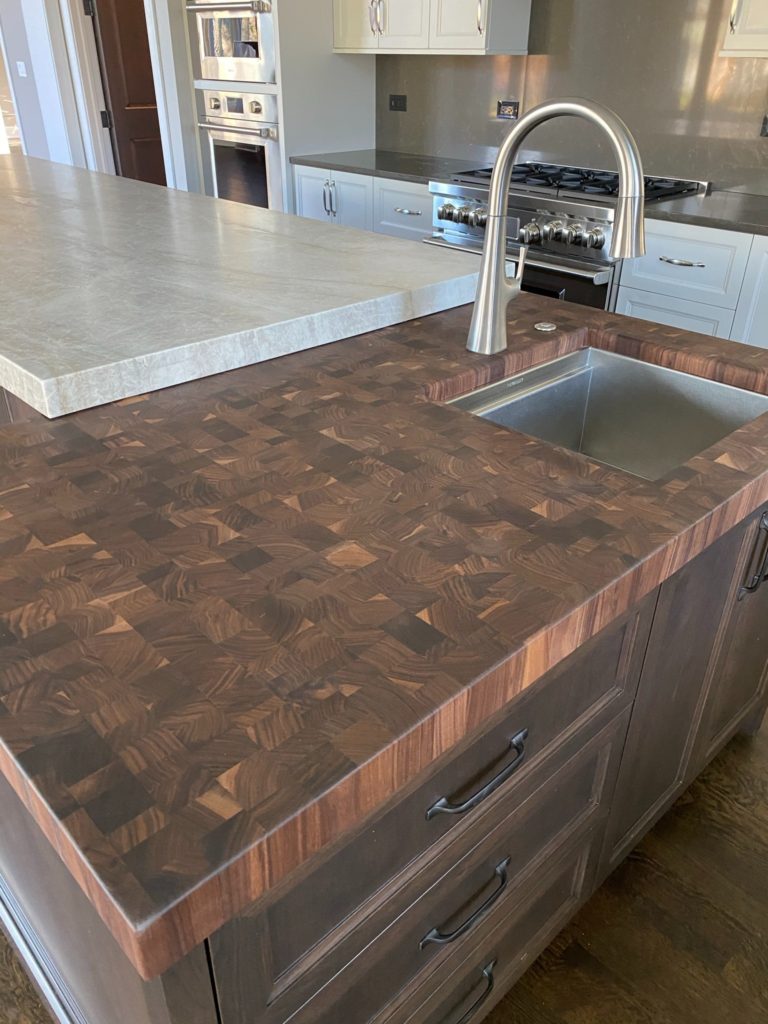
Choosing a 36 x 96 Countertop for Your Island
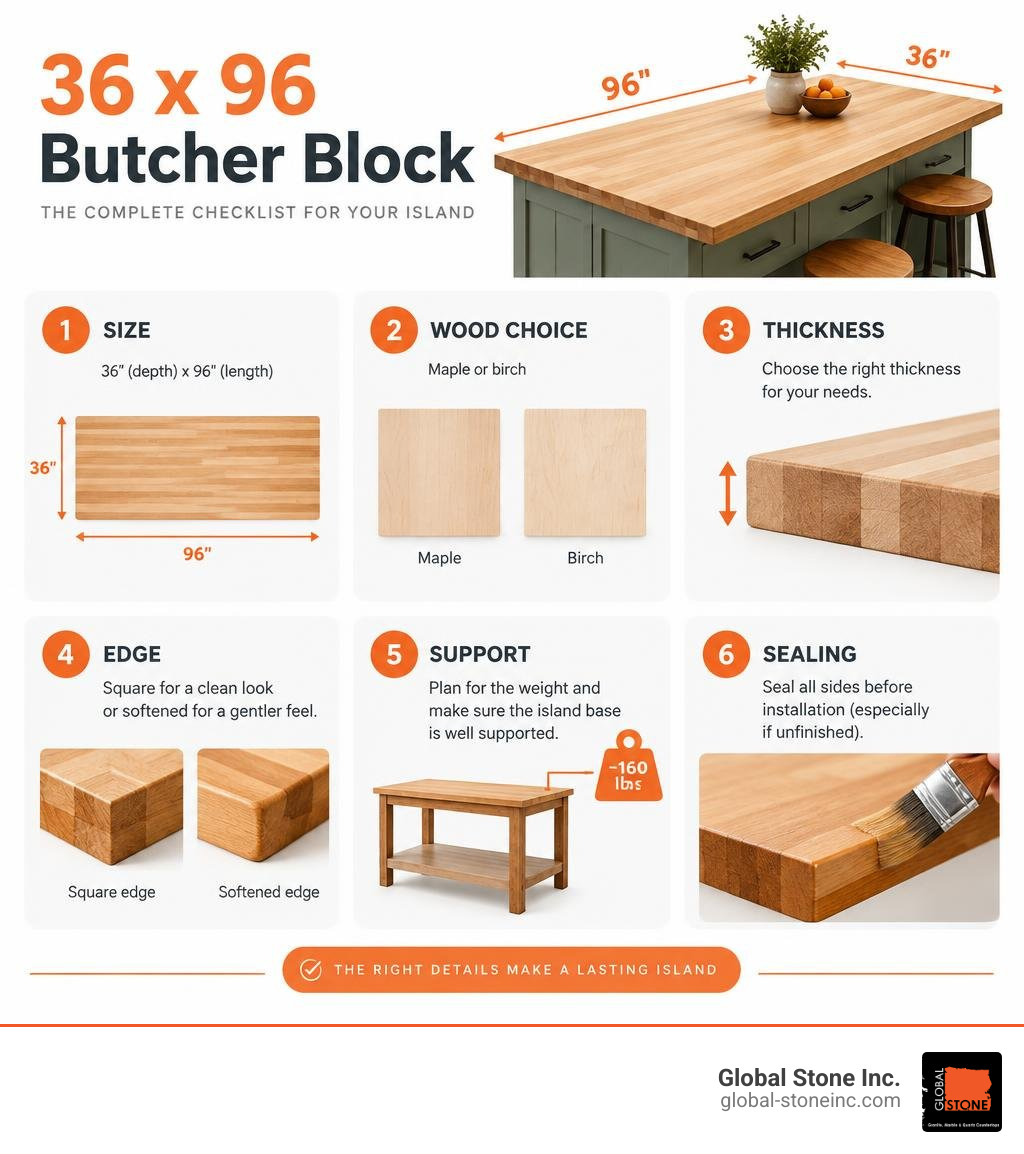
A 36 x 96 countertop gives an island eight feet of length and three feet of depth. For butcher block, start by comparing maple and birch, then check the slab’s thickness, finish, and actual dimensions before you buy. Plan for a heavy top: large wood slabs can weigh around 160 pounds, so the island base needs sound support. An unfinished top also needs sealing on all sides before installation.
The right choice depends on how you use the island. A square edge gives it a clean, simple look; a softened edge feels less sharp where people sit or pass by. Leave room in your plan for any seating overhang, and confirm how it will be supported.
I’m Greg Zamarski with Global Stone Inc., which has served Chicago-area countertop customers for more than 20 years. My work in countertop planning and installation informs the sizing and support questions we’ll cover for a 36 x 96 countertop.
Discover more about 36 x 96 countertop:
Planning Your Kitchen Island: Selecting the Best 36 x 96 Countertop

A 36 x 96 layout creates a generous 24 square feet of uninterrupted workspace. In kitchen design, this standard 8-foot span serves as an ideal anchor for open-concept layouts across homes in Chicago, Naperville, and Elk Grove Village. It provides enough surface area to divide your island into dedicated functional zones: a prep station on one end, a casual serving hub in the middle, and comfortable bar seating along the perimeter.
When mapping out your kitchen, measuring island dimensions accurately is the critical first step. A standard 24-inch-deep base cabinet run topped with a 36-inch-wide slab leaves you with a 12-inch overhang—the sweet spot for knee clearance when tucking in barstools.
Planning also requires budgeting for material costs and fabrication needs. According to our 2026 countertop pricing trends, large-format butcher block slabs vary widely depending on thickness, species, and edge treatments. Hardwood tops range from around $500 for entry-level utility panels to well over $1,800 for premium, extra-thick maple slabs.
Popular Hardwood Options for a 36 x 96 Countertop
Selecting the right timber species determines how your surface handles daily food prep, ambient moisture, and kitchen traffic.
- Northern Hard Rock Maple: The undisputed industry gold standard for culinary surfaces. Hard maple features a dense, closed grain structure that naturally resists food stains and bacterial penetration. It carries a Janka hardness rating of 1,450 lbf, making it resilient against heavy kitchen prep.
- Baltic Birch: A practical, budget-friendly hardwood offering a warm, light golden tone. While slightly softer than maple (around 1,260 Janka), furniture-grade Nordic birch provides structural stability at a lower price point.
- Northern Red Oak: Celebrated for its pronounced, traditional grain patterns. Oak brings a classic rustic charm, but its open grain pores require diligent sealing to prevent moisture ingress.
| Wood Species | Janka Hardness | Stain & Moisture Resistance | Best Application | Relative Cost |
|---|---|---|---|---|
| Northern Hard Maple | 1,450 lbf | Excellent (Closed Grain) | Heavy food prep, direct chopping | $$$$ |
| Baltic Birch | 1,260 lbf | Very Good | Dining islands, general prep | $$ |
| Red Oak | 1,290 lbf | Moderate (Open Grain) | Accent islands, dry dining tables | $$$ |
Grain Construction Styles for Large Spans
Large wood tops expand and contract across their width as seasons shift. How the individual timber strips (lamellas) are glued together dictates the slab’s long-term stability.
- Edge Grain: Formed by laying long wood rails parallel on their sides. This aligns the densest surface fibers upward, creating a clean linear look that stands up well to heavy chopping.
- Blended Edge Grain: Uses finger-jointed timber rails of varying lengths joined end-to-end and side-to-side. This layout distributes natural timber tension evenly across an 8-foot run, significantly reducing the risk of cupping or warping.
- End Grain: Assembles short vertical wood blocks with the growth rings facing upward. While it creates a self-healing butcher block surface that is gentle on culinary knives, crafting an end-grain slab in a full 36 x 96 dimension is exceptionally heavy and costly.
- Face Grain (Wide Plank): Lays wide boards flat to showcase natural cathedral wood patterns. While beautiful, face-grain tops are more prone to seasonal movement and surface marks over wide 36-inch spans.
Installation Logistics, Weight Support, and Edge Profiles
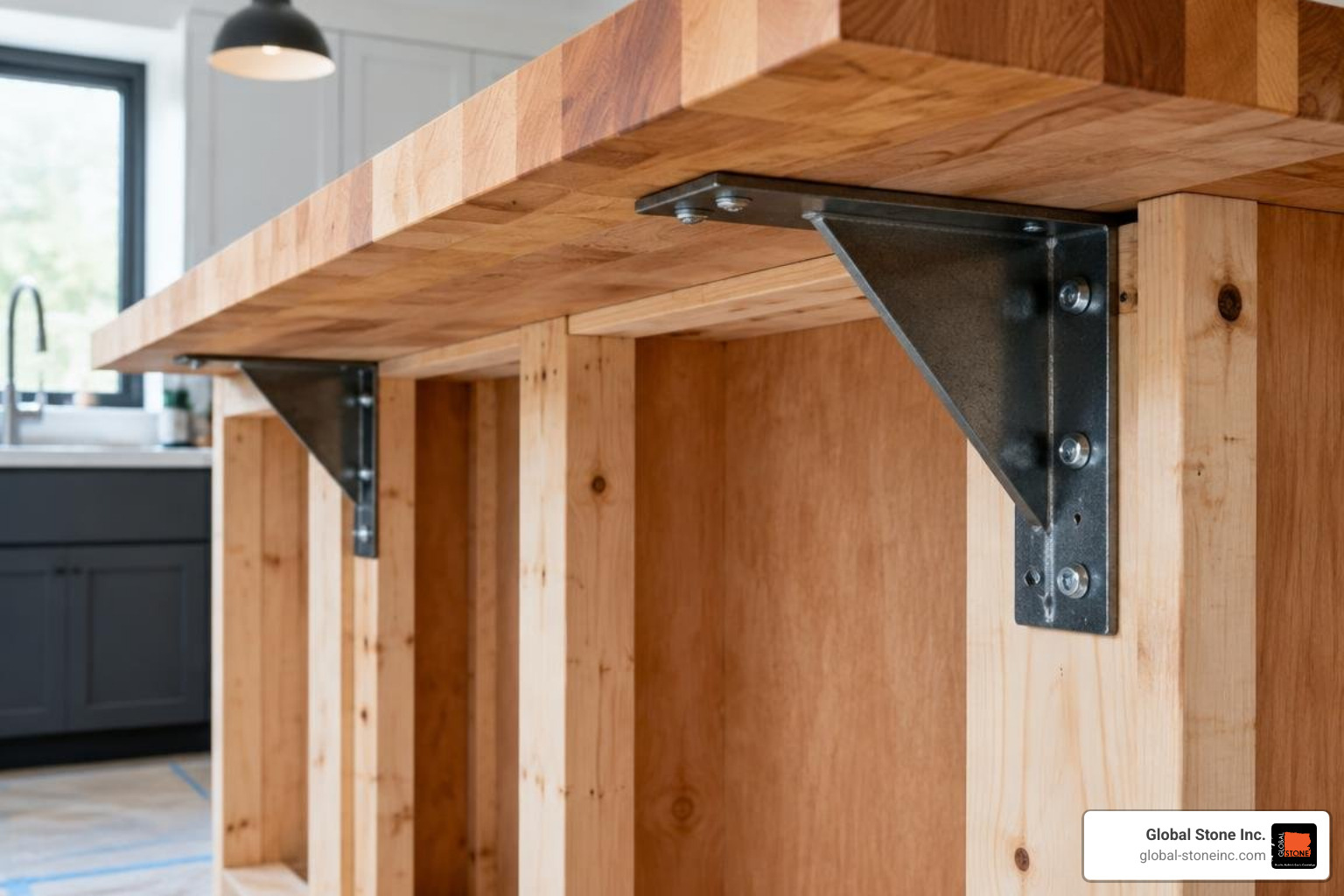
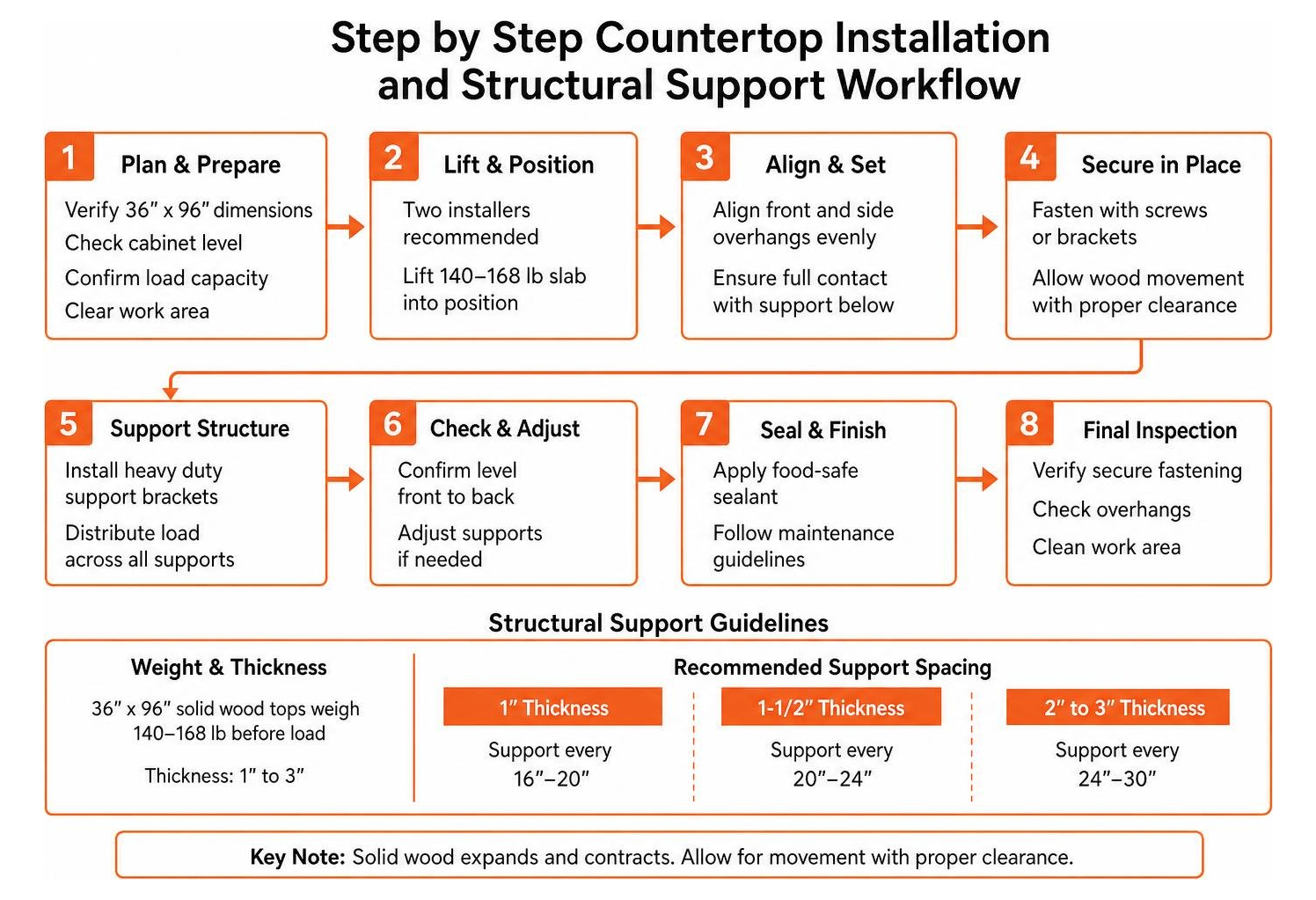
Lifting and securing a large slab requires preparation. Solid wood tops of this size impose a dead load between 140 and 168 pounds before factoring in small appliances, food, or resting elbows.
When securing these surfaces, our team at Global Stone Inc. follows strict structural guidelines. While wood behaves differently than stone, adhering to professional standards—such as the load distribution principles outlined by the Natural Stone Institute – Installation Standards—protects both your cabinetry and your countertop investment. For comprehensive project support, consider working with professional countertop installation services to guarantee proper structural anchoring.
Thickness and Support Needs for a 36 x 96 Countertop
Standard slabs range in thickness from 1 inch to 3 inches:
- 1″ to 1-1/2″ Thickness: Common for standard residential islands and table tops. Slabs weighing around 140 to 160 pounds are manageable for two installers.
- 1-3/4″ Thickness: The commercial standard for heavy-duty food stations and butcher block island hubs, weighing roughly 168 pounds.
- 2″ to 3″ Thickness: Premium architectural slabs that deliver bold, substantial visual presence.
Any seating overhang exceeding 10 to 12 inches on a wood top requires structural support. Use heavy-duty steel countertop brackets or decorative timber corbels spaced every 24 inches along the island’s seating wall to prevent sagging and joint failure.
Precision Sizing, Tolerances, and Edge Shaping
Wood is an organic material subject to subtle manufacturing variations. Factory-milled slabs commonly carry an industry-standard tolerance of +/- 1/8 inch in width and length. Always verify both the nominal sizing and the net dimensions before building end-panels or decorative surrounds.
Your edge profile shapes both comfort and style:
- Square Edge: Clean, crisp 90-degree lines that fit contemporary and industrial kitchens.
- Ora or Eased Edge: Slightly rounded corners (1/8-inch radius) that soften the edge to prevent chipping and ease forearm pressure for seated guests.
- Routed Bullnose: A fully rounded edge profile that brings a softer, traditional look to busy family kitchens.
Sealing, Long-Term Care, and Material Alternatives
Unfinished wood reacts quickly to changes in relative humidity. When your slab arrives, apply a protective finish to all six sides—top, bottom, and all four edges—within 48 hours to lock out moisture and prevent uneven expansion.
Penetrating Food-Safe Oils vs. Acrylic Topcoats
Choose your protective coating based on how you plan to use the island:
- Food-Safe Mineral Oil and Beeswax: Best for surfaces intended for direct food prep and cutting. Mineral oil penetrates deep into dry fibers, while beeswax seals the surface pores. This requires regular upkeep: reapply oil once a week for the first month, and monthly thereafter. Minor knife marks can be smoothed out with 220-grit sandpaper before re-oiling.
- Non-Toxic Acrylic or Polyurethane Topcoats: A durable, film-building finish for islands used strictly for dining, entertaining, and homework stations. Acrylic seals the timber completely, eliminating regular oiling routines. However, you cannot chop food directly on an acrylic-sealed surface, as scratches breach the moisture seal.
Comparing Wood Butcher Block to Stone Alternatives
While hardwood delivers warmth and organic texture, it demands consistent maintenance and remains sensitive to standing water, high heat, and blade scores. For many homeowners, pairing a rich wood island with durable stone perimeter tops—or choosing an all-stone island—delivers the ideal balance of beauty and resilience.
Before finalizing your layout, explore a complete residential countertop material comparison. Non-porous premium quartz slab options eliminate the need for ongoing oiling or sealing, resisting spills from red wine, citrus juices, and cooking oils. Integrating low-maintenance stone surfaces remains one of the top countertop design strategies that boost resale value across modern kitchen renovations.
Frequently Asked Questions About Large Island Tops
What is the weight of a standard 36 x 96 butcher block countertop?
A solid northern hard maple slab measuring 96 inches long, 36 inches deep, and 1-3/4 inches thick weighs approximately 168 pounds. A 1-1/2-inch-thick birch or maple panel of the same footprint weighs roughly 140 to 160 pounds. Moving and positioning these slabs safely requires two adults.
Can oversized cutting boards substitute for a 36 x 96 wood countertop?
Yes. If you prefer low-maintenance stone or quartz across your main island, pairing that surface with an oversized prep board—such as a 36 x 24-inch or 30 x 20-inch bamboo cutting board—gives you dedicated chopping space without committing the entire island to regular wood oiling and maintenance.
How soon after delivery should a 36 x 96 wood countertop be sealed?
Seal your slab immediately upon unboxing, ideally within 24 to 48 hours. Raw hardwood readily absorbs and releases airborne moisture. Leaving one side unfinished while exposing the top to room air causes uneven moisture distribution, which can lead to cupping or edge cracking.
Conclusion
A 36 x 96 butcher block island serves as a warm, functional centerpiece for food preparation, casual family meals, and daily gatherings. By choosing the right wood species, edge grain construction, and edge profile, you can create a durable kitchen workspace tailored to your home.
If you are weighing the natural charm of hardwood against the effortless maintenance of engineered quartz, granite, or natural marble, our team is here to help. Backed by our lifetime warranty and more than 20 years of local fabrication experience in Elk Grove Village, Naperville, and Chicago, Global Stone Inc. provides expert guidance from initial design to final installation. Explore our custom kitchen countertop fabrication and installation solutions to find the ideal surface for your dream kitchen.