Stop Settling for High Maintenance and Pick the Ideal Stone Surface
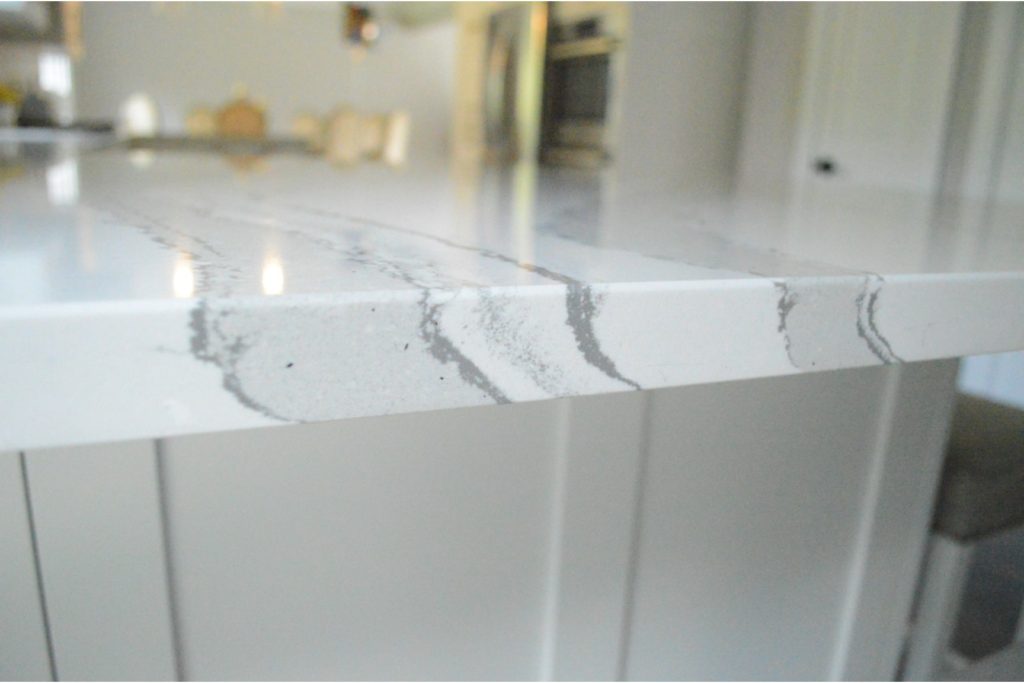
Engineered Stone vs Natural Stone: Which Fits Your Kitchen?
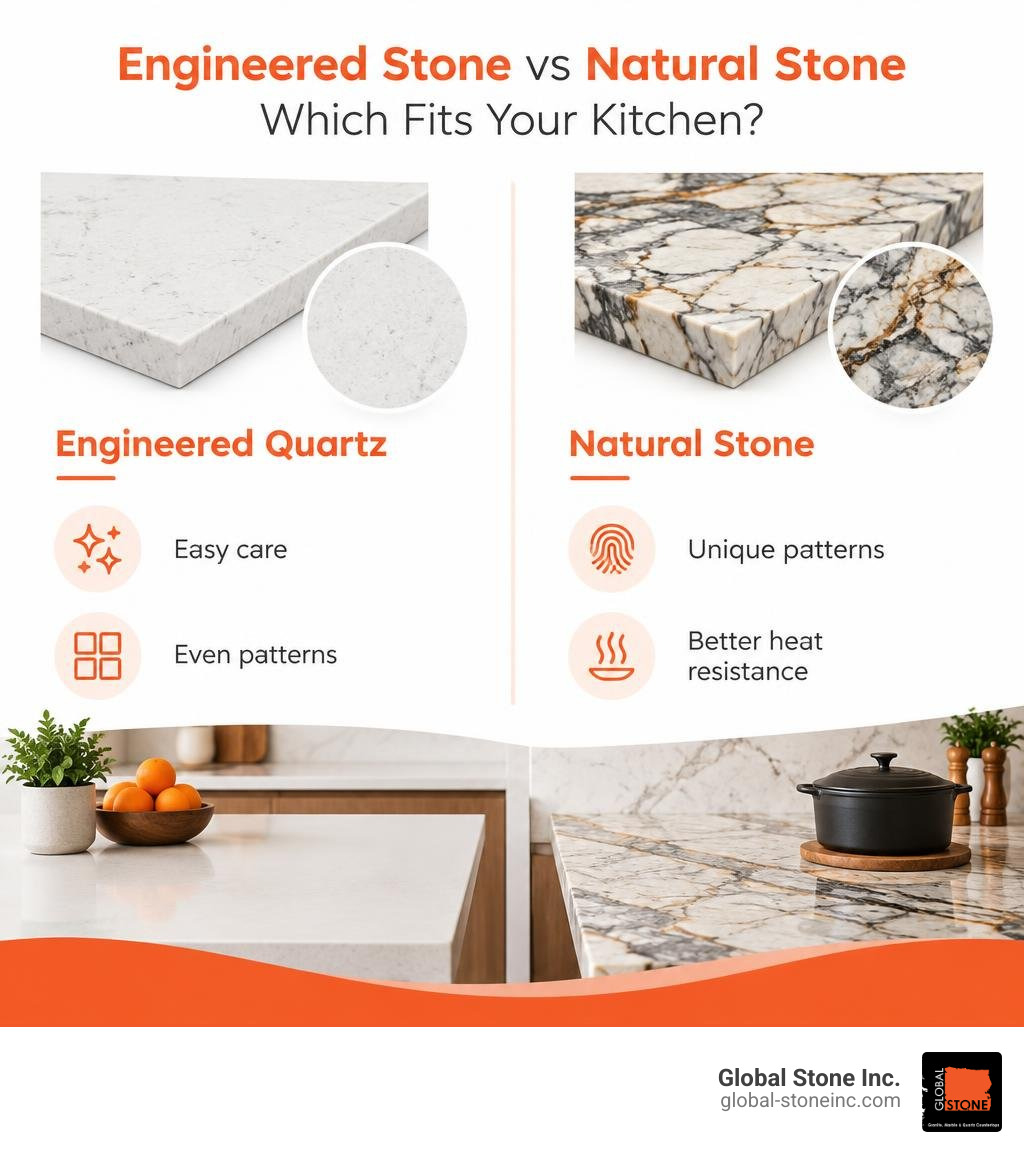
For engineered stone vs natural stone, the choice comes down to how you use your counters. Choose engineered quartz for a consistent look and easy cleanup. Choose natural granite or marble for unique patterns and stronger heat resistance. Quartz does not need sealing, but hot pans can damage its resin. Some natural stones need sealing, and marble can etch when it touches acidic foods.
I’m Greg Zamarski of Global Stone Inc., where our team has fabricated and installed countertops for Chicago-area homeowners since 2004. From our work with quartz, granite, and marble, I’ll compare engineered stone vs natural stone by cost, care, and everyday use.
Engineered Stone vs Natural Stone: Complete Material and Cost Comparison
Understanding surface performance starts at the molecular level. Engineered stone—most commonly known as engineered quartz—is a factory-manufactured composite material. It consists of roughly 90% to 93% ground quartz crystals and crushed minerals bonded together with 7% to 10% polymer resins and color pigments. This engineered blend yields an exceptionally dense slab with a water absorption rate of around 0.24% and a high flexural strength of approximately 30.13 MPa.
In contrast, natural stone represents 100% quarried rock cut straight from the earth without synthetic binders, chemical polymers, or artificial dyes. From crystalline igneous granite to metamorphic marble and quartzite, every slab is a unique piece of geological history millions of years in the making.
When evaluating an engineered stone countertop vs natural slab costs durability and style, installed pricing often overlaps considerably across both categories:
| Material Type | Composition | Average Installed Cost (per sq. ft.) | Expected Lifespan | Typical Porosity |
|---|---|---|---|---|
| Engineered Quartz | 90–93% quartz, 7–10% resin | $50 – $150 | 15 – 50 years | Non-porous (0.24%) |
| Granite | 100% natural igneous rock | $45 – $120 | 50 – 200+ years | Low to moderate (requires sealer) |
| Marble | 100% natural metamorphic rock | $60 – $200+ | 50 – 100+ years | Moderate to high (acid sensitive) |
| Quartzite | 100% natural metamorphic quartz | $70 – $200+ | 50 – 200+ years | Very low to low |
Across the United States, the residential kitchen countertop market remains roughly split 50/50 between quartz and natural stone slabs. While entry-level engineered quartz and standard-tier granite compete at similar pricing thresholds ($50 to $75 per square foot installed), premium natural slabs with rare veining or exotic quarries command higher prices.
Weighing the Pros and Cons: Engineered Stone vs Natural Stone
Deciding between manufactured and quarried materials involves evaluating design consistency against natural depth. When comparing stone countertop options, here is how the core strengths and limitations balance out:
Engineered Stone Pros:
- Zero Sealing Required: The resin matrix seals the surface during manufacturing, preventing moisture absorption and household stains.
- Color Consistency: Engineered slabs offer predictable patterns, making seams across expansive L-shaped counters or multiple slabs simpler to match.
- Structural Uniformity: Void-free composition provides dependable flexural strength without hidden interior fissures.
Engineered Stone Cons:
- Heat Vulnerability: Polymer resins can scorch, warp, or discolor when exposed to high heat above 300°F.
- UV Sensitivity: Prolonged ultraviolet light breaks down polymer bonds, leading to yellowing in outdoor kitchens or sunlit spaces.
- Challenging Repairs: Chips and deep gouges cannot be seamlessly ground down and refinished like natural slabs.
Natural Stone Pros:
- Exceptional Heat Resistance: Igneous and metamorphic stones easily withstand direct pan temperatures up to 900°F.
- Authentic Visual Depth: Naturally formed mineral crystals create unique, light-refracting layers that factory printing cannot duplicate.
- Restoration Longevity: Natural stone can be ground, honed, polished, and resealed repeatedly over centuries of use.
Natural Stone Cons:
- Routine Maintenance: Most natural surfaces require periodic application of penetrating sealers to resist oil and moisture.
- Chemical Susceptibility: Calcite-based stones like marble and limestone etch when exposed to lemon juice, vinegar, or acidic cleaners.
Resale Value and ROI: Engineered Stone vs Natural Stone
Both material families deliver high returns on investment during home remodeling projects. However, the long-term appraisal impact diverges depending on architectural style and property tier.
Insights from our stone countertop comparison guide 2026 show that buyers view both quartz and granite as premium upgrades over laminate or solid surface options. In entry-to-mid-tier single-family homes, quartz often attracts buyers who prefer turnkey, low-maintenance living.
In the luxury real estate sector, authentic quarried materials hold a distinct edge. Sustainable architecture studies indicate that properties featuring authentic, ESG-compliant natural stone interiors appreciate 10% to 12% above market averages. Furthermore, buildings targeting LEED or WELL certifications often secure appraisal premiums of roughly 7%, driven by the chemical-free, natural lifecycle of quarried slabs.
Performance and Maintenance: Durability, Heat, and Outdoor Suitability
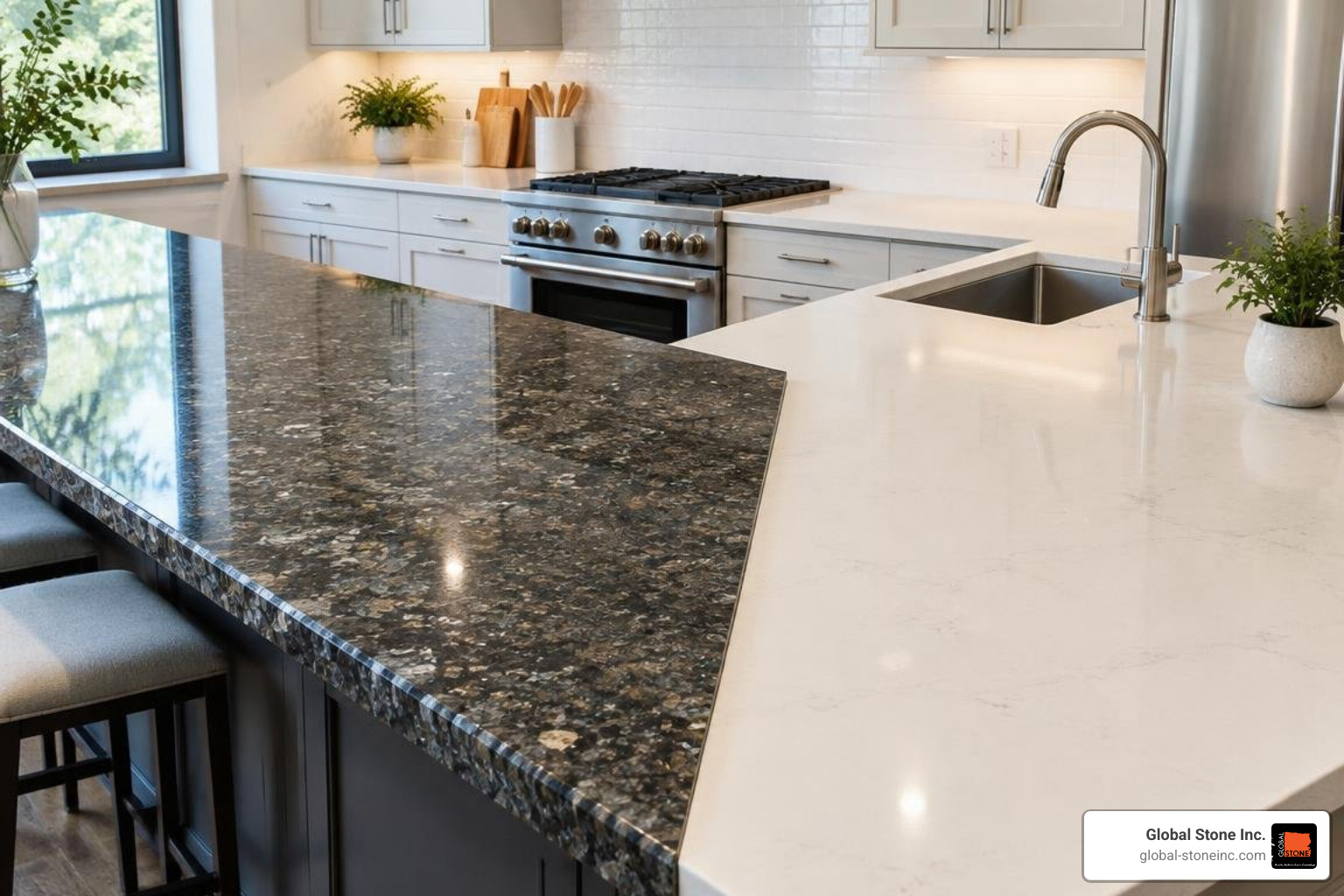
Daily kitchen life puts surface strength and stain resistance to the test. High flexural strength gives engineered quartz excellent resistance against chipping along profiled edges. When evaluating natural stone countertops, granite and hard quartzites provide exceptional scratch and gouge resistance against heavy cookware and cutlery.
To maintain natural stone, homeowners simply apply an inexpensive penetrating sealer once every 12 to 24 months—a quick wipe-on, wipe-off process that takes under thirty minutes. Engineered quartz eliminates the need for periodic sealers entirely; daily cleaning requires only warm water and mild dish soap.
Heat Tolerance and Thermal Shock Resistance
The primary functional difference between these materials during active cooking is heat management. Engineered stone contains up to 10% polymer binders. When a hot cast-iron skillet or baking sheet coming out of an oven sits directly on quartz, thermal shock can scorch the resin binders, leaving a cloudy, permanent ring. Trivets and hot pads are required on all engineered surfaces.
Conversely, natural granite countertops formed under extreme geothermal heat handle scorching temperatures without burning. Similarly, dense soapstone countertops are chemically inert and naturally conduct heat evenly, making them popular for wood-stove hearths and active kitchen zones.
Outdoor Performance and UV Stability
Outdoor kitchens and open-air patios require materials that withstand freezing winters, seasonal rain, and intense summer sun.
Engineered quartz is designed primarily for indoor use. Direct sunlight breaks down polymer resins over time, turning bright whites yellow and fading darker pigments.
For exterior entertaining zones, natural quarried slabs and architectural stone products easily outperform synthetic alternatives. As detailed in resources covering Veneer Stone vs. Natural Stone – Before You Buy, natural stone naturally resists UV rays, moisture infiltration, and freeze-thaw cycles without surface delamination.
Health, Sustainability, and Regulatory Safety Standards
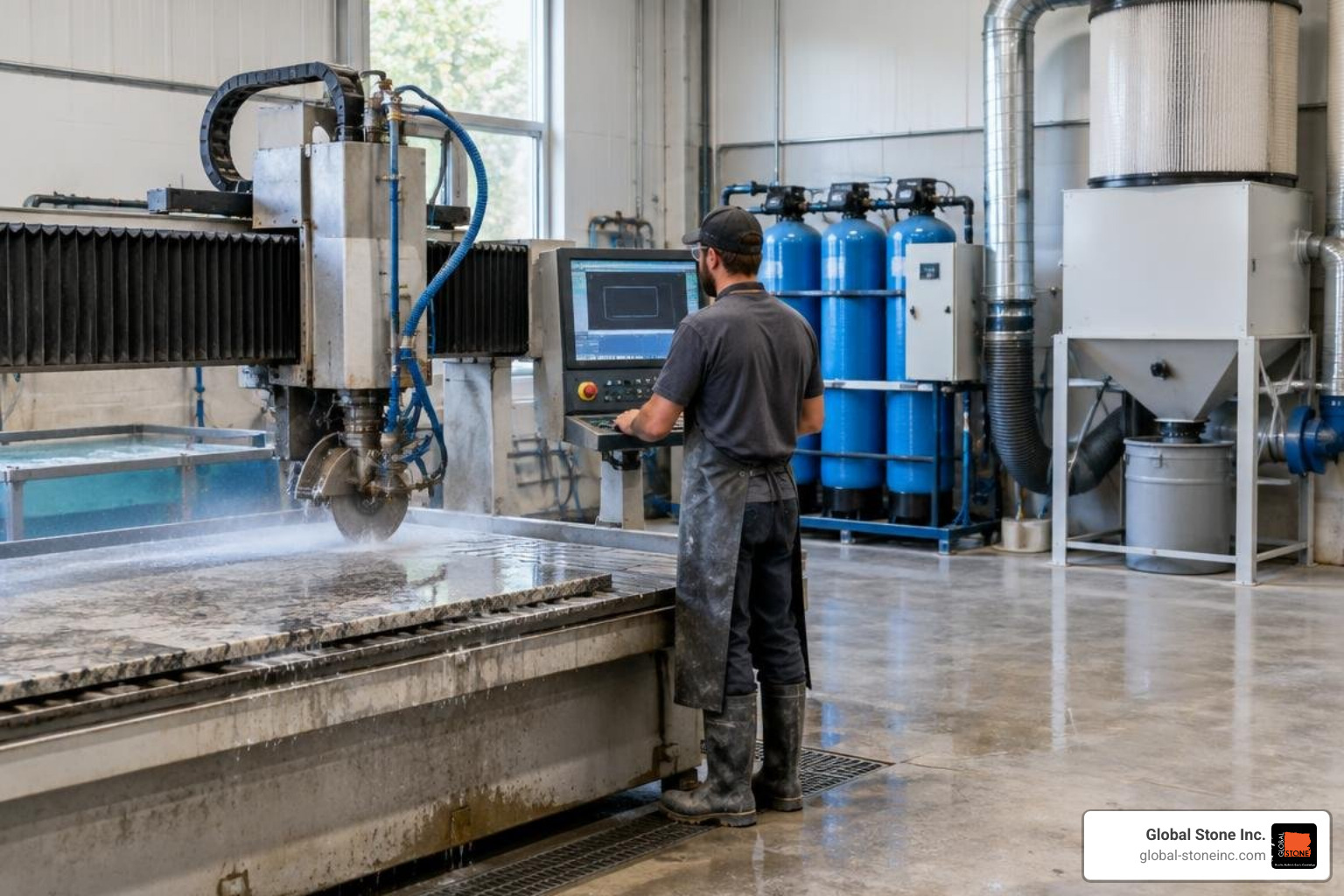
Material safety during manufacturing has become a critical focus within the architectural and stone fabrication industries. The primary health concern involves respirable crystalline silica dust generated during cutting, grinding, and polishing.
While natural granite typically contains 10% to 45% crystalline silica, traditional engineered stone slabs contain high concentrations ranging from 90% to 95%. When dry-cut without appropriate engineering controls, this ultra-fine silica dust can cause silicosis—a severe, preventable occupational lung disease.
In 2024, a NIOSH survey of stone fabrication shops in California revealed that 51% had at least one employee exposed to airborne silica levels exceeding OSHA’s permissible exposure limit of 50 micrograms per cubic meter. Modern shops prevent this risk by using 100% wet-cutting CNC machinery, automated bridge saws, high-efficiency water recycling systems, and strict HEPA dust capture during all fabrication stages for quartz countertops.
Global Regulatory Trends and Silica Bans
Workplace safety concerns have spurred regulatory changes across international markets:
- Australia: In July 2024, Australia enacted a nationwide ban on the manufacture, supply, and installation of high-silica engineered stone products.
- European Union: Regulatory bodies have placed strict worker monitoring protocols and product tracking mandates on high-silica composite panels.
- United States: OSHA has intensified safety compliance inspections, requiring fabricators to implement wet-sawing protocols, certified respiratory protection, and isolated air monitoring systems.
As these safety standards evolve, quartz manufacturers are rolling out low-silica formulations that replace quartz crystals with recycled glass and alternative mineral blends.
Environmental Lifecycle and Recyclability
When reviewing environmental performance, lifecycle longevity is a major consideration. Natural stone boasts an operational lifespan of 50 to 200+ years. Quarried stone involves minimal industrial processing, produces zero volatile organic compound (VOC) off-gassing, and can be crushed and repurposed into architectural aggregate at the end of its useful life.
Engineered stone offers a typical functional lifespan of 15 to 50 years. Because cured polyester resins bind the composite mix permanently, engineered quartz cannot be re-melted or recycled, meaning decommissioned slabs usually end up in local landfills. For long-term projects seeking natural sustainability, durable quarried surfaces like quartzite countertops provide decades of performance.
How to Choose the Ideal Surface for Your Home
Matching the right stone surface to your home involves balancing everyday kitchen routines, interior aesthetic goals, and long-term maintenance preferences.
Best Scenarios for Engineered Stone Surfaces
Engineered stone is an excellent fit for:
- Busy Family Kitchens: Non-porous quartz resists spills from juice, condiments, and oils without staining.
- Modern Minimalist Designs: Provides pure, consistent color palettes without unpredictable natural fissures.
- High-Traffic Powder Rooms: Resists personal care chemicals, cosmetics, and liquid soaps with basic daily cleaning.
- Rental and Commercial Properties: Eliminates the need for ongoing tenant maintenance or periodic resealing schedules.
Best Scenarios for Natural Stone Surfaces
Natural stone is the ideal selection for:
- Gourmet Home Chefs: Natural granite and quartzite allow direct pan placement during prep and cooking.
- Outdoor Kitchens & BBQ Islands: 100% UV-stable natural minerals resist sun-bleaching and freeze-thaw cycles.
- Classic Architectural Designs: Authentic marble countertops develop a soft, natural patina that enhances historic and luxury interiors.
- One-of-a-Kind Showpieces: Natural veining patterns ensure your kitchen island remains a unique design element.
Frequently Asked Questions About Stone Countertops
Is engineered quartz cheaper than natural granite or marble?
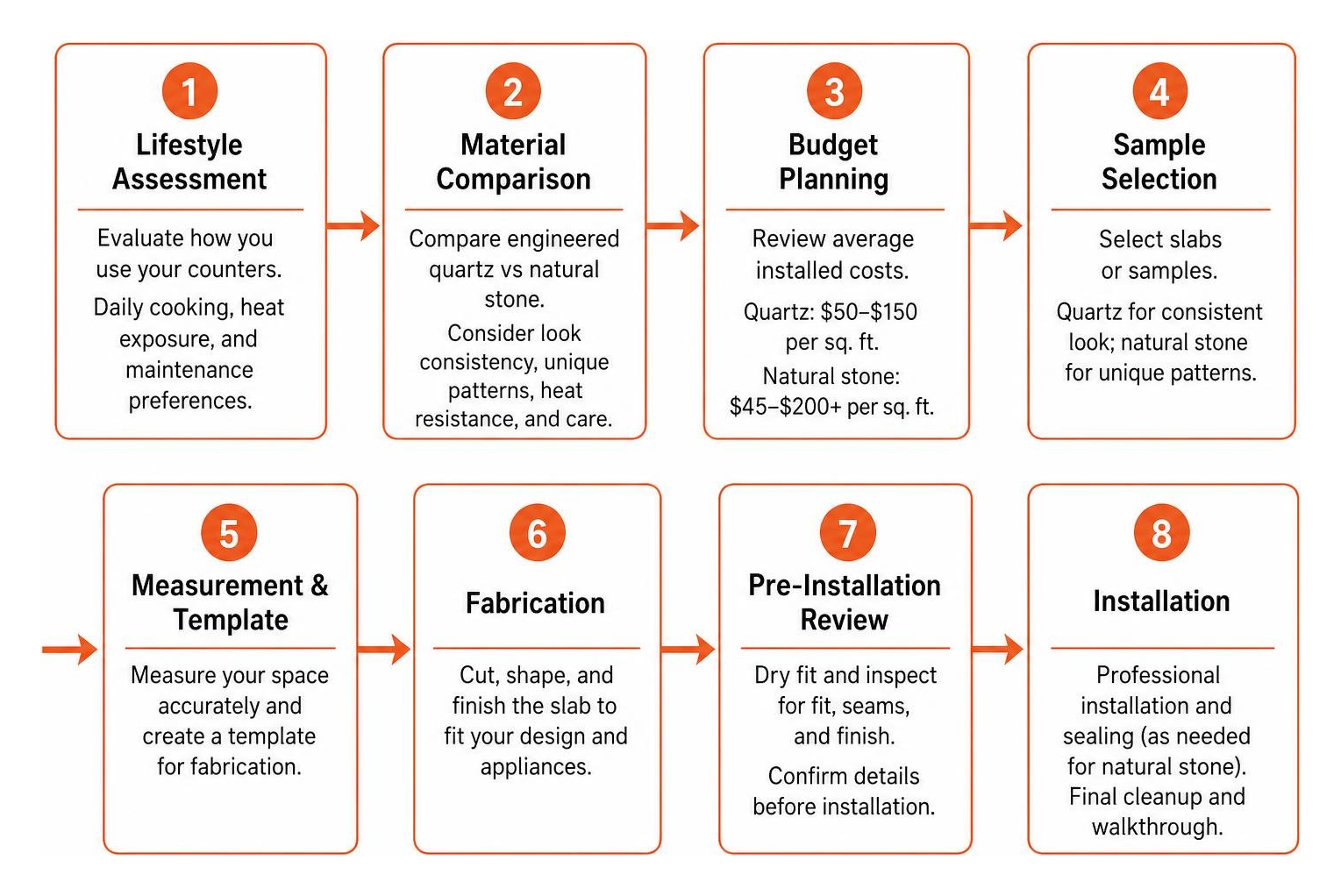
Pricing across quartz and natural stone overlaps considerably. Standard engineered quartz and entry-level granite both cost roughly $50 to $75 per square foot installed. While premium quartz lines can reach $120 to $150 per square foot, rare natural marble, soapstone, and exotic quartzite slabs often exceed $150 to $200+ per square foot installed depending on quarry origin and fabrication details.
Can you place hot pans directly on engineered stone surfaces?
No. Engineered quartz contains 7% to 10% polymer resin binders that can scorch, cloud, or crack when exposed to temperatures above 300°F. Always use protective trivets, hot pads, or insulated mats beneath heated cookware, slow cookers, and countertop appliances.
Does natural stone require annual sealing to prevent stains?
Not all natural stone requires yearly sealing. Dense black granites and true quartzites rarely absorb liquid. Softer marbles, porous granites, and limestones benefit from a quick sealer application every 12 to 24 months. You can test your surface by leaving a few drops of water on the counter; if the water darkens the stone after 10 minutes, it is time to reapply sealer.
Conclusion
Choosing between engineered quartz and natural quarried stone comes down to matching material characteristics with your lifestyle. If you value uniform patterns and zero sealing, engineered quartz provides dependable convenience. If you prioritize heat tolerance, unique patterns, and century-long durability, quarried granite, marble, and quartzite remain premier investments. For homeowners considering warm, earth-toned natural alternatives, discovering why limestone counters are the granite alternative you need can open up versatile design options.
At Global Stone Inc., our team brings over 20 years of custom fabrication and installation experience to homeowners across the greater Chicago area, including Elk Grove Village and Naperville. With in-house designers, expert fabricators, and our lifetime installation warranty, we help you select and install the ideal stone surface for your home. Contact us today to schedule your design consultation.