
Smart Ways to Save Money on Natural Stone Benchtops
How to Compare Benchtop Stone Prices Without Overpaying
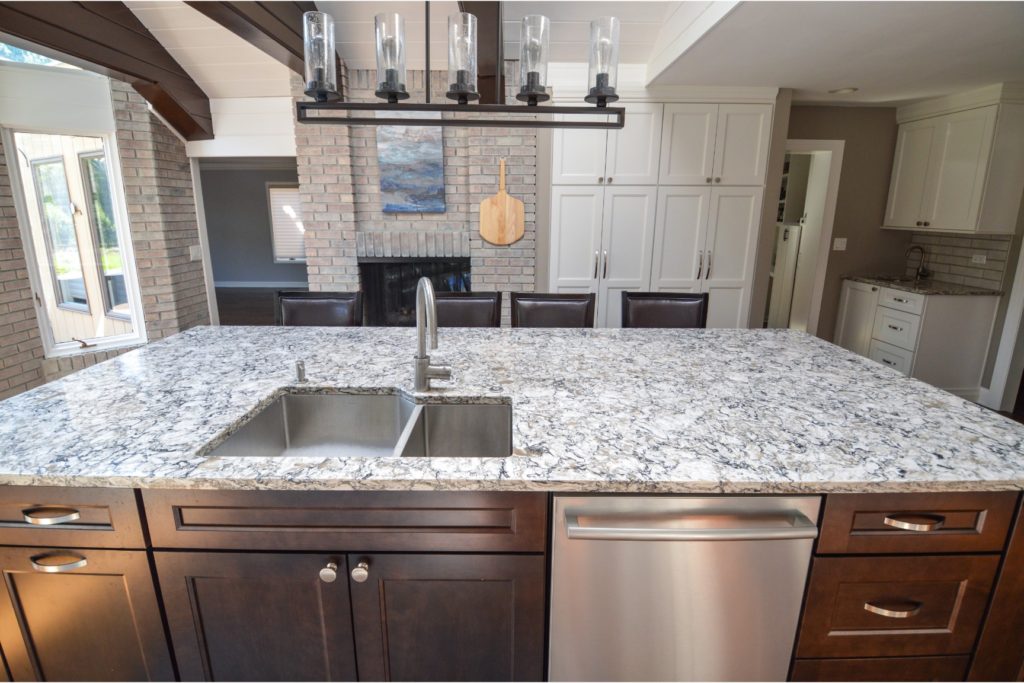
The benchtop stone price depends on more than the slab. Granite is often a lower-cost natural stone choice than marble, but the final quote also reflects the stone’s grade, your layout, edge finish, sink cut-outs, and installation. To save money, compare quotes for the same measurements and features, then ask whether a simpler edge or a remnant slab would suit your project.
I’m Greg Zamarski. After more than 20 years working with stone countertops in the Chicago area, I’ve learned that the clearest way to judge a benchtop stone price is to see exactly what the quote includes.
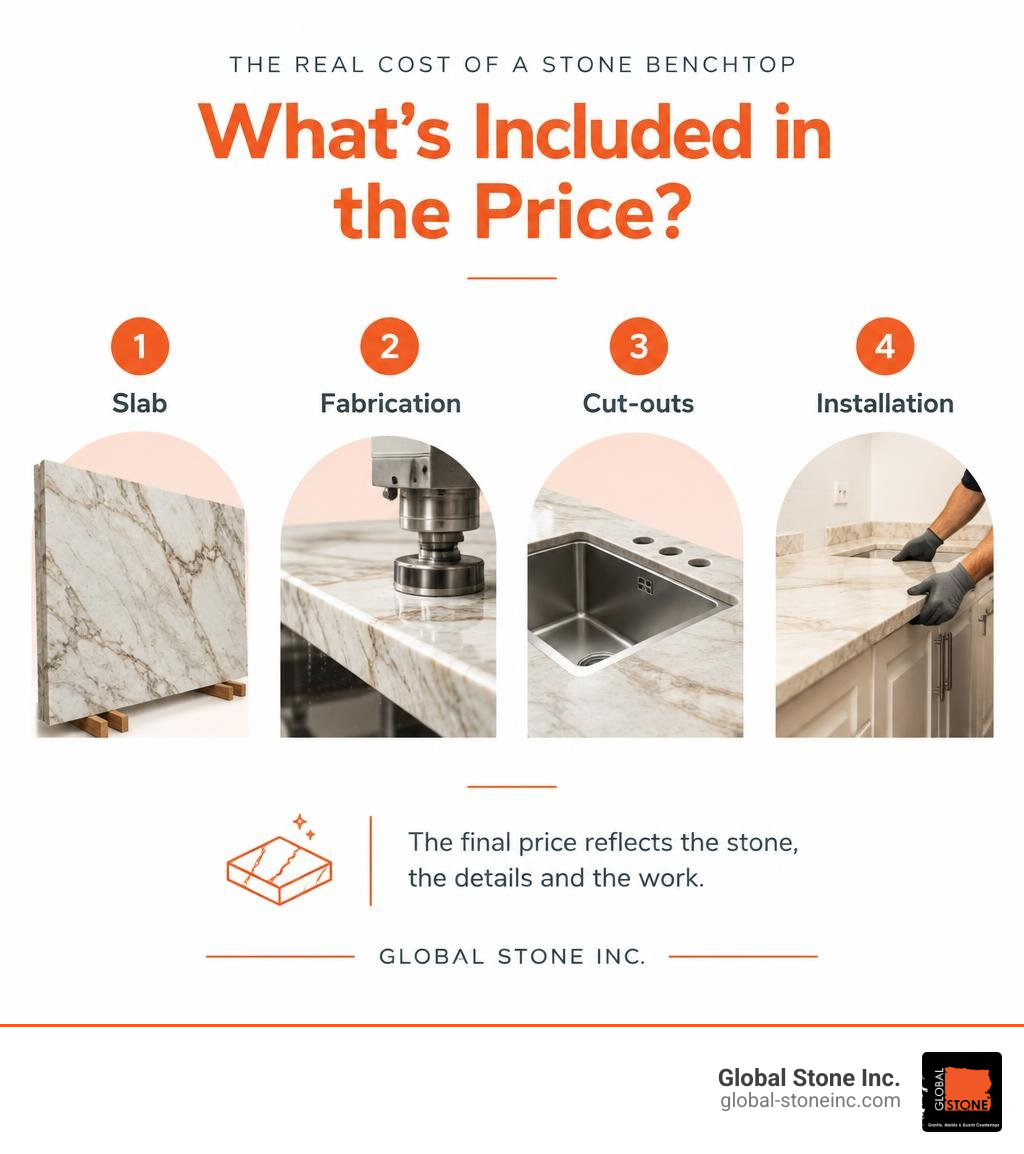
Planning a kitchen or bathroom remodel is an exciting milestone, but navigating the numbers can quickly feel overwhelming. Whether you are remodeling a historic brownstone in Chicago, updating a suburban kitchen in Naperville, or fitting out a custom home near our Elk Grove Village facility, knowing where your money goes is the best way to get a luxury finish without blowing your budget.
Benchtop Stone Price Breakdown by Material
When estimating the price of a stone benchtop, the raw material forms the baseline of your quote. Stone varieties differ significantly in how they are quarried, their rarity, and how challenging they are to cut and polish.
Choosing the right material involves balancing aesthetic appeal with functional durability. If you are exploring the market, taking time for comparing stone countertop options helps you understand how different geological profiles perform under daily kitchen wear and tear.
| Material Type | Average Price Range (per m²) | Durability Rating | Maintenance Needs | Expected Lifespan |
|---|---|---|---|---|
| Entry-Level Granite | $450 – $650 | High (scratch/heat resistant) | Annual sealing | 30–50+ years |
| Premium Granite | $900 – $1,300+ | Very High | Annual sealing | 50+ years |
| Classic Marble | $800 – $2,000 | Moderate (prone to etching) | Frequent sealing (6–12 mos) | 30–50+ years |
| Exotic Quartzite | $600 – $1,200+ | Extremely High | Annual sealing | 50+ years |
| Porcelain / Sintered | $400 – $1,000 | High (non-porous) | Zero sealing required | 20–30+ years |
Understanding the Benchtop Stone Price for Granite, Marble, and Quartzite
Natural stone is priced primarily by rarity, color consistency, and quarry location.
- Granite ($450–$1,500/m²): Granite remains the workhorse of kitchen surfaces. Entry-level varieties with common speckled patterns cost around $450 to $650 per square metre. If you fall in love with premium slabs featuring sweeping, dramatic movement or rare blue and green mineral deposits, prices naturally climb toward $900 to $1,300+ per square metre.
- Marble ($800–$2,000/m²): Coveted for its classic veining and luminous surface, marble comes at a premium. Slabs sourced from renowned quarries command top dollar, especially when selecting high-clarity white backgrounds like Calacatta or Statuario. That marble contains calcium carbonate, making it sensitive to acidic spills like lemon juice or vinegar.
- Quartzite ($600–$1,200+/m²): Quartzite is a natural metamorphic rock formed under intense heat and pressure. It delivers the delicate, flowing look of marble with durability that exceeds granite. Because quartzite is dense and hard, it requires specialized diamond-tipped fabrication tooling, which is reflected in both material and fabrication rates.
How the Engineered Stone Ban Reshaped Pricing
Historically, traditional engineered stone (synthetic quartz containing high concentrations of crystalline silica) served as an alternative to natural stone. However, regulatory shifts—such as Safe Work Australia’s 2024 ban on high-silica engineered stone—have created global awareness around worker safety during cutting and dry-fabrication.
As homeowners and builders shift focus toward safety and longevity, demand has redirected back to quarried natural stone and zero-silica mineral alternatives. When evaluating engineered stone countertop vs natural slab costs, natural stone offers superior heat resistance, an authentic one-of-a-kind appearance, and an investment lifespan of 30 to 50+ years.
Key Factors That Influence the Cost of Stone Benchtops
Two identical kitchens using the same granite can end up with entirely different price tags. That is because the stone slab itself is only one part of the final equation.
Slab Thickness and Fabrication Dimensions
Standard natural stone slabs are manufactured in 20mm and 30mm nominal thicknesses.
- 20mm Slabs: Often more economical to transport and handle. For a clean, minimalist profile, 20mm is a sleek choice that pairs well with modern cabinetry.
- 30mm Slabs: Provide a substantial, luxurious presence and extra rigidity across unsupported spans, such as breakfast bar overhangs.
- Mitred Apron Edges: If you want your benchtop to look 40mm, 60mm, or thicker, fabricators join a 20mm slab with a 45-degree bevel along the perimeter. This creates the appearance of an ultra-thick monolithic block while managing overall weight and material cost.
Carefully planning your layout allows you to optimize slab yield. Minimizing awkward offcuts ensures you get the highest usable surface area out of every slab you buy. Taking steps toward estimating your granite budget before construction prevents surprises before the stone ever hits the saw.
Edge Profiles, Cut-Outs, and Waterfall Finishes
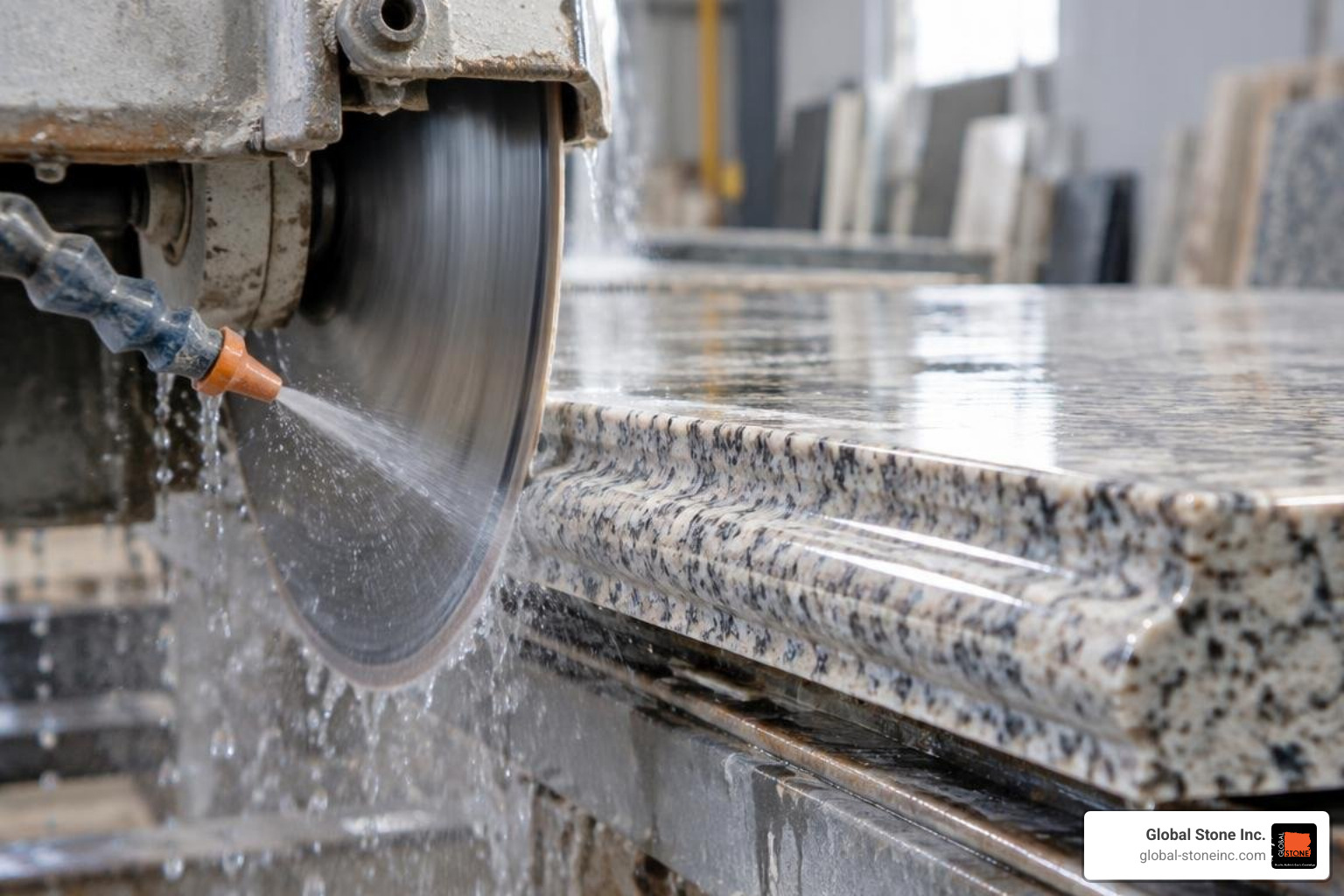
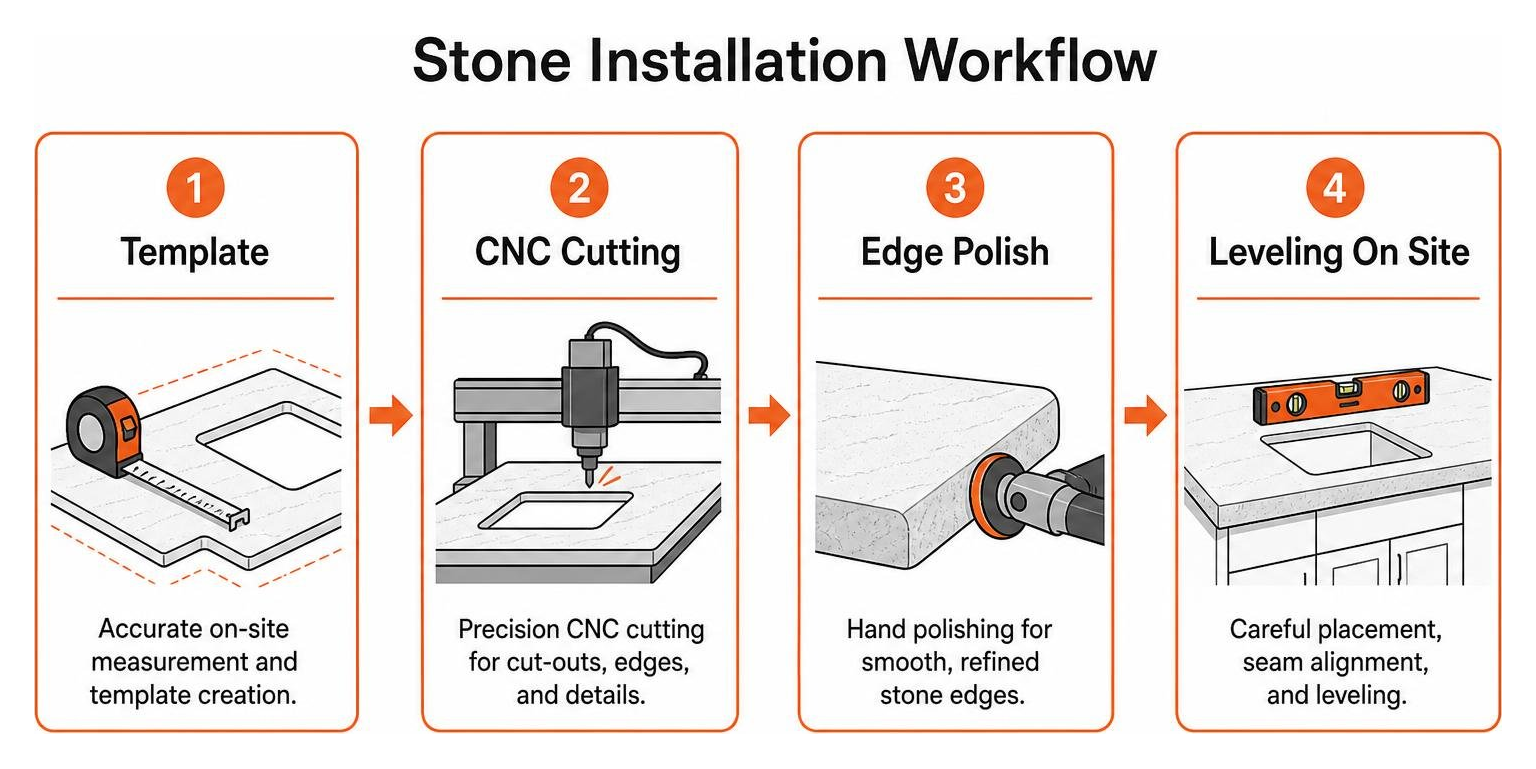
Custom detailing adds personality to your stone surface, but it requires precision CNC machining and hand-polishing.
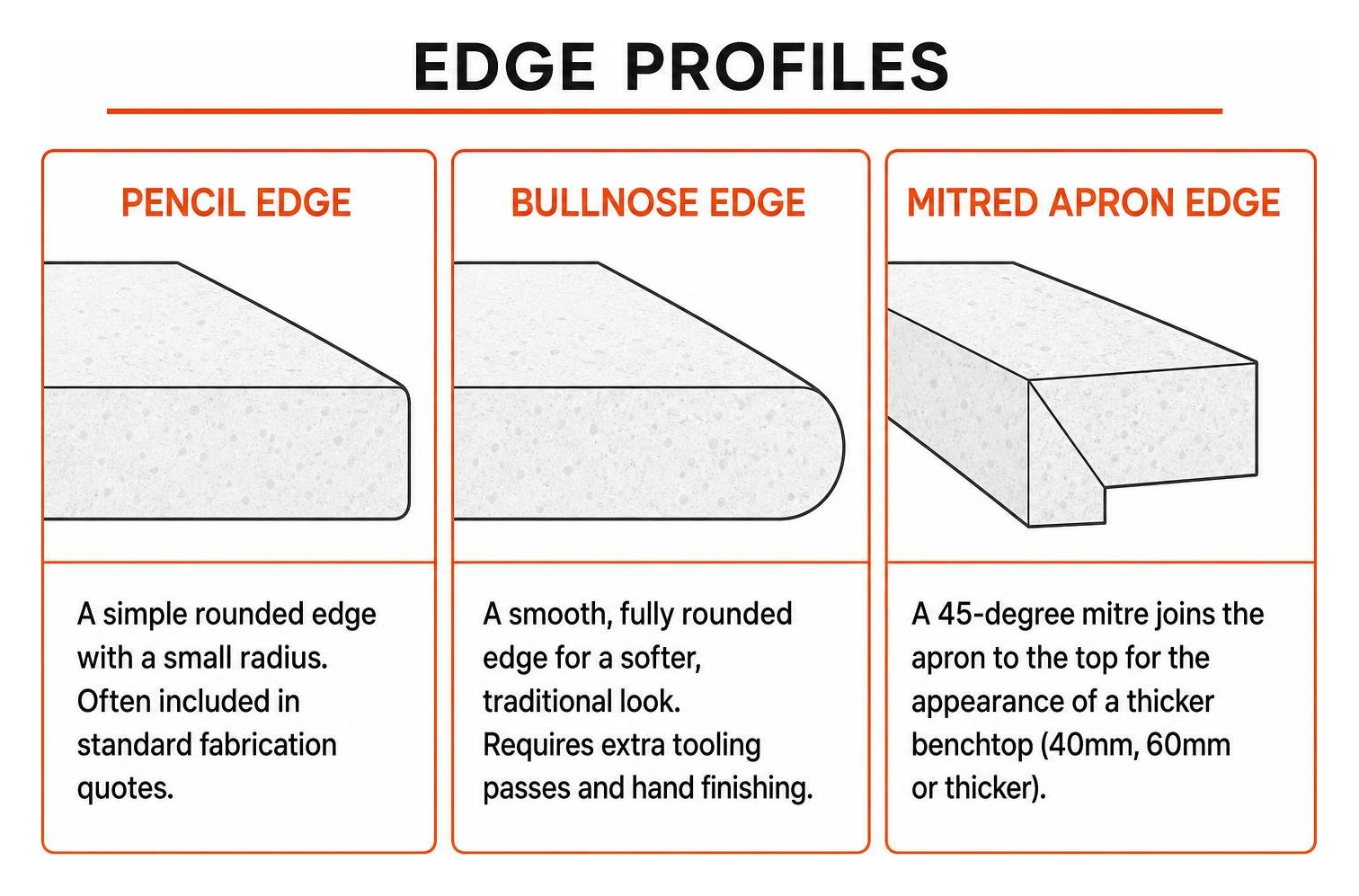
- Standard Edges: A simple pencil round or eased edge is usually included in standard fabrication quotes.
- Decorative Profiles: Bullnose, ogee, or bevelled edges require extra tooling passes and hand finishing, adding to the per-linear-metre cost.
- Sink & Cooktop Cut-Outs: Drop-in sinks are simple to prepare, but polished undermount sink cut-outs typically cost between $220 and $250 each. Cooktop cut-outs require internal corner radius reinforcement to disperse heat stress.
- Drainage Grooves: Precision-milled slope grooves cut into the stone next to an undermount sink add roughly $350 in specialized CNC programming and polishing labor.
- Waterfall Ends: Dropping the stone vertically to the floor at the end of an island creates an architectural focal point. Each waterfall end adds approximately $100+ for the mitred join, along with the extra stone required to match the grain pattern down the side.
Installation Costs and Overall Project Budgeting
For a typical kitchen requiring 4 to 6 square metres of stone, the total fully installed project cost generally lands between $4,000 and $8,000.
Basic installations for straight runs usually range from $700 to $1,200. Complex layouts involving multi-piece L-shapes, extensive cut-outs, and heavy waterfall panels can push installation labor between $1,200 and $2,500+.
What Determines the Installed Benchtop Stone Price?
Natural stone is dense and heavy—a single 30mm slab can weigh well over 400 kilograms. Safe transport, maneuvering through narrow doorways, and achieving perfectly leveled, invisible joins require experienced stone masons.
To see how individual line items come together, review our stone countertop installation cost breakdown. Professional installation protects your investment by ensuring proper weight distribution, seamless joins, and rigid structural support across your base cabinetry.
Removal, Demolition, and Site Preparation Costs
If you are renovating an existing kitchen rather than building from scratch, remember to budget for site preparation:
- Removal and Disposal: Taking out existing laminate, tile, or stone counters adds a modest allowance (often 10% to 15% to the total job cost) to cover labor and tipping fees.
- Substrate & Cabinet Leveling: Stone has zero flex. If your base cabinets are uneven, installers must shim and reinforce the substrate to prevent structural stress points.
- Plumbing and Electrical Disconnects: Masons handle stone fabrication and placement, so factor in certified trades to disconnect and reconnect sinks, cooktops, and garbage disposals. Consulting a quick start guide to countertop installation quotes helps ensure all trade prep is scheduled efficiently.
Practical Strategies to Save Money on Natural Stone Benchtops
You do not have to settle for low-grade finishes to stay within your remodeling budget. A few strategic design decisions can save you thousands of dollars while delivering a breathtaking natural stone result.
Utilizing Remnant Slabs for Smaller Renovations
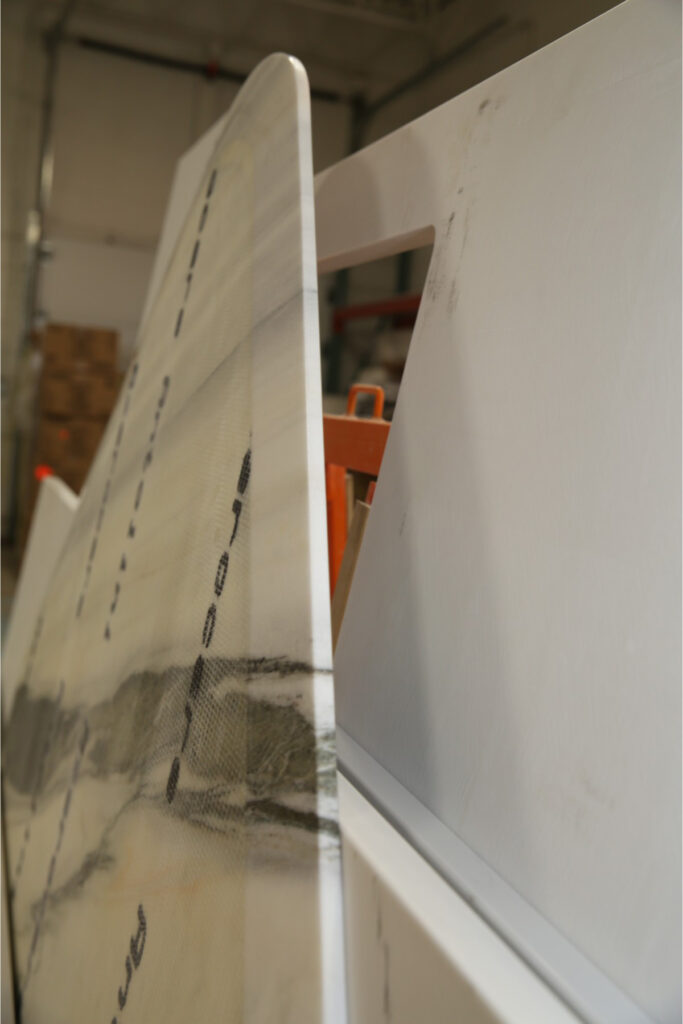
Stone fabricators retain leftover pieces from large commercial and residential slabs. These pieces—known as remnants or offcuts—are brand-new, premium natural stone looking for a home.
- Ideal Applications: Remnants are perfect for bathroom vanity tops, laundry benches, butler pantries, bar carts, and outdoor BBQ stations.
- Massive Cost Savings: Purchasing a remnant often cuts raw material costs by up to 40% because you only pay for the specific dimensions you need rather than an entire full-sized slab.
- Inspection Tip: When picking a remnant, visit the yard to inspect the piece for natural fissures and verify that its dimensions accommodate your cut-outs.
Optimizing Layout and Limiting Custom Joinery
Smart design choices streamline the fabrication process:
- Design Around Standard Slab Sizes: Standard stone slabs average roughly 3,000mm to 3,200mm in length by 1,400mm to 1,600mm in width. Designing an island benchtop within these dimensions eliminates the need for a visible seam across the middle of your showpiece.
- Stick to Single-Level Islands: Multi-tiered benchtops require extra vertical cladding, edging, and steel bracket support. A flat, single-level island maximizes usable prep space while using stone efficiently.
- Choose Classic Pencil Edges: Fancy triple-tiered edge profiles drive up machine run-times. A standard eased or pencil round edge is timeless, easy to wipe clean, and budget-friendly.
- Choose Readily Available Stone: Rare, imported boutique slabs come with high freight charges. Broadening your search by comparing countertop materials helps you find domestically stocked stone patterns that achieve your design vision for less.
Long-Term Maintenance and Sealing Costs for Stone Benchtops
Natural stone is an authentic product of nature. Because stone is naturally porous, proper surface care ensures it remains stain-free and vibrant for decades.
- Penetrating Sealers: Quality penetrating sealers soak into the microscopic pores of granite, marble, and quartzite, forming a barrier that repels water and oils. Professional-grade sealer costs roughly $20 to $50 per square metre.
- Sealing Frequency: Granite and quartzite typically require sealing once every 12 to 24 months. Softer, more porous stones like marble benefit from sealing every 6 to 12 months.
- The Water Drop Test: To check if your benchtop needs resealing, drop a small puddle of tap water on the surface and wait 15 minutes. If the water beads tightly, your seal is intact. If the stone darkens and absorbs the moisture, it is time for a fresh coat of sealer.
- Daily Cleaning: Avoid acidic or abrasive cleaners like bleach, ammonia, or citrus-based sprays. A soft microfiber cloth with warm water and pH-neutral soap is all you need for daily sanitization.
When properly sealed, natural stone stands the test of time far better than synthetic alternatives, often lasting 30 to 50+ years without degrading. Exploring the best residential countertop materials reveals how natural stone delivers exceptional long-term return on investment by elevating property resale values.
Frequently Asked Questions About Stone Benchtops
How much does an average kitchen stone benchtop cost fully installed?
In an average-sized kitchen (requiring 4 to 6 square metres of surface area), a complete stone benchtop project typically costs between $4,000 and $8,000 fully installed. The exact price depends on whether you select entry-level granite ($450–$650/m²), mid-range quartzite ($600–$1,200/m²), or luxury marble ($800–$2,000/m²), as well as the complexity of your cut-outs and edge finishes.
How often do natural stone benchtops need sealing?
Most granite and quartzite benchtops only need sealing once every 1 to 2 years. Marble, limestone, and sandstone are more porous and should be sealed every 6 to 12 months. Applying a penetrating sealer is a simple DIY process that takes less than an hour: simply wipe the sealer onto a clean, dry surface, allow it to penetrate, and buff off any excess.
How does stone benchtop pricing compare across natural stone options?
Entry-level granite is generally the most budget-friendly natural stone choice, starting at approximately $450 to $650 per square metre installed. Dense quartzite ranges from $600 to $1,200+ per square metre due to higher material hardness and tooling requirements. High-grade marble sits at the top tier, ranging from $800 to $2,000+ per square metre based on background clarity and vein rarity.
Conclusion
Upgrading your home with a natural stone benchtop is one of the most rewarding investments you can make. Natural stone provides enduring beauty, incredible heat resistance, and a distinct character that synthetic alternatives simply cannot replicate.
By understanding the key drivers of benchtop stone price—from slab selection and thickness to edge profiles and site logistics—you can confidently design a kitchen that aligns with your aesthetic goals and your remodeling budget.
At Global Stone Inc., we believe in complete transparency and craftsmanship without compromises. With over 20 years of experience serving homeowners across Chicago, Naperville, and from our Elk Grove Village fabrication facility, our team handles everything in-house. From initial laser templating and precision CNC fabrication to final installation, we back our work with a lifetime warranty.
Ready to take the next step? Learn more about evaluating your countertop investment and contact our design team today for a free, comprehensive project quote.