
A Comprehensive Guide to Marble Kitchen Countertop Options
Choosing a Marble Kitchen Countertop
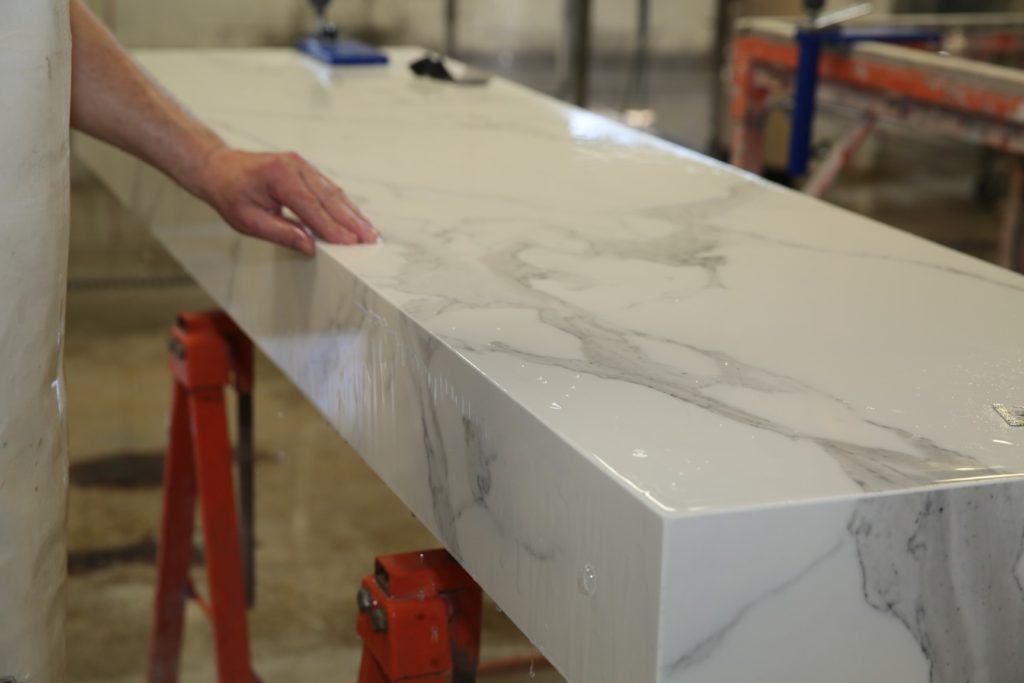
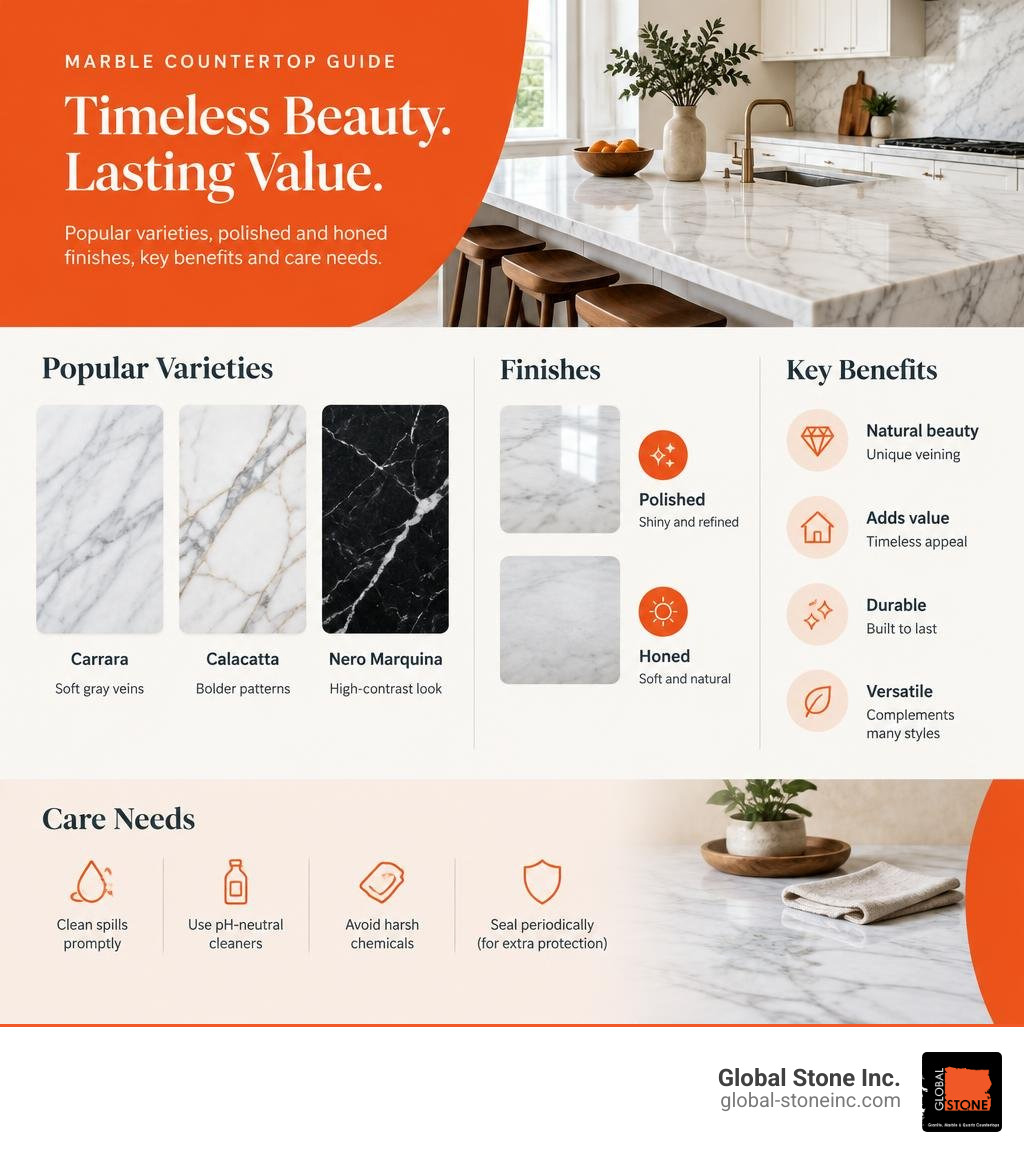
A marble kitchen countertop brings natural veining and a one-of-a-kind look to your kitchen. Carrara has soft gray veins, Calacatta has bolder patterns, and Nero Marquina offers a dark, high-contrast look. Choose a polished finish for shine or a honed finish for a softer look. Marble can pair with white, colorful, or wood cabinets, but it needs prompt spill cleanup and careful cleaning because it can stain or etch.
I’m Greg Zamarski. For more than 20 years, I’ve worked with Global Stone Inc. serving Chicago-area homeowners with stone fabrication and installation, including marble kitchen countertop projects.
Popular Types of Marble for Kitchen Countertops
Marble is a metamorphic rock formed over millions of years when limestone undergoes intense heat and pressure deep within the Earth’s crust. This geological process recrystallizes calcite minerals into a dense, crystalline structure that creates marble’s signature luminosity and dramatic veining. Because every mountain quarry features unique mineral deposits, no two slabs are ever identical.
When you begin exploring the ultimate breakdown of different types of marble countertops, slab thickness plays a massive role in both structural integrity and visual weight. Standard kitchen installations typically utilize 2-centimeter (about 3/4-inch) or 3-centimeter (about 1 1/4-inch) slabs. High-end custom designs often seek out rare 2-inch (5-centimeter) monolithic slabs or use mitered edge fabrication to achieve an ultra-thick, substantial look across large kitchen islands.
White Marble Varieties: Carrara, Calacatta, and Statuary
White marble remains the gold standard for classic and contemporary kitchens alike, offering light-reflective brilliance that opens up any room. Among the top reasons to consider marble for your kitchen remodel are the distinct personalities found in legendary Italian white stones:
- Carrara Marble: Sourced from the Carrara region of Tuscany, this is the most widely used white marble. It features a soft, light-gray field with subtle, feathery blue-gray veining that provides an understated, timeless elegance.
- Calacatta Marble: Quarried from the same Italian region but far rarer, Calacatta features a bright, luminous white background contrasted by bold, dramatic ribbons of dark gray and warm gold veining.
- Statuary (Statuario) Marble: Famous for its historic use in classical sculptures, Statuary marble presents a crisp, semi-translucent white ground crossed by striking, high-contrast charcoal and slate veining patterns.
Dark and Dramatic Marbles: Nero Marquina, Bardiglio, and Arabescato
While luminous whites dominate design feeds, rich, moody, and intricately patterned marbles bring undeniable depth and drama to modern kitchen designs.
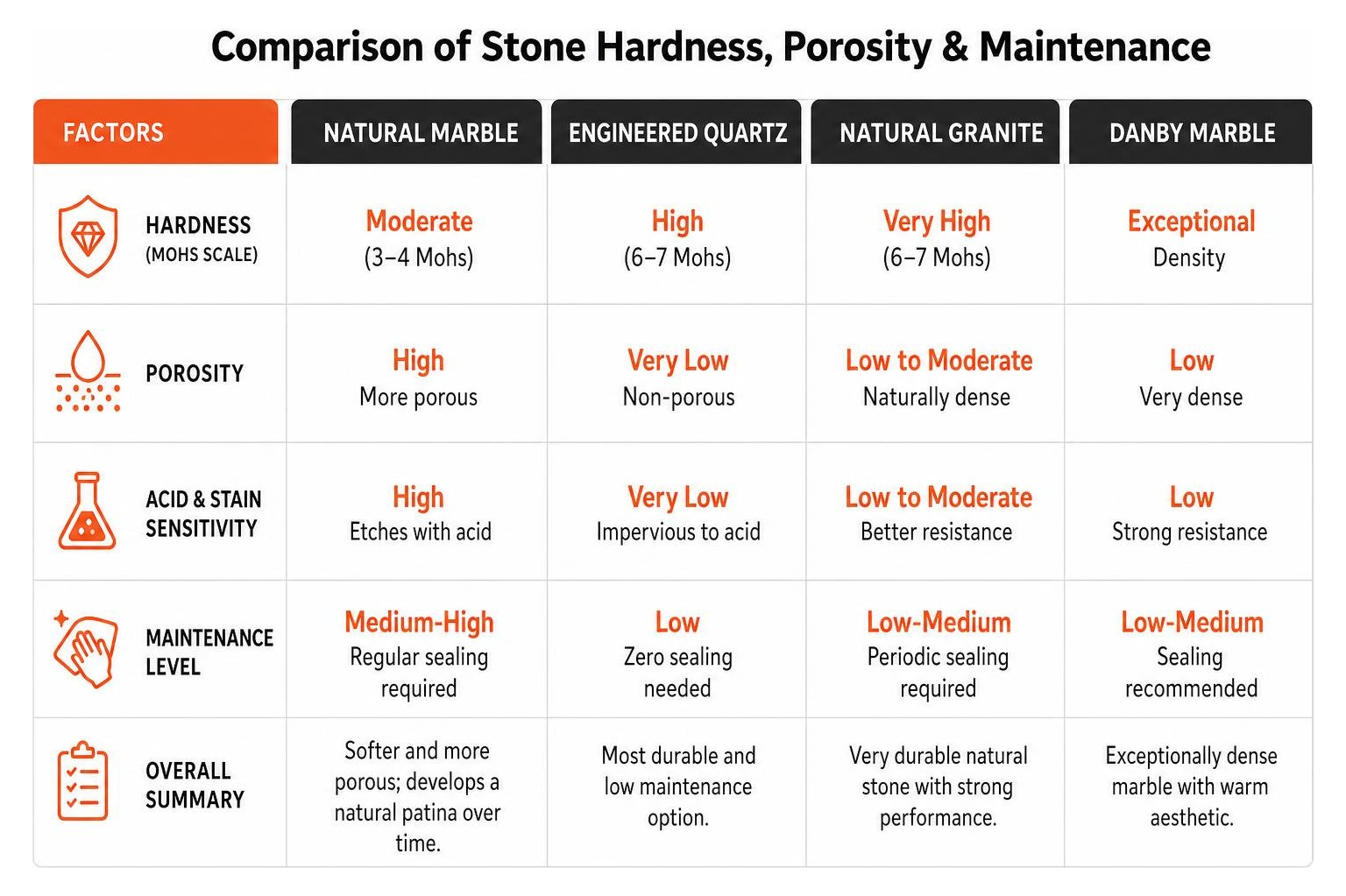
- Nero Marquina: Originating from northern Spain, this striking black marble features a velvety midnight background electrified by crisp, irregular white veining. It creates an unforgettable centerpiece on islands and modern bar tops.
- Bardiglio Marble: A sophisticated Italian stone defined by deep, cloudy gray tones with fine mineral movements, Bardiglio pairs effortlessly with neutral cabinetry and darker flooring.
- Arabescato Marble: Renowned for its dramatic brecciated structure, Arabescato showcases dark, rounded crystalline veins that form oval “islands” against a dusty white ground.
- Danby Marble: Sourced from North America, Danby marble provides exceptional density and a warm white base interwoven with soft green and gray linear veining.
Marble vs. Other Countertop Materials: Pros, Cons, and Comparisons
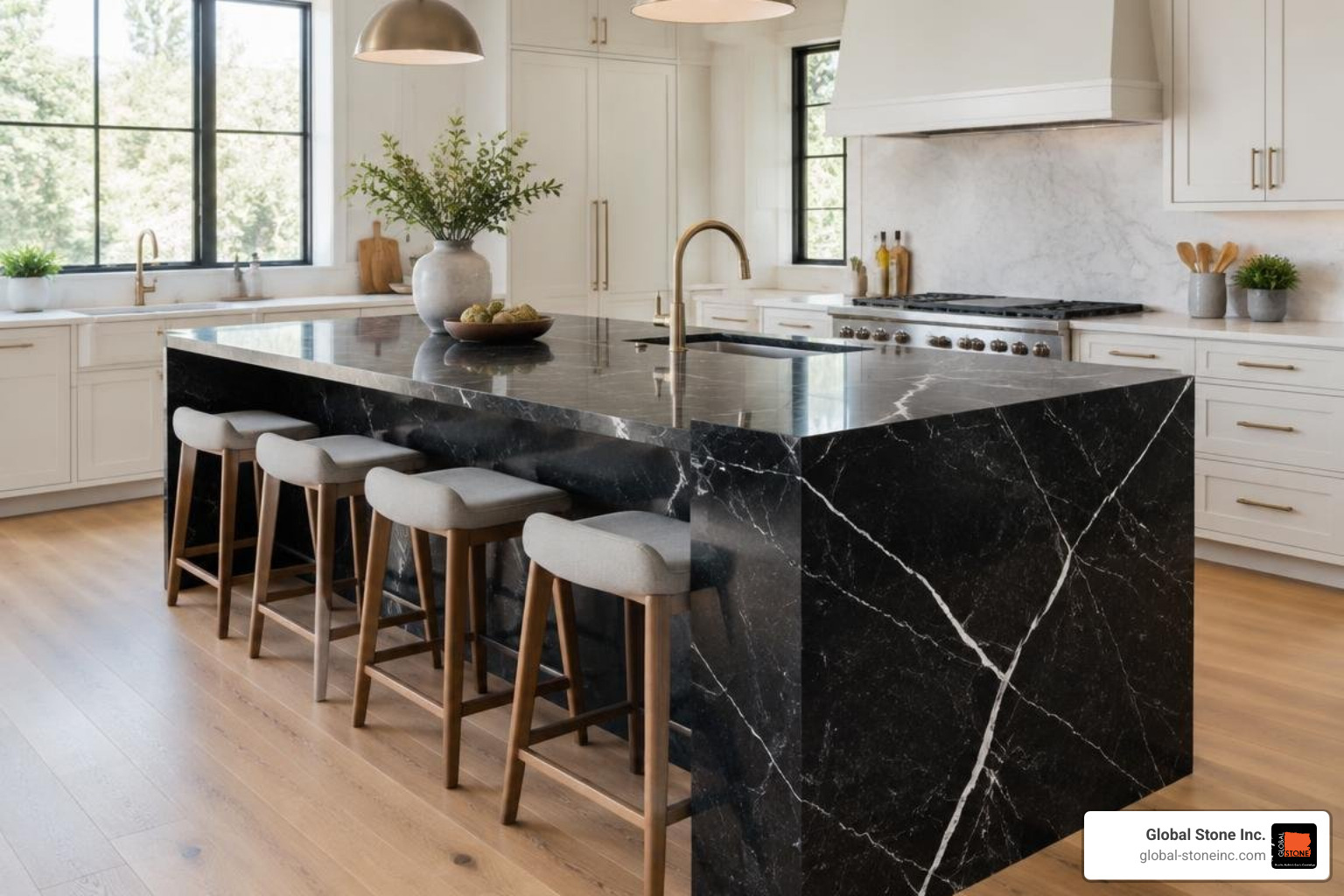
Investing in stone surfaces requires weighing natural elegance against everyday functionality. Marble naturally remains cool to the touch and offers solid heat tolerance, meaning a hot baking sheet will not instantly burn the stone. However, because marble is primarily composed of calcium carbonate, it is softer and more porous than granite or engineered surfaces, leaving it susceptible to surface scratches and chemical etching from acidic household liquids.
Before finalizing your surface selection, reviewing the complete guide to comparing stone countertop options helps balance visual priorities with practical cooking habits.
| Countertop Material | Scratch Resistance | Heat Resistance | Acid & Stain Sensitivity | Maintenance Level | Relative Cost Tier |
|---|---|---|---|---|---|
| Natural Marble | Moderate (3-4 Mohs) | Excellent | High (Etches with acid) | Medium-High (Regular sealing required) | Premium to Ultra-Luxury |
| Engineered Quartz | High (6-7 Mohs) | Moderate (Resin burns) | Very Low (Non-porous) | Low (Zero sealing needed) | Moderate to Premium |
| Natural Granite | Very High (6-7 Mohs) | Excellent | Low to Moderate | Low-Medium (Periodic sealing) | Moderate to Premium |
Durability and Performance Comparison
Understanding why quartz usually wins the durability battle against marble comes down to daily kitchen habits. Quartz is engineered from crushed natural minerals bound together with polymer resins, making it non-porous and completely impervious to acidic foods like lemon juice, vinegar, and tomato sauce.
In a direct quartz countertops vs marble countertops kitchen showdown, natural marble requires a mindset that embraces character. Over years of regular cooking, a natural marble surface develops a softened patina that tells the story of meals shared across generations—a European hallmark that manufactured stones simply cannot replicate.
Designing with a Marble Kitchen Countertop: Aesthetics, Cabinetry, and Lighting
Integrating stone into your home layout goes beyond picking a pretty slab; it involves curating a balanced palette of texture, contrast, and light. If you are exploring creative marble kitchen design gorgeous ways to feature stone in your home, consider using monolithic island blocks as your space’s visual anchor.
Marble adapts seamlessly across contrasting aesthetic styles:
- Modern Minimalist: Ultra-sleek, handleless white or matte black cabinetry pairs with high-contrast Calacatta marble to create clean, architectural lines.
- Colorado Rustic: Heavily scraped oak cabinets, exposed wooden ceiling beams, and textured leather barstools find balance against the cool, refined tones of a Bardiglio or Carrara slab.
- Vintage Charm: Inset shaker cabinetry with antique brass accents complements the subtle warmth of honed Danby marble for a cozy, historic feel.
Pairing Cabinets and Hardware with a Marble Kitchen Countertop
Cabinet colors and metallic finishes allow you to highlight the undertones within your marble’s veining. Applying practical strategies to upgrade your kitchen with marble countertops 10 simple tips ensures every architectural element harmonizes:
- Warm and Vibrant Cabinetry: Pair mustard or custom yellow cabinetry with gold-veined Calacatta slabs to break away from all-white monotony and bring radiant energy into the room.
- Deep Bronze and Matte Black: Use dark bronze plumbing fixtures and dark cabinet hardware to echo the deep charcoal movement in Arabescato or Statuary stone.
- Warm Brushed Brass: Warm up cool gray Carrara surfaces by installing brushed brass bridge faucets and statement drawer pulls.
- Organic Lighting: Integrate woven bamboo pendants or ribbed glass fixtures over your island to cast soft, glare-free light across the stone’s crystalline face.
Creating Cohesion with Matching Marble Backsplashes and Waterfalls
Carrying your marble surface vertically creates a striking, cohesive visual statement. Instead of breaking up sightlines with traditional ceramic tile, many designers run the same slab from the counter directly up to the underside of the upper cabinetry or range hood. For homeowners exploring wall options, rock solid style how to choose the perfect marble kitchen wall tile highlights how marble subway or mosaic tiles can also tie back into your primary counters.

Pairing a full-height slab backsplash with a waterfall island edge—where the stone flows over the counter edge down to the floor—maximizes the dramatic visual flow of natural veining. When fabricating these continuous installations, bookmatching (mirroring two sequential stone slabs along their seam) turns your kitchen walls and island ends into genuine works of art.
Essential Care and Maintenance for Long-Lasting Marble Surfaces
Caring for marble surfaces is straightforward once you establish a simple, consistent routine. Learning a few essential marble countertop maintenance tips protects your investment for decades to come:
- Wipe away spills promptly using a damp microfiber cloth and warm water.
- Clean daily with mild dish soap or dedicated pH-neutral stone cleaners.
- Avoid all abrasive scouring pads, vinegar, bleach, ammonia, and citrus-based degreasers.
- Use cutting boards for all food prep to prevent scratching the stone’s calcite minerals.
Maintaining the Beauty of a Marble Kitchen Countertop
Because marble contains microscopic pores, applying a premium penetrating, impregnating stone sealer is your first line of defense against oil and pigment absorption. A quality sealer soaks into the stone’s upper layers, creating a barrier that buys you time to wipe up spills before they set.
Test your seal every six months by sprinkling a few drops of tap water across the surface. If the water beads tightly into round droplets, your sealer is intact. If the water darkens the stone or soaks in within ten minutes, it is time for a fresh coat. Always place decorative trivets beneath hot cookware and coasters beneath glasses filled with wine, coffee, or citrus juices.
Polishing, Honing, and Etch Removal Techniques
If your countertops develop minor dull spots (acid etching) or stubborn stains over time, several restoration approaches can restore their original beauty:
- Honed vs. Polished Surfaces: A polished finish provides a high-gloss, reflective shine that highlights deep stone color, but reveals chemical etching more readily. A honed finish leaves a smooth, matte, satin surface that naturally diffuses ambient light and hides minor wear or light etching.
- Poultice Spot Removal: For deep organic or oil stains, apply a paste made of baking soda and water (or commercial stone poultice powder), tape plastic wrap over it, and let it sit for 24 to 48 hours to draw the stain out of the pores.
- Professional Refinishing: For widespread etching or deep surface scratches, scheduling professional marble polishing services to save your surfaces allows certified technicians using diamond-grit pads to hone and re-polish your counters right inside your home.
Frequently Asked Questions About Marble Countertops
How do I prevent stains and etching on marble counters?
Preventing surface damage requires regular sealing combined with proactive kitchen habits. Keep an impregnating stone sealer fresh by reapplying it every 6 to 12 months. Wipe up spills immediately—especially acidic substances like wine, vinegar, citrus juice, and tomato sauce—and clean surfaces daily using only pH-neutral stone soaps and soft microfiber cloths.
Which marble finish is best for high-traffic kitchens?
A honed (matte) finish is generally the best choice for busy, high-traffic family kitchens. Because honed marble lacks a reflective gloss, minor surface scratches and acid etches blend seamlessly into the stone’s natural patina rather than standing out under direct task lighting.
Is marble more expensive than quartz or granite?
Marble pricing spans a wide spectrum depending on rarity and quarry origin. Common varieties like Carrara are often comparable in price to mid-range granite or engineered quartz. However, rare, highly sought-after varieties like Calacatta Gold or Statuario carry premium price points due to limited supply and custom fabrication requirements.
Conclusion
A natural marble kitchen surface brings organic luxury, timeless elegance, and architectural character that no manufactured product can replicate. Whether you fall in love with the classic soft veining of Carrara, the bold movement of Calacatta, or the moody drama of Nero Marquina, stone counters provide enduring home value and everyday enjoyment.
At Global Stone Inc., our team brings over 20 years of hands-on stone fabrication and installation experience to homeowners across the greater Chicago area, including our facility in Elk Grove Village and nearby communities like Naperville. With in-house designers, skilled fabricators, master installers, and an industry-leading lifetime warranty on our craftsmanship, we are ready to help you select, cut, and install the perfect stone surfaces for your dream kitchen.