
Countertop Culture: Why Your Local Stone Center is the Key to a Dream Kitchen
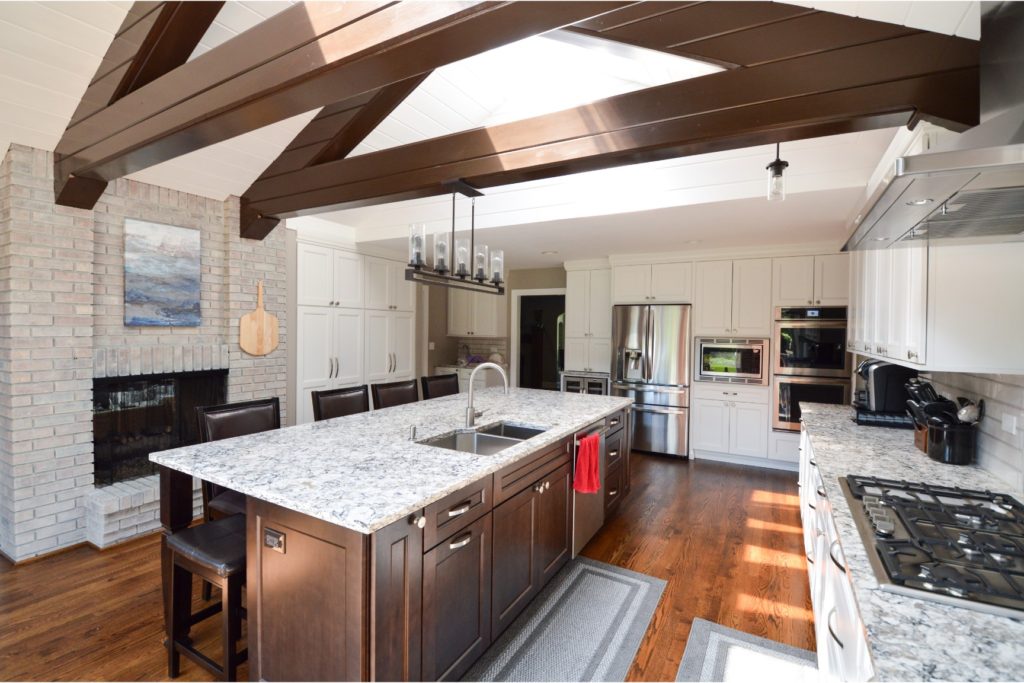
Why Center Stone Countertops Are the Heart of Every Dream Kitchen
Center stone countertops are the large, natural or engineered stone surfaces used as the primary work surface in a kitchen or bathroom — most often the island or main counter that becomes the visual and functional focal point of the space.
Here’s a quick overview of the most common center stone countertop materials:
| Material | Starting Cost (Installed) | Key Strength | Maintenance |
|---|---|---|---|
| Granite | $80–$130/sq ft | Extreme durability, heat resistant | Seal annually |
| Marble | $40–$100/sq ft | Luxury appearance | Seal regularly, avoid acids |
| Quartz | $50–$200/sq ft | Non-porous, low maintenance | Wipe clean, no sealing |
| Quartzite | $60–$120/sq ft | Harder than granite, UV resistant | Seal periodically |
| Sintered Stone | $65–$150/sq ft | Fully heat and UV resistant | No sealing required |
Choosing the right countertop material isn’t just about looks. It affects how your kitchen feels to use every single day — from prep work to hosting guests. The wrong choice means staining, cracking, or constant upkeep. The right one means decades of beauty with minimal effort.
Countertops are consistently described as the focal point of any kitchen remodel. That makes the decision both exciting and, honestly, a little overwhelming.
This guide breaks it all down — materials, costs, fabrication, maintenance, and what to look for in a fabricator — so you can make a confident choice.
I’m Greg Zamarski, owner of Global Stone Inc. in Elk Grove Village, with over 20 years of hands-on experience fabricating and installing center stone countertops for homeowners across the Chicago area. Everything in this guide is grounded in what I’ve seen work — and what I’ve seen go wrong — on thousands of real kitchen and bathroom projects.
Demystifying Center Stone Countertops: What Are They?
When we talk about center stone countertops, we are focusing on the literal and figurative centerpiece of your home. In modern open-concept living, the kitchen is no longer hidden behind closed doors. It is the social hub, the homework station, and the buffet line. Consequently, the stone surfaces you place at the center of this environment must balance incredible durability with show-stopping aesthetics.
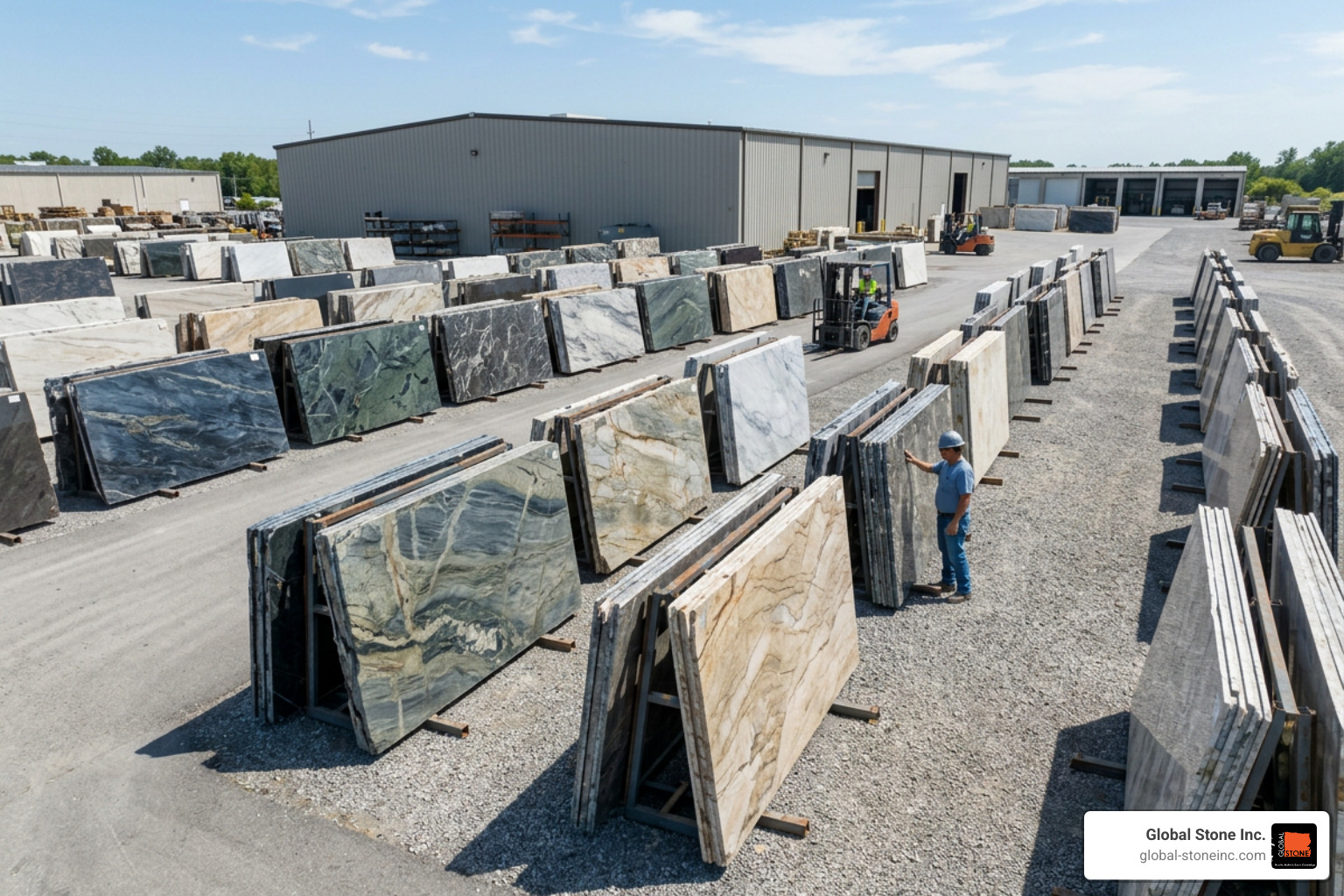
Defining the Focal Point of Your Kitchen
The “center stone” is typically the slab selected for your kitchen island or the primary run of countertops that catches the eye the moment you walk into the room. Because it occupies so much visual real estate, selecting this slab requires a careful eye.
Unlike perimeter countertops, which might play a supporting role with solid, neutral colors, the center stone is where homeowners love to showcase dramatic veining, unique geological formations, and rich textures. When planning your slab layout, our design team works closely with you to ensure that the natural flow of the stone’s pattern is positioned perfectly, highlighting the most beautiful sections of the slab right where they will be seen most.
Comparing Center Stone Countertops to Engineered Quartz
One of the most common decisions homeowners face is choosing between natural stone (like granite, quartzite, or marble) and engineered surfaces. Engineered quartz has taken a massive share of the market — holding roughly 51% of the US countertop market — and for good reason.
Quartz countertops consist of roughly 93% natural quartz aggregate bound together with about 7% polymer resin binders and color pigments. This manufacturing process creates an incredibly dense, non-porous surface that resists stains, scratches, and bacteria without ever needing to be sealed.
To explore this material further, check out The Ultimate Guide to Quartz Countertops. If you are weighing the benefits of this engineered marvel, you will find excellent insights in our breakdown of the 4 Advantages of Quartz Countertops.
The Main Types of Stone Countertops Available
To choose the perfect center stone countertops for your home, it helps to understand the unique personality and physical characteristics of each material.
Granite and Quartzite: Natural Durability
Granite remains the classic heavyweight of natural stone. Quarried from deep within the earth (with many premium varieties sourced from Italy and Brazil), granite offers unmatched heat resistance and unique, organic patterns. No two slabs are ever identical, meaning your kitchen will have a completely custom look.
Quartzite, on the other hand, is a natural metamorphic rock that begins its life as sandstone. Through intense heat and pressure within the earth, it transforms into an incredibly hard material. In fact, quartzite is harder than granite on the Mohs scale and is highly resistant to scratching. It often features the elegant, flowing veins of marble but possesses the rugged durability of granite.
If you love the organic look of natural stone but prefer the predictability of engineered surfaces, you can explore how to mimic these looks by reading Don’t Take It for Granite: A Guide to Quartz Countertop Color Selection.
Marble: Timeless Elegance
There is nothing quite like the luminous, cool-to-the-touch surface of natural marble. Its characteristic soft grey veining against a bright white background has defined luxury for centuries. However, marble is a softer, calcium-rich stone. This makes it porous and susceptible to “etching” — dull spots left behind when acidic liquids like lemon juice, vinegar, or wine spill on the surface.
For a detailed head-to-head comparison of how marble stacks up against engineered alternatives in a busy cooking environment, read our Quartz Countertops vs Marble Countertops Kitchen Showdown.
Sintered Stone and Porcelain: Modern Innovation
Sintered stone and porcelain represent the absolute cutting edge of surface technology. Sintered stone is made entirely of natural minerals (including quartz, porcelain materials, and glass) ground into a fine powder and subjected to extreme pressure — up to 25,000 tons — and fired at temperatures exceeding 2,190°F (1,200°C). This process, known as sintering, mimics the natural metamorphic process of stone formation in a matter of hours.
Because it contains zero resin binders, sintered stone is completely immune to UV damage and can withstand extreme heat up to 300°F and beyond without yellowing or scorching. It is entirely non-porous, scratch-proof, and highly hygienic. The only major drawback is that the printed designs are often only on the surface, meaning the edge profile won’t show the same veining as the top unless you opt for specialized through-body slabs.
Cost, Fabrication, and Installation Factors
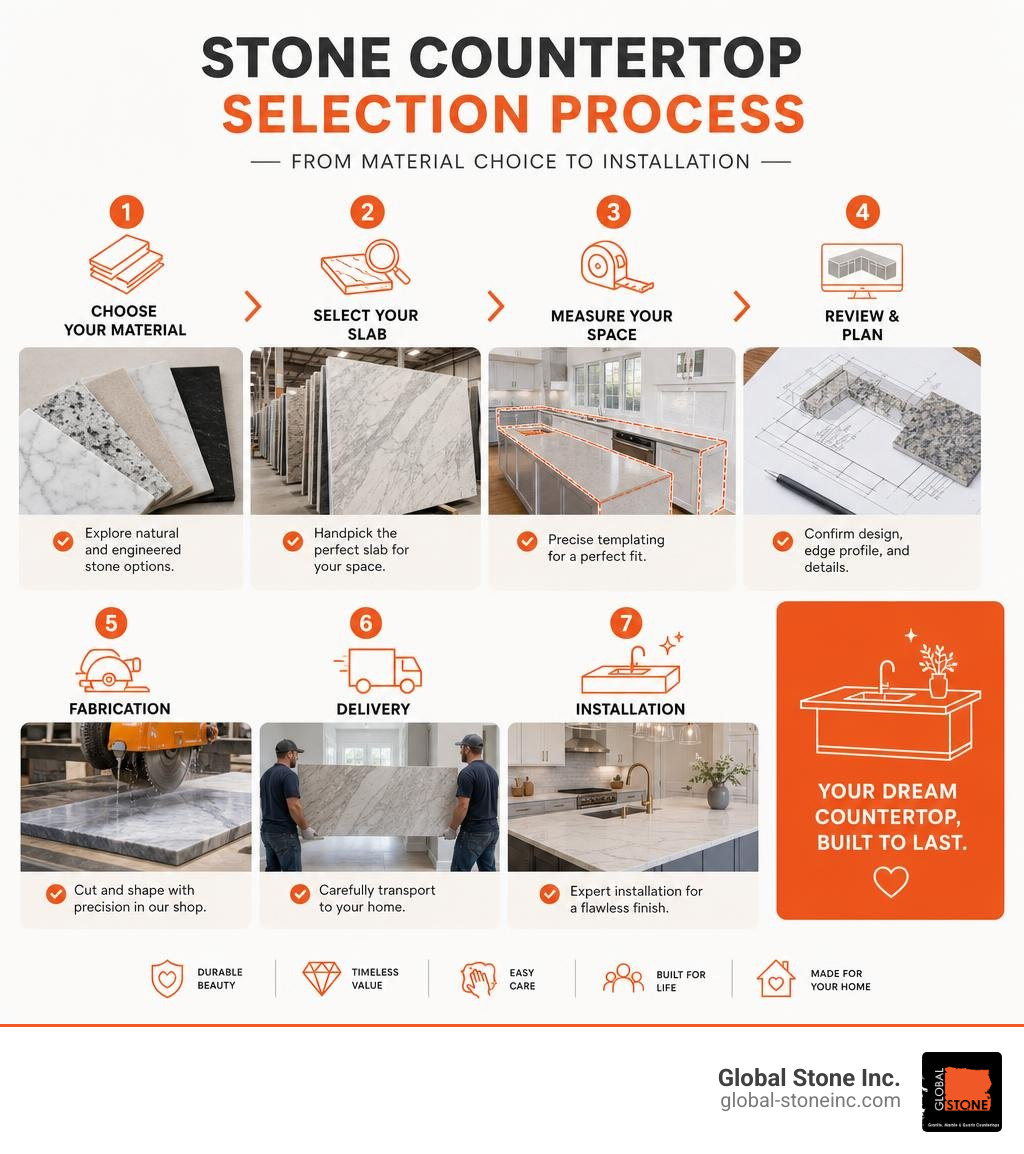
Bringing your dream countertops to life requires a journey from raw slab to precision-cut surface. This process relies on advanced technology and skilled craftsmanship.
Understanding the Price Ranges
The total cost of your center stone countertops is influenced by the rarity of the material, the thickness of the slab (typically 2cm or 3cm), the complexity of the cuts, and the labor required for installation.
- Sintered Stone: Costs between $60 to $150 per square foot installed, reflecting the specialized diamond blades and handling expertise required to cut it without cracking.
- Granite: Ranges from $80 to $130 per square foot installed.
- Marble: Typically runs from $40 to $100 per square foot installed, though rare Italian varieties can go much higher.
- Quartz: Ranges from $50 to $200 per square foot installed. The average material and installation cost often sits between $50 to $75 per square foot, with professional installation labor running up to $30 per square foot.
If you are looking for gorgeous, budget-friendly options in the Chicagoland area, explore the Affordable Quartz Countertops Chicago Residents Love.
The Fabrication Journey from Slab to Countertop
The journey begins with laser templating. Our installation team visits your home to capture digital measurements of your cabinetry down to a fraction of a millimeter. This digital template is loaded into our fabrication software, allowing us to align the seams and vein patterns perfectly before a single cut is made.
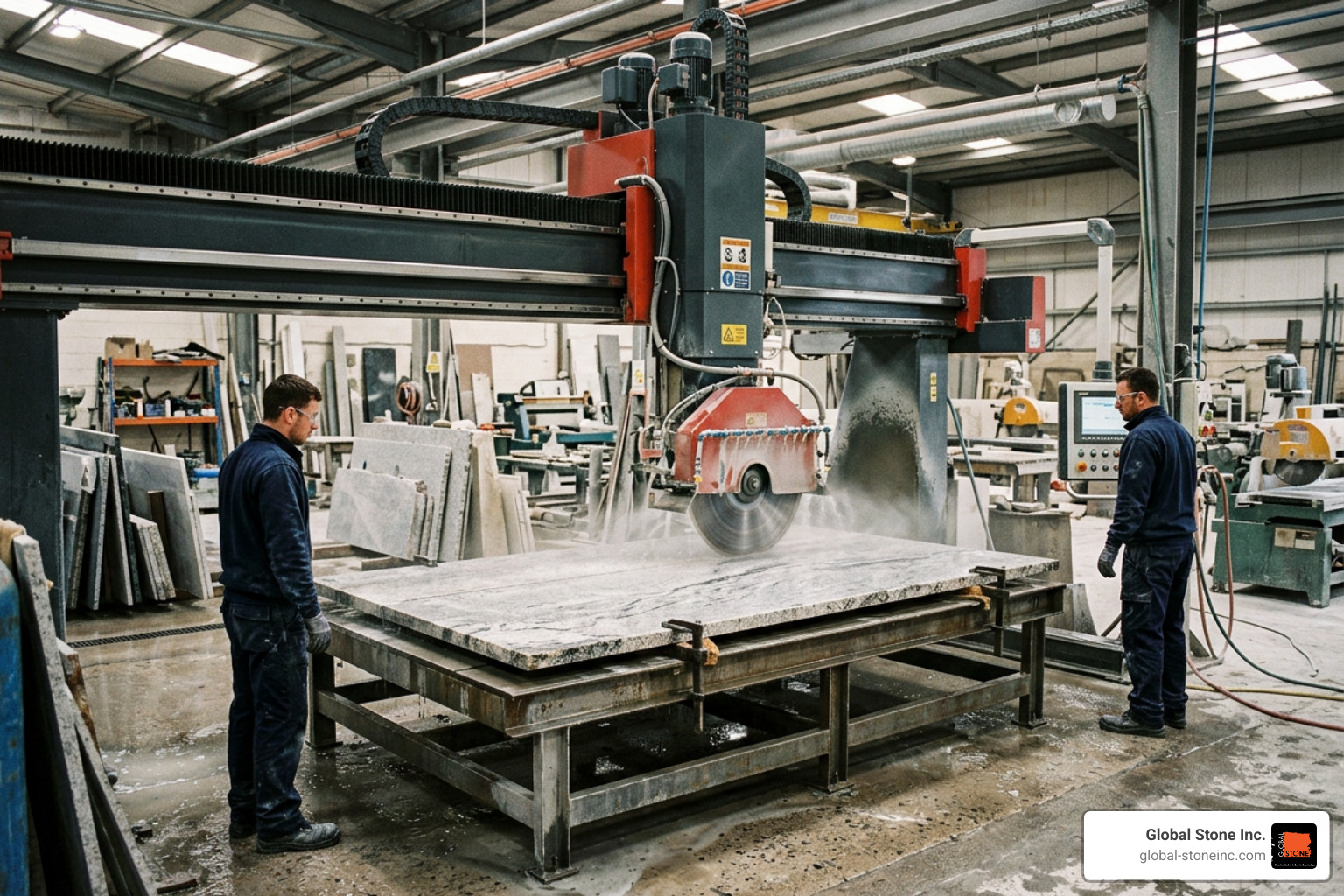
Next, we use a high-precision CNC bridge saw and waterjet cutters at our Elk Grove Village facility to shape the stone. These advanced machines cut the sink openings, faucet holes, and customized edge profiles.
Whether you want a clean, minimalist eased edge, a classic bevel, or a dramatic mitered apron that makes a standard 3cm slab look like a massive 6cm block of solid stone, professional fabrication makes all the difference.
Practical Care and Design Customization
Once your new countertops are installed, keeping them looking brand new comes down to simple daily habits and choosing the right design accents.
How to Maintain and Clean Your Center Stone Countertops
Different materials require different levels of love:
- Natural Stone (Granite, Quartzite, Marble): These materials must be sealed regularly (usually once a year for granite and quartzite, and more frequently for marble) to prevent liquids from penetrating the pores. Clean them daily using a soft microfiber cloth, warm water, and a mild, pH-neutral dish soap. Avoid abrasive scrubs or acidic cleaners.
- Engineered Quartz and Sintered Stone: These surfaces never require sealing. Spills wipe away easily, making them incredibly low-maintenance. However, while quartz is highly stain-resistant, you should still avoid leaving harsh chemicals or solvents on the surface. Always use a trivet or hot pad for hot pots, as the resin in quartz can yellow or crack under sudden thermal shock.
Are you thinking about upgrading your bathroom vanity surfaces as well? Learn why this material is a perfect fit by reading Built to Last: Why Your Next Bathroom Counter Should Be Quartz.
Design Options: Colors, Textures, and Backsplashes
Your design options are virtually limitless. For a sleek, contemporary look, many homeowners are turning to a honed or leathered finish, which offers a soft, matte texture that hides fingerprints and water spots beautifully.
To elevate your design, consider bookmatching — a technique where two consecutive stone slabs are cut and polished so that they mirror each other, creating a dramatic, symmetrical pattern across a large island or full-height backsplash.
If you are dreaming of a clean, bright aesthetic, read our tips on White Quartz Countertops for Your Kitchen. To tie the entire look together, check out these 7 Stunning Backsplash Ideas for Your Calacatta Quartz Countertops.
Frequently Asked Questions about Stone Countertops
What is the difference between natural stone and sintered stone?
Natural stone is quarried directly from the earth and sliced into slabs, preserving its raw, geological history. Sintered stone is an engineered product made from natural minerals that are pulverized and fused together using extreme heat and pressure without any resin binders. This lack of resin gives sintered stone superior heat resistance (up to 300°F and beyond) and complete UV stability compared to quartz.
Can I use these stone countertops for outdoor kitchens?
Yes, but you must choose your material wisely. Granite, quartzite, and sintered stone perform exceptionally well in outdoor environments because they are highly resistant to UV rays and freeze-thaw cycles. Engineered quartz is not recommended for outdoor use, as sunlight will eventually break down the resin binders, causing the surface to fade, yellow, or warp.
How do I choose a reliable stone fabricator in Chicago?
When searching for a local stone center, look for a company that handles everything in-house — from design and fabrication to final installation. This ensures seamless communication and accountability.
Avoid suppliers who do not have a physical showroom where you can view full-size slabs in person. A reputable local fabricator will have a dedicated showroom where you can inspect slabs, explore different edge profiles, and consult directly with design experts to ensure your project is executed perfectly.
Conclusion
Your countertops are the foundation of your kitchen’s style and functionality. Investing in premium center stone countertops means investing in the long-term beauty and value of your home.
At Global Stone Inc., we bring over 20 years of experience to every project we touch. Serving the greater Chicago area from our state-of-the-art facility in Elk Grove Village, and our convenient locations in Naperville and Chicago, we handle the entire process in-house. With our team of expert designers, precise fabricators, and careful installers, we are proud to offer a lifetime warranty on our craftsmanship.
Are you ready to find the perfect centerpiece for your dream kitchen? Explore our premium countertop collection or take a look at our specialized Countertops/Natural Stone Countertops/Quartz Countertop options to get started today!