
A Practical Guide to Sinks
Why Choosing the Right Sink Matters for Your Home
Sinks are one of the hardest-working fixtures in any home — used dozens of times a day in kitchens, bathrooms, laundry rooms, and beyond.
But with so many types, materials, and installation styles available in July 2026, picking the right one can feel overwhelming. The wrong choice can mean poor fit, costly reinstallation, or a sink that clashes with your countertop material.
Here is a quick overview of the most common sink types to match your search intent:
| Sink Type | Best For | Common Materials |
|---|---|---|
| Drop-in | Easy DIY install, any countertop | Stainless steel, cast iron |
| Undermount | Granite or quartz countertops | Stainless steel, fireclay |
| Farmhouse/Apron | Large kitchens, heavy use | Fireclay, cast iron |
| Vessel | Bathroom vanities, modern style | Ceramic, copper, stone |
| Wall-mount | Small spaces, ADA compliance | Porcelain, stainless steel |
| Pedestal | Bathrooms without cabinet storage | Porcelain, ceramic |
This guide covers everything — from sink types and materials to installation requirements and maintenance tips — so you can make a confident, informed decision.
I’m Greg Zamarski, and with over 20 years of fabricating and installing granite, marble, and quartz countertops at Global Stone Inc., I’ve helped hundreds of Chicago-area homeowners pair the right sinks with the right stone surfaces. Getting this pairing correct from the start saves time, money, and frustration.
Understanding Different Types of Sinks
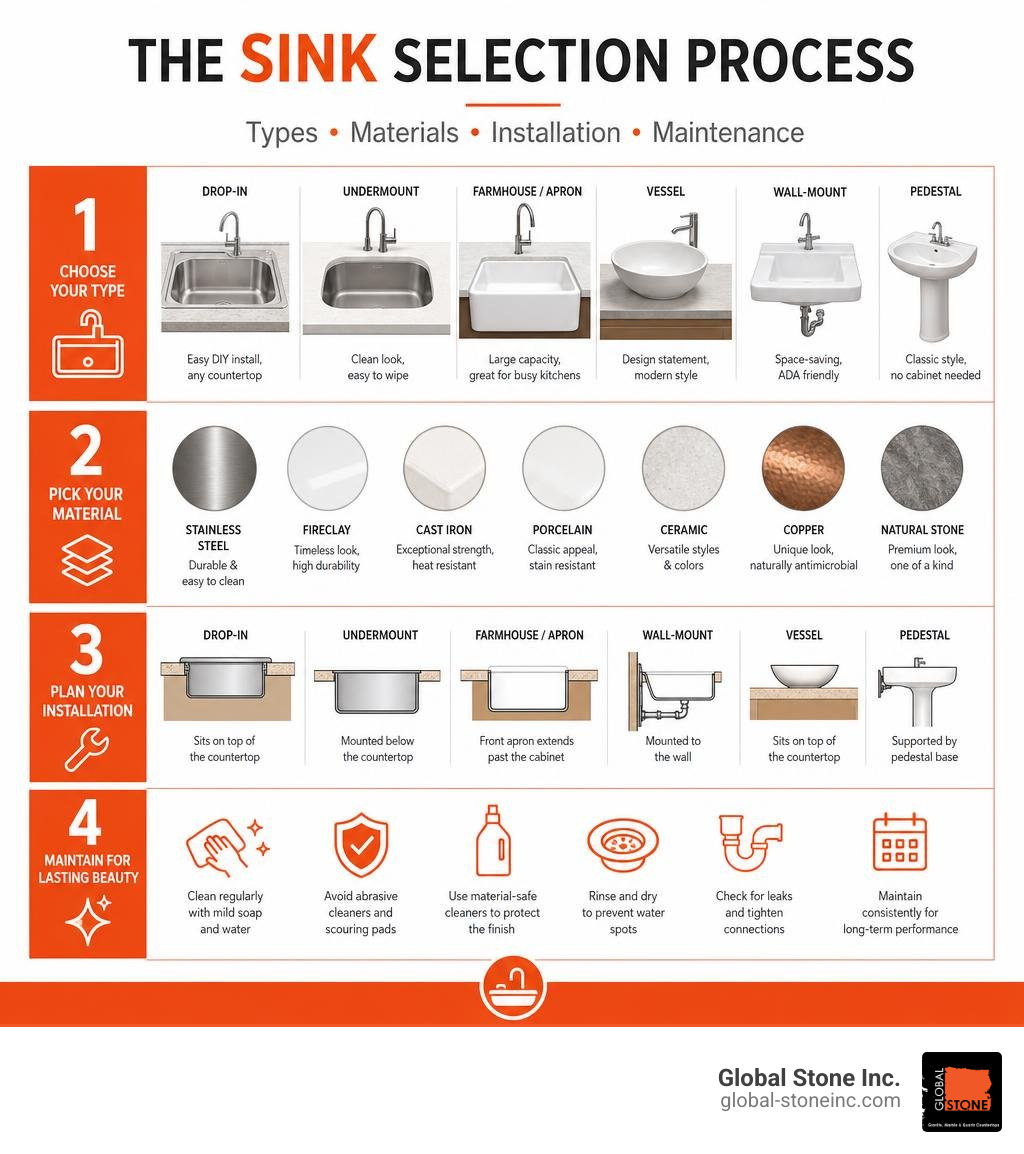
When planning a remodel or building a new home, the physical mounting style of your sink is the first major decision you will face. How a sink connects to your countertop affects both the daily cleaning routine and the overall aesthetic of your space.
Drop-In Sinks (Top-Mount)
Drop-in sinks are the traditional standard. They feature a finished rim or lip that rests directly on top of the countertop surface. The sink is lowered into a pre-cut hole and secured from below.
- Pros: Extremely easy to install and highly budget-friendly. They work with virtually any countertop material, including laminate.
- Cons: The raised rim can catch dirt, grime, and water. Sweeping crumbs directly from the counter into the basin is blocked by the lip.
Undermount Sinks
Undermount models are mounted entirely beneath the countertop surface. This style creates a completely seamless transition from the stone to the basin.
- Pros: Sleek, modern appearance that maximizes usable counter space. Cleaning is incredibly easy because you can wipe water and debris directly into the bowl.
- Cons: Requires professional installation and a solid, water-resistant countertop material like granite, quartz, or marble.
Farmhouse Sinks (Apron-Front)
Farmhouse sinks feature a deep basin with an exposed front panel that replaces a section of your cabinetry.
- Pros: Exceptionally deep and wide, making them perfect for washing oversized pots, baking sheets, and large dinner plates. They also reduce strain on your back because they sit closer to your body.
- Cons: Requires specialized, heavy-duty cabinetry and custom countertop cuts.
Vessel Sinks
Mainly used in bathroom design, vessel styles sit entirely on top of the vanity counter, resembling a decorative bowl.
- Pros: Highly artistic, modern, and available in unique materials like hand-painted ceramic, hammered copper, and carved natural stone.
- Cons: They increase the height of the washing area, which may require a lower vanity cabinet or tall, vessel-specific faucets.

Wall-Mount and Pedestal Sinks
Wall-mount and pedestal models do not require a countertop or vanity cabinet. Wall-mount versions bolt directly to the wall studs, while pedestal versions rest on a decorative ceramic column.
- Pros: Ideal for tight powder rooms and small bathrooms where space is at a premium. Wall-mount options are also excellent for achieving ADA compliance.
- Cons: Complete lack of under-sink storage space and exposed plumbing lines.
To see these mounting styles in person, we highly recommend visiting local home design showrooms or consulting with a professional stone fabricator in the Chicago area.
Kitchen Sinks
Your kitchen sink is the command center of your culinary space. Beyond selecting an installation style, you must decide on the bowl configuration and overall functionality.
Single Bowl vs. Double Bowl vs. Triple Bowl
- Single Bowl: A single, wide basin has become the dominant preference for modern kitchens. It easily accommodates large baking sheets, Dutch ovens, and commercial-sized cookware.
- Double Bowl: Typically split 50/50 or 60/40, double bowls allow you to separate dirty dishes from food prep or clean water. However, the dividing wall can make it difficult to soak long pans.
- Triple Bowl: Usually featuring two standard basins with a small garbage disposal basin in the center, these are ideal for multi-cook households but require significant counter space.
Workstation Sinks
One of the most exciting design trends in July 2026 is the workstation sink. These sinks feature integrated ledges built into the basin walls. These ledges hold custom-fit accessories like sliding cutting boards, colanders, roll-up dish drying racks, and utility bins. Workstation models allow you to prep, wash, chop, and dry directly over the basin, keeping your stone countertops clutter-free.
If you are planning a kitchen renovation, take a look at our comprehensive guide, The Complete Guide to Kitchen Sinks, to dive deeper into sizing, faucet pairings, and layout strategies. For purchasing high-quality basins, you can browse wholesale inventories via Sinks & Tools | E-Commerce Sinks-Wholesale or consult with your countertop installer to find the perfect match.
Bathroom Sinks
Bathroom sinks balance daily hygiene needs with personal style. Unlike kitchen basins, bathroom models are often smaller and focus heavily on material aesthetics.
Ceramic and Porcelain Sinks
Vitreous china and ceramic remain the gold standard for bathroom basins. Baked at incredibly high temperatures, these materials create a glassy, non-porous surface that resists staining, scratching, and fading.
Undermount Vanity Sinks
For a clean, minimalist bathroom vanity, undermount porcelain basins are highly favored. They tuck neatly beneath your marble or quartz top, allowing the natural veining of the stone to take center stage. They are also incredibly easy to wipe clean after brushing teeth or washing hands.
Vessel Bowls
If you want to make a bold design statement, a vessel bowl is the way to go. From circular ceramic bowls to rectangular black stone basins, vessel options act as functional art. To explore how dark fixtures can transform your master bath, read our guide on Bold and Beautiful Black Bathroom Sinks to Elevate Your Space.
Sink Materials and Durability
The material you select determines how your sink will handle daily wear and tear, thermal shock, and exposure to acidic foods or cleaning chemicals. For a complete historical look at how these materials evolved over the centuries, check out the Sink article on Wikipedia.
Here is a breakdown of the most common materials used today:
Stainless Steel
Stainless steel is the most common material for kitchen and commercial installations due to its durability, corrosion resistance, and ease of cleaning. High-quality stainless steel basins are made from 16-gauge or 18-gauge Type 304 steel. The lower the gauge number, the thicker and quieter the steel.
Fireclay
Fireclay is a specialized ceramic material clay that is molded, glazed, and baked at temperatures exceeding 2200°F for nearly a full day. This process fuses the clay and glaze, creating an incredibly dense, heavy, and impact-resistant sink. Fireclay is the premier choice for traditional farmhouse styles.
Granite and Quartz Composite
Made by mixing crushed natural quartz or granite with high-performance acrylic resins, composite sinks are practically indestructible. They are non-porous, highly resistant to scratches and chips, and feature built-in anti-microbial properties.
Porcelain Enamel on Cast Iron or Steel
Cast iron coated in a thick layer of porcelain enamel offers a timeless, glossy look. It is exceptionally heavy, retains heat well, and is highly durable, though the enamel can chip if struck by a heavy pan. Porcelain on steel is a lighter, more budget-friendly alternative with a similar look.
Copper
Copper sinks offer a rustic, living finish. Over time, the copper reacts with oxygen and water to develop a rich patina that shifts in color. Copper is also naturally antibacterial.
If you are looking for a highly tailored metal basin, specialized metal fabricators can craft bespoke copper or stainless steel solutions to fit your exact specifications.
Material Comparison Table
| Material | Durability | Scratch Resistance | Noise Level | Maintenance |
|---|---|---|---|---|
| Stainless Steel | High | Moderate (Scratches blend over time) | Low to Medium (Depends on sound pads) | Easy |
| Fireclay | High | Very High | Low | Easy |
| Granite Composite | Extremely High | Extremely High | Low | Very Easy |
| Cast Iron | High | High (Enamel can chip) | Low | Moderate |
| Copper | Moderate | Low | Low | High (Patina changes) |
Key Installation and Design Considerations
A successful sink project requires careful coordination between your cabinetry, your countertop fabricator, and your plumbing installer.
Cabinet Size and Clearance
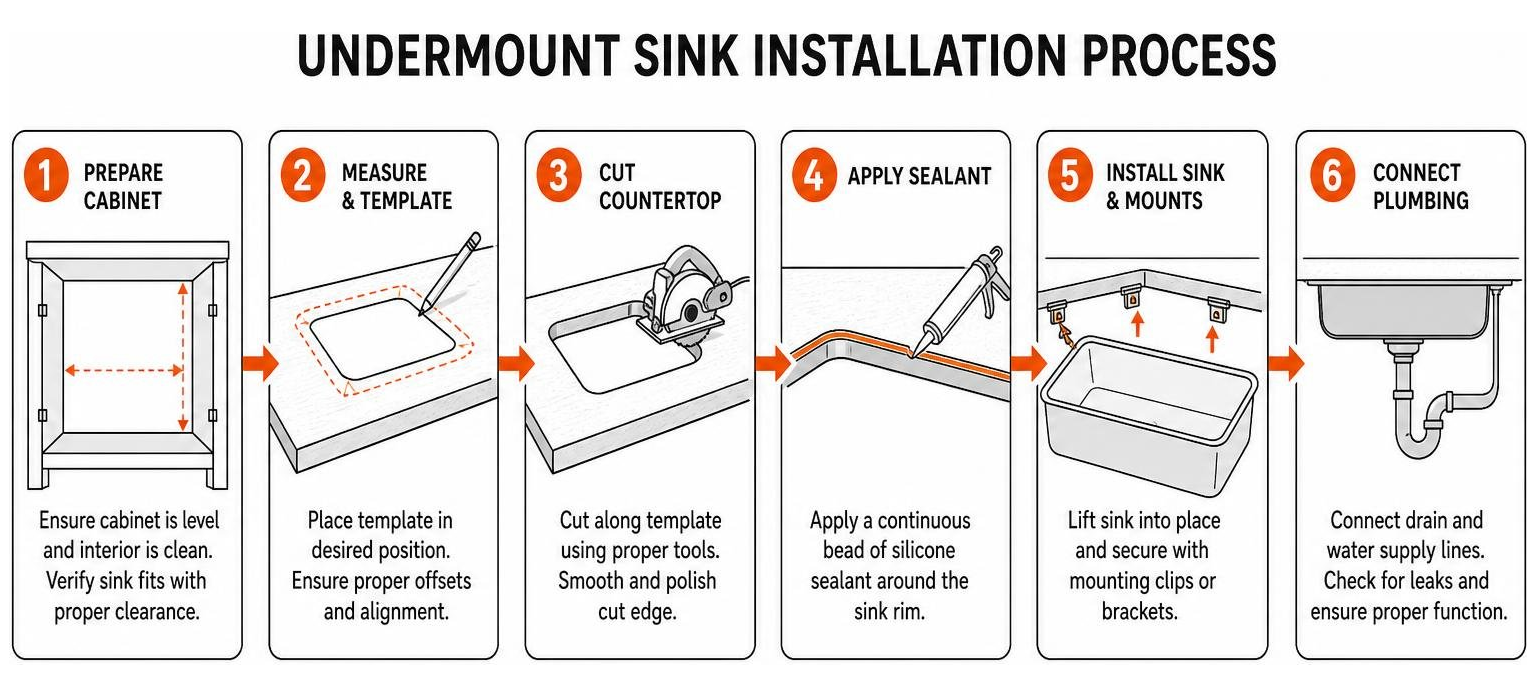
A common mistake is choosing a sink that is too large for the existing base cabinet. Always measure the interior width of your cabinet. As a general rule, your sink’s outer dimensions should be at least 3 inches smaller than the cabinet’s internal width to leave room for mounting clips and brackets.
Countertop Material Integration
Your countertop material dictates your installation options. Heavy fireclay, cast iron, and undermount sinks must be paired with solid surfaces like granite, quartz, or marble. Because we fabricate and install these stone countertops daily at Global Stone Inc., we ensure that the sink cutout is polished to perfection and structurally supported with heavy-duty undermount harness systems. To learn more about how we handle this process, check out our dedicated page on Sinks Installation.
Drain Placement and Commercial Fittings
Rear-offset drains are highly beneficial because they push the plumbing lines to the back of the cabinet, maximizing the usable storage space underneath. For high-traffic areas or commercial-grade residential setups, pairing your basin with robust plumbing from Chicago Faucets: Commercial Faucets & Fittings ensures reliable water control.
ADA Compliance
For accessible design, look for shallow basins (usually 6.5 inches deep or less) with offset drains to allow proper knee clearance underneath. Models like the Elkay Lustertone SS 19.5 x 22 x 6.5 Single Bowl Drop-in ADA Sink+Perfect Drain | Elkay are specifically engineered to meet these accessibility standards without sacrificing style.
Modern Features and Maintenance Best Practices
Modern manufacturing has introduced incredible innovations that make sinks quieter, cleaner, and more efficient.
Sound-Deadening Pads and Undercoating
To eliminate the metallic “clatter” of running water and garbage disposals, premier stainless steel manufacturers apply thick rubber sound-deadening pads and heavy spray-on undercoatings (often called Stoneguard) to the exterior of the basin.
Perfect Drain Technology
Traditional drain collars leave a small, recessed gap where food debris, slime, and bacteria can accumulate. Innovations like Elkay’s Perfect Drain feature an edgeless, integrated design. The drain is seamlessly pressed into the stainless steel, allowing food and water to glide straight down without catching.
You can see this technology in action on models like the:
- Elkay Lustertone SS 22 x 19.5 x 10.1 Single Drop-in Sink w Perfect Drain | Elkay
- Elkay Lustertone SS 17 x 22 x 10.1 Single Bowl Drop-in Sink w Perfect Drain | Elkay
- Elkay Lustertone SS 19.5 x 19 x 7.5 Single Bowl Drop-in Sink w Perfect Drain | Elkay
- Elkay Gourmet SS 19.5 x 22 x 10.1 Single Bowl Drop-in Sink | Elkay

Cleaning and Scratch Resistance
- Stainless Steel: Light scratches will naturally blend into the satin finish over time. To maintain the luster, clean with a mild abrasive cleaner like Bar Keepers Friend, always wiping in the direction of the grain.
- Fireclay and Composite: Avoid harsh abrasive pads. Use warm soapy water and a soft sponge. For stubborn stains on fireclay, a mild bleach solution or baking soda paste works wonders.
Frequently Asked Questions About Sinks
Why do stainless steel sinks sometimes develop rust stains?
While high-quality 18-gauge Type 304 stainless steel is highly rust-resistant, it is not completely rust-proof. Most “rust” stains are actually surface deposits. They occur when iron particles from cast iron cookware, steel wool pads, or hard water mineral buildup cling to the sink surface and oxidize. These can easily be removed using a stainless steel restoration kit or a mild, non-abrasive metal polish.
What is the difference between Belfast and London sinks?
Both are traditional fireclay utility or butler sinks. The primary difference is that a Belfast sink features an integrated overflow weir (a built-in channel that prevents water from spilling over the edge). Historically, London sinks were built without an overflow because water was scarcer in London, and designers wanted to encourage users to conserve water by not filling the basin to the top.
How do I choose the correct sink size for my existing cabinets?
To find the right fit, measure the interior width of your sink base cabinet. Subtract 3 inches from this measurement to determine the maximum outer width of your new sink. For example, if you have a standard 30-inch cabinet, your sink’s outer width should not exceed 27 inches. This ensures adequate clearance for mounting brackets, clips, and faucet installations.
Conclusion
Choosing the perfect sink is about balancing beautiful design with daily practicality. Whether you are installing a heavy-duty workstation sink in your kitchen or a modern vessel bowl in your powder room, pairing it with the right countertop and professional installation ensures it will perform flawlessly for decades.
At Global Stone Inc., we combine over 20 years of experience with an industry-leading lifetime warranty. From our state-of-the-art fabrication facility in Elk Grove Village, our in-house designers, fabricators, and installers serve homeowners throughout the Chicago area, including Naperville and Chicago. We handle the entire process under one roof — ensuring your stone countertops and sinks fit together with absolute precision.
Ready to start your next home project? Explore The Complete Guide to Kitchen Sinks or contact us today to schedule your New Bathroom Sink Installation in Chicago.