A – Z Guide to Dekton Countertops
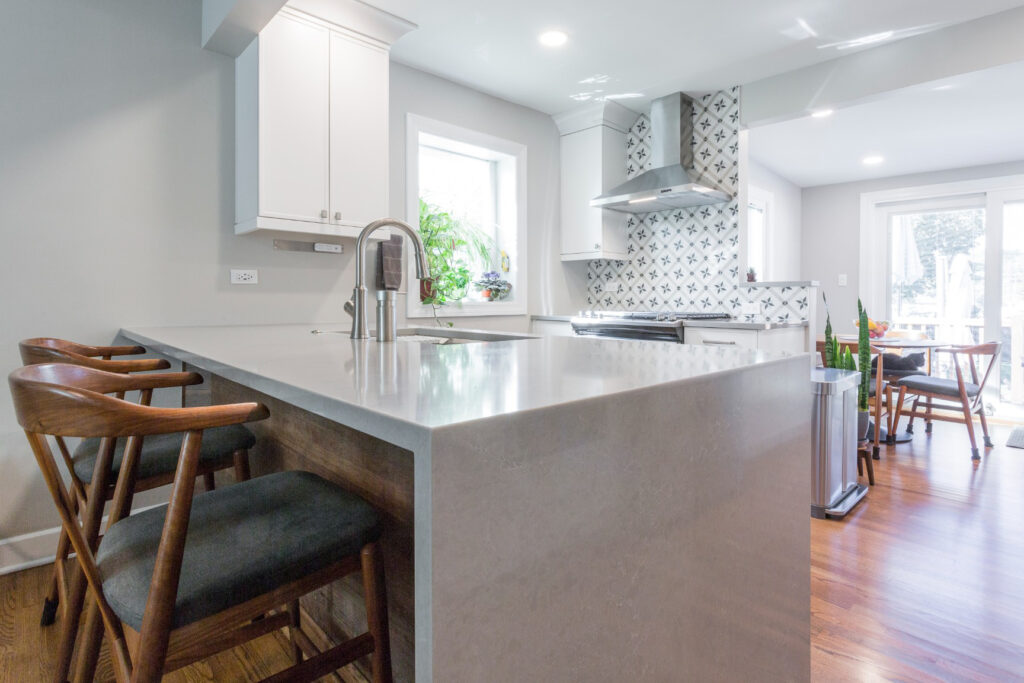
What Are Dekton Countertops? A Quick Answer
Dekton countertops are ultracompact surfaces made by Cosentino using extreme heat and pressure to fuse glass, quartz, and porcelain into a dense, non-porous slab. Here’s what you need to know at a glance:
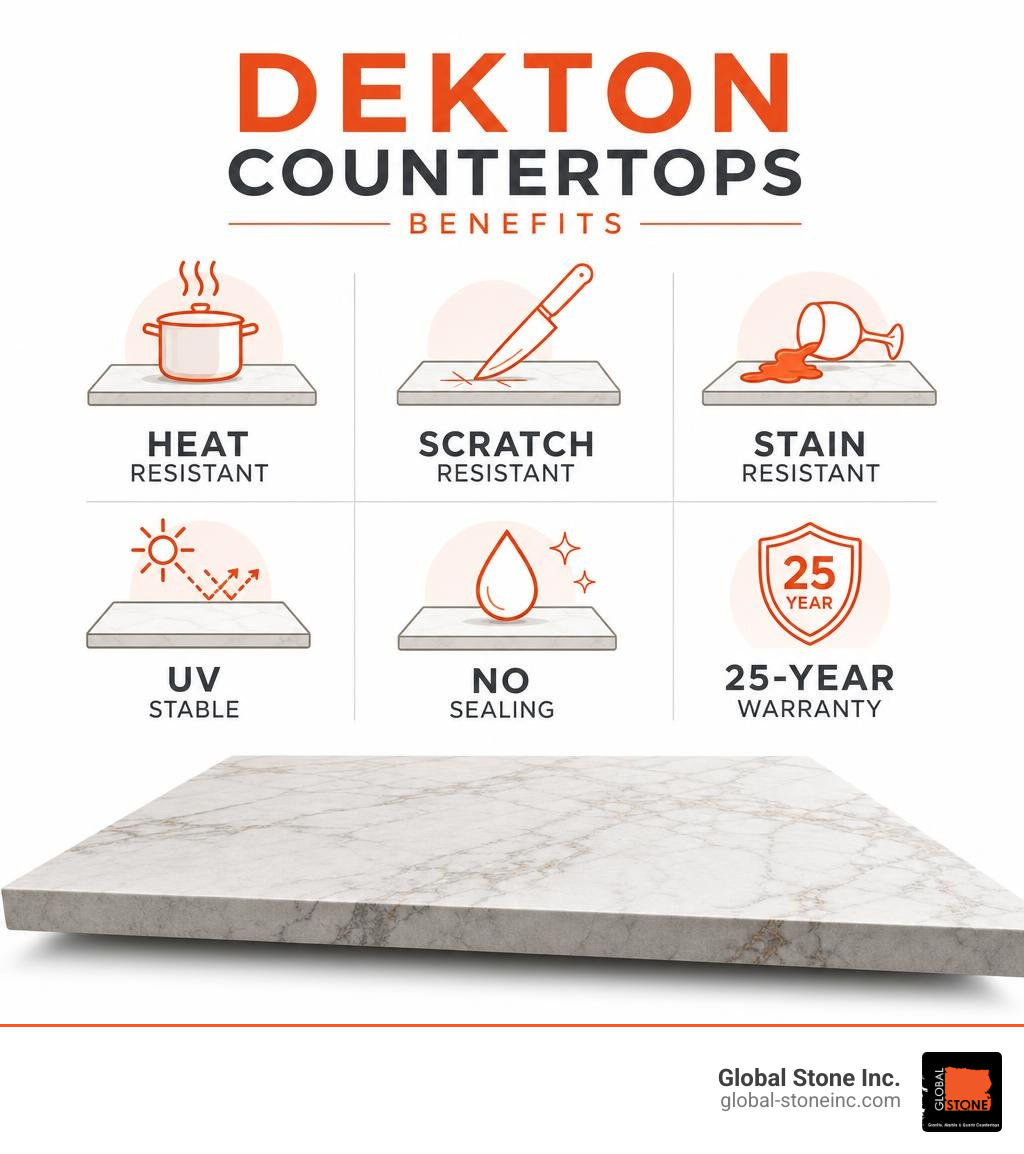
| Feature | Dekton Performance |
|---|---|
| Heat resistance | Withstands direct contact with hot pots and pans |
| Scratch resistance | 92% scratch resistant (ISO tested) |
| Stain resistance | 100% stain resistant — no sealing needed |
| UV resistance | Won’t fade indoors or outdoors |
| Typical cost | $80–$210 per sq ft; $2,400–$6,400 installed |
| Warranty | 25-year consumer warranty (when registered) |
| Maintenance | Soap and water only |
If you’re weighing your options for a kitchen or bathroom remodel, Dekton is one of the most technically advanced countertop materials available today. It’s engineered to handle the demands of real cooking life — heat, spills, scratches, and even outdoor exposure — without the upkeep that natural stone requires.
What makes it stand out isn’t just durability. It’s the combination of performance, design flexibility, and sustainability that few other surfaces can match. Dekton is the only countertop material certified as carbon-neutral across its entire lifecycle, from raw materials to end of life.
This guide covers everything: how Dekton is made, how it compares to quartz and granite, what it costs in 2026, and what to watch out for before you buy.
I’m Greg Zamarski, owner of Global Stone Inc. — a Chicago-area fabricator and installer with over 20 years of experience working with premium surfaces including dekton countertops. I’ll walk you through everything you need to make a confident decision for your home.
What is Dekton and How is it Made?
To truly appreciate dekton countertops, you have to look past their gorgeous surface and dive into how they are made. Dekton is not just a standard piece of tile or a slab of engineered quartz. It belongs to a class of materials known as Ultra Compact Countertops, which are manufactured using a proprietary method that accelerates the natural geological changes stone undergoes over thousands of years.
According to Cosentino, the creators of this material, What is Dekton can be defined as a sophisticated, carbon-neutral ultracompact surface. Its manufacturing relies on Particle Sintering Technology (PST), a process that subjects raw minerals to extreme physical forces.
To press these minerals into a solid slab, Cosentino uses a colossal press that exerts 25,000 tons of uniform pressure. To put that in perspective, that is roughly two and a half times the weight of the entire Eiffel Tower pressing down on a single slab. This extreme compaction eliminates air pockets entirely, resulting in a material with null porosity and zero micro-defects.
Sinterized Particle Technology
Sinterized Particle Technology is the magic behind Dekton’s extreme durability. During the sintering process, the dry blend of raw minerals is exposed to temperatures reaching up to 2,192°F (1,200°C).
At this heat level, the particles don’t just melt; they fuse together on a molecular level. This mimics the metamorphic change that occurs deep within the Earth’s crust when natural stones like granite or marble are formed. However, instead of taking millions of years, this high-tech industrial version completes the transformation in a matter of hours. The result is a completely glassy, ultra-dense structure that outperforms almost every natural stone on the market.
Mineral Composition of Dekton Countertops
What exactly goes into the mix before the big squeeze? Dekton is composed of a blend of more than 20 natural minerals. This mix includes raw materials sourced from three main groups:
- Glass: Provides structural stability and contributes to the material’s non-porous nature.
- Quartz: Adds incredible hardness and scratch resistance.
- Porcelain: Lends a refined texture, color depth, and exceptional heat tolerance.
Unlike traditional engineered quartz, which relies on plastic resins and polymers to bind the stone particles together, Dekton is entirely resin-free. It is 100% inorganic mineral. This lack of resins is exactly why it can handle extreme heat and direct sunlight without scorching, warping, or yellowing over time. If you are exploring options for your home, understanding these material differences is a great first step. You can read more about how this mineral blend compares to other options in our detailed guide on The Best Materials for Residential Countertops.
Key Benefits and Performance Features of Dekton Countertops
When we install DEKTON KITCHEN COUNTERTOPS for our clients in the Chicago suburbs, we often tell them they are buying peace of mind. Dekton is designed for high-performance, everyday living. Additionally, for environmentally conscious homeowners, it is the only Cradle-to-Grave carbon-neutral surface on the market. Cosentino offsets 100% of the carbon emissions generated throughout the product’s entire lifecycle. To back up this incredible durability, the material comes with a robust 25-year consumer warranty when registered within six months of purchase.
Heat and UV Resistance
One of the most liberating things about having a Dekton countertop is the cooking experience. Because it contains zero resins and is highly dense, Dekton has excellent thermal shock resistance. You can take a cast-iron skillet directly from a 500°F oven and place it straight onto the countertop. There is no need for trivets, hot pads, or fear of cracking the surface.
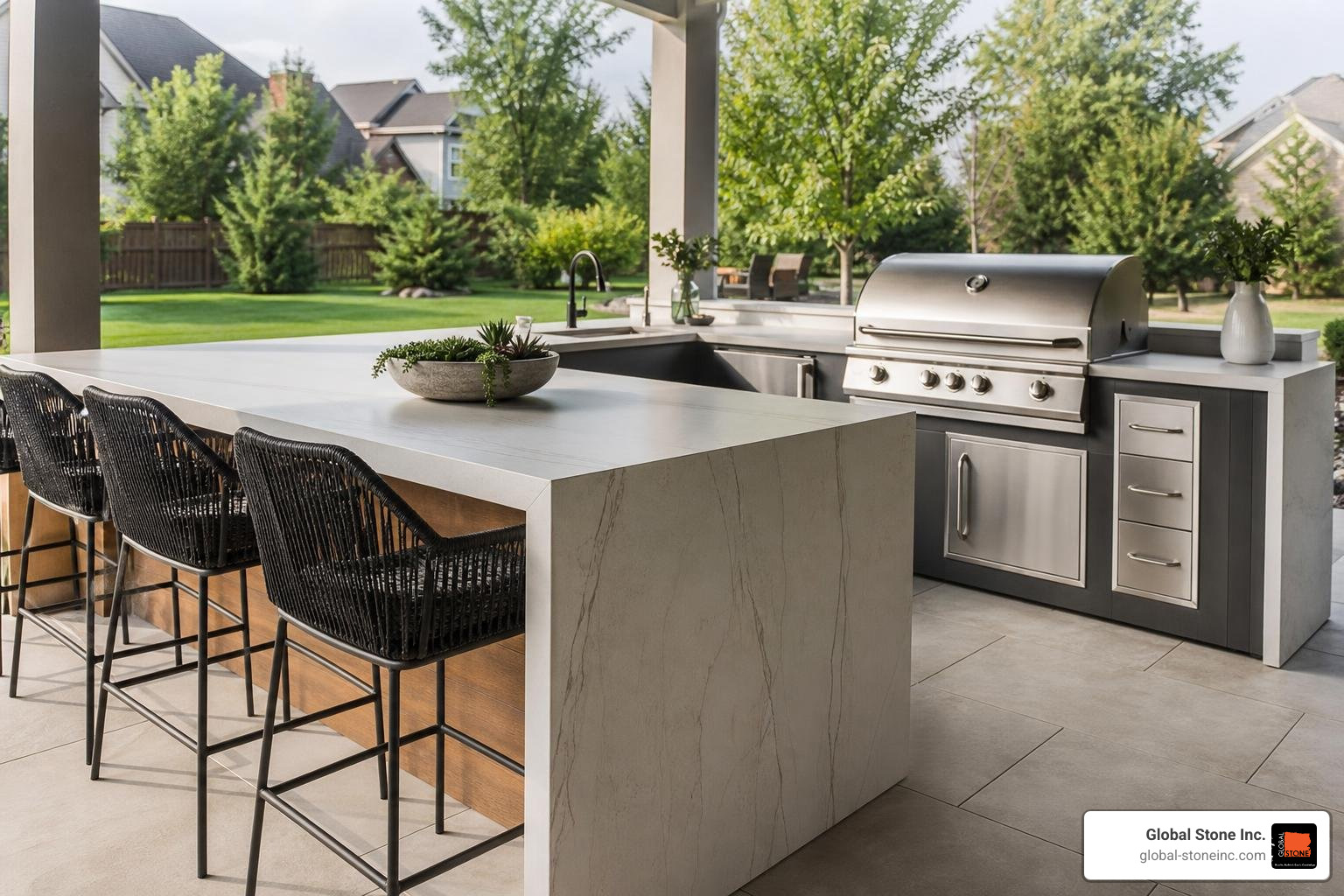
This extreme heat tolerance also makes it a non-combustible material with an A1 fire rating. Furthermore, Dekton is completely UV-resistant. While quartz countertops will fade, yellow, or weaken when exposed to direct sunlight, Dekton is entirely unaffected by UV rays. This makes it the ultimate choice for fully exposed outdoor kitchens, patios, and outdoor grilling stations in Illinois, where the weather swings from freezing winters to scorching summers.
Scratch and Stain Resistance
Thanks to its null porosity, Dekton is practically immune to stains. Liquids like red wine, dark coffee, lemon juice, and even permanent markers cannot penetrate the surface. They simply sit on top until you wipe them away. You don’t have to worry about acidic foods etching the surface the way they would on marble or granite.
When it comes to scratch resistance, Dekton scores incredibly high (tested at 92% scratch resistance under strict ISO standards). You can technically slice bread or chop vegetables directly on the surface without leaving a mark—though we still recommend using a cutting board, mostly to keep your kitchen knives from dulling! It also boasts incredible chemical resistance, meaning it won’t be damaged by common household cleaners, though you should always avoid products containing hydrofluoric acid.
Comparing Dekton to Other Materials
Choosing a countertop is all about tradeoffs. To help you visualize how Dekton stacks up against traditional materials like quartz, granite, and porcelain, we’ve put together a direct comparison table:
| Property | Dekton | Engineered Quartz | Granite | Porcelain |
|---|---|---|---|---|
| Composition | 100% Minerals (Resin-free) | ~90% Quartz, 10% Resin | 100% Natural Stone | Clay, Kaolin & Silica |
| Sealing Required? | No | No | Yes (Every 1–2 years) | No |
| Heat Resistance | Excellent (Up to 2192°F) | Moderate (Damaged >300°F) | High | High |
| UV Stability | Perfect (Indoor/Outdoor) | Low (Indoors only) | High | High |
| Porosity | Near-Zero | Very Low | Low to Moderate | Very Low |
| Chipping Risk | Moderate (Sharp edges) | Low | Low | Moderate to High |
If you want to explore how these options fit your specific aesthetic, browse our dedicated pages on Natural Stone Countertops or check out our full range of available Countertops.
Dekton vs. Quartz, Granite, and Porcelain
While engineered quartz has been the reigning champion of low-maintenance countertops for years, it has two major Achilles’ heels: heat and UV light. Because quartz contains plastic resins, hot pans can leave permanent burn rings, and sunlight will slowly discolor the surface. Dekton solves both of these issues by being completely resin-free.
When compared to granite, Dekton wins hands-down on maintenance. Granite is a beautiful natural stone, but it is naturally porous. Without regular sealing, granite can harbor bacteria and absorb liquids, leading to permanent stains. Dekton requires absolutely zero sealing.
Porcelain is the closest cousin to Dekton, but there is still a key manufacturing difference. Standard porcelain is fired without the massive 25,000-ton compaction step that Dekton undergoes. This means Dekton is denser, has higher impact resistance, and is less prone to the micro-cracks that can sometimes plague standard porcelain slabs during the fabrication process.
Design, Cost, and Maintenance
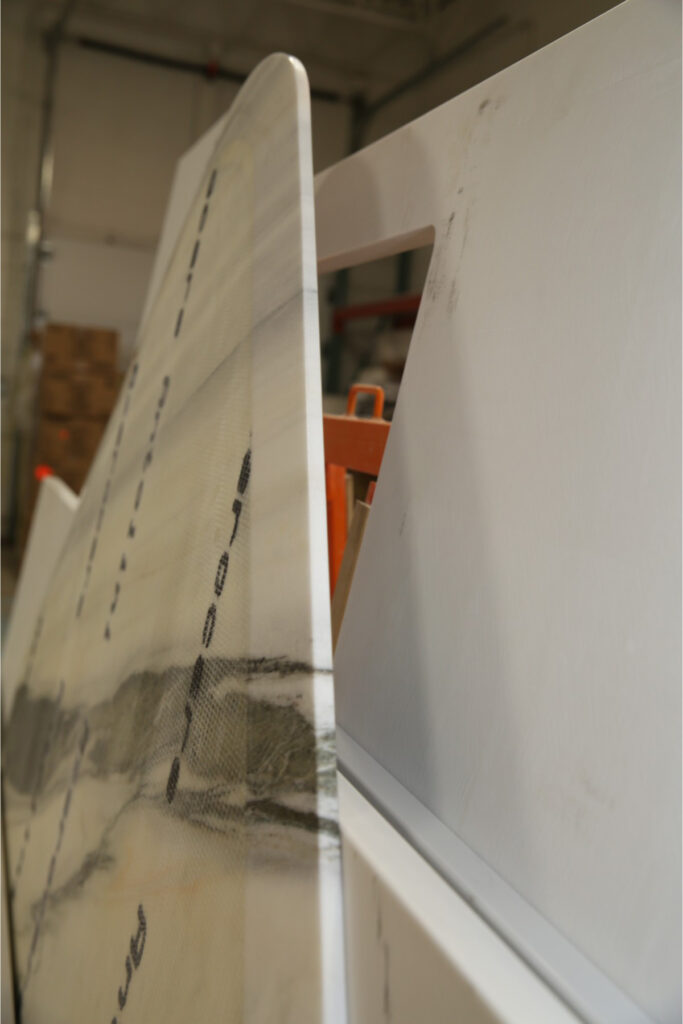
One of the great visual design benefits of Dekton is its slab size. Slabs are available in large-format dimensions up to 126 x 55.1 inches, with a Jumbo option available at 129.9 x 64.2 inches. These massive sizes allow designers to cover large kitchen islands and long L-shaped counters with minimal joints, creating a highly hygienic and visually seamless look. We work closely with the industry’s leading Brands to bring these premium design options straight to your home.
Popular Colors and Finishes
Dekton is available in a vast array of colors and textures that mimic everything from industrial concrete to exotic natural marbles. Some of the most popular collections include:
- Pietra Kode: Inspired by classic Italian stones like Travertine and Vicenza stone.
- Onirika: A collection that showcases dramatic, deep veining with a high-end, dreamlike aesthetic.
In terms of finishes, you can choose from matte (which minimizes light reflections in bright kitchens), polished (for a high-gloss, mirror-like shine), and textured surfaces that mimic the feel of natural, cleft stone. For ultra-high gloss, Cosentino offers X-Gloss, which uses a nanotech treatment to achieve a spectacular, crystal-clear shine.
Slab Sizes and Thickness Options
Depending on your design goals, Dekton comes in several thickness profiles:
- 0.31 inches (8 mm): Ideal for light-weight applications like vertical wall cladding.
- 0.47 inches (12 mm): A sleek, modern profile popular in contemporary European kitchen designs.
- 0.79 inches (20 mm): The standard thickness for traditional American kitchen countertops.
- Dekton Slim (4 mm): An ultra-light format designed for furniture cladding, drawer fronts, and bathroom wall panels.
2026 Cost Factors and Pricing
According to How Much Does a Dekton Countertop Cost? | Angi, the price for a Dekton countertop installation typically ranges from $80 to $210 per square foot for materials. For a standard kitchen remodel, homeowners can expect to invest between $2,400 and $6,400 on average.
Several factors will influence your final project cost:
- Color and Pattern: Solid colors are generally more affordable, while complex, highly-detailed marble patterns sit at the higher end of the price spectrum.
- Slab Thickness: Thicker slabs (20 mm) cost more than thinner slabs (12 mm).
- Fabrication Complexity: Because Dekton is incredibly hard, cutting sink holes, cooktop cut-outs, and polished edges requires specialized diamond-tipped tools and experienced fabricators. This makes labor costs slightly higher than those for standard quartz or granite.
- Number of Seams: Complex kitchen layouts requiring multiple cuts and seam joinery will increase the overall fabrication time.
Cleaning and Countertop Maintenance
Caring for your new surface is incredibly simple. For daily cleanups, you only need a soft cloth, some warm water, and a mild dish soap. If you run into a stubborn, dried-on spill, you can safely use a non-abrasive kitchen sponge and a standard household surface cleaner.
Unlike natural stones, you will never have to spend time or money applying chemical sealers to keep your counters safe from moisture. To learn more about keeping your kitchen surfaces looking brand new, check out our comprehensive guide on Countertop Maintenance.
Understanding the Drawbacks of Dekton Countertops
While Dekton is an incredible material, we believe in being completely honest with our clients. No material is completely indestructible. The main drawback of Dekton is its susceptibility to edge chipping.
Because the material is extremely dense and rigid, it behaves somewhat like a sheet of heavy glass. If you accidentally strike a sharp, 90-degree edge with a heavy cast-iron pan, it can chip. To minimize this risk, we highly recommend choosing a rounded or beveled edge profile (at least a 3 mm bevel) to help deflect impacts.
Additionally, because the complex patterns on some Dekton slabs are printed onto the surface rather than running through the entire thickness of the slab, a deep chip can reveal the solid-colored core underneath. Finally, because of the specialized tools and precise handling required to cut this material without cracking it, professional installation is absolutely mandatory.
Frequently Asked Questions
Can you put hot pans directly on Dekton?
Yes! You can place hot pots, pans, and baking sheets directly onto your Dekton countertops without any worry. Because Dekton is made of 100% inorganic minerals and contains no resin binders, it will not burn, scorch, or crack from thermal shock.
Does Dekton chip easily?
Dekton is highly impact-resistant across its flat surface, but its edges can be vulnerable to chipping if struck hard by heavy objects. To prevent this, we recommend opting for eased, beveled, or rounded edge profiles rather than sharp, square edges.
Does Dekton require sealing?
No, Dekton has near-zero porosity and never requires sealing. It is naturally resistant to stains, bacteria, and moisture, making it one of the most hygienic and low-maintenance surfaces available.
Conclusion
If you are looking for a countertop that combines cutting-edge technology, unmatched durability, and a stunning modern look, dekton countertops are an exceptional investment. Whether you are designing a high-traffic family kitchen indoors or an elegant entertainment space outdoors, Dekton is built to handle whatever life throws at it.
At Global Stone Inc., we have spent more than 20 years helping homeowners throughout the Chicago area bring their dream spaces to life. From our state-of-the-art fabrication facility in Elk Grove Village, IL, we handle the entire process in-house — from design and custom fabrication to final installation. We proudly serve clients across Chicago, Naperville, Elk Grove Village, and the surrounding suburbs.
If you are ready to explore your options, we invite you to work with our team of expert craftsmen. Contact us today to find a certified Countertop Contractor Chicago, search for Countertop Installation Near Me, or explore our premium selection of Dekton Countertops to get started on your home transformation!