
From Slabs to Veining: Why Black Soapstone is a Timeless Choice
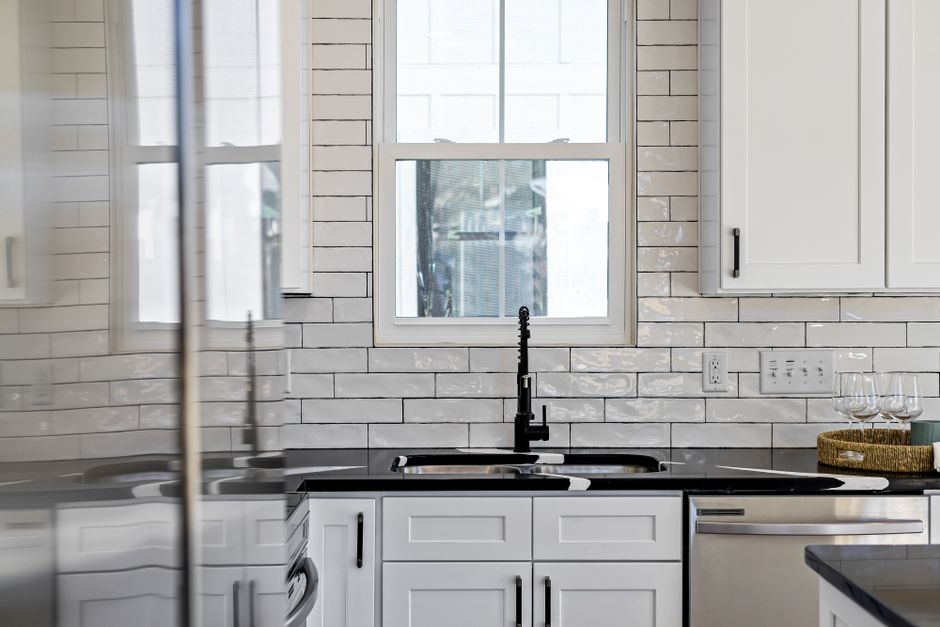
Why Black Soapstone Countertops Belong in Your Next Kitchen or Bathroom Remodel
Black soapstone countertops are a natural stone surface made from metamorphic rock composed mainly of talc, chlorite, and dolomite. They are known for being non-porous, heat-resistant, and low-maintenance — no sealing required.
Quick facts at a glance:
| Feature | Black Soapstone |
|---|---|
| Material | Natural metamorphic rock (talc-based) |
| Finish options | Honed or polished |
| Heat resistance | Excellent — handles hot pans directly |
| Requires sealing? | No — non-porous surface |
| Maintenance | Periodic mineral oil application |
| Cost (installed) | $55–$120/sq ft material + ~$90/sq ft install |
| Hardness (Mohs) | 1 — soft, but scratches are repairable |
| Origin | Primarily Brazil and India |
| Indoor/outdoor use | Yes — both |
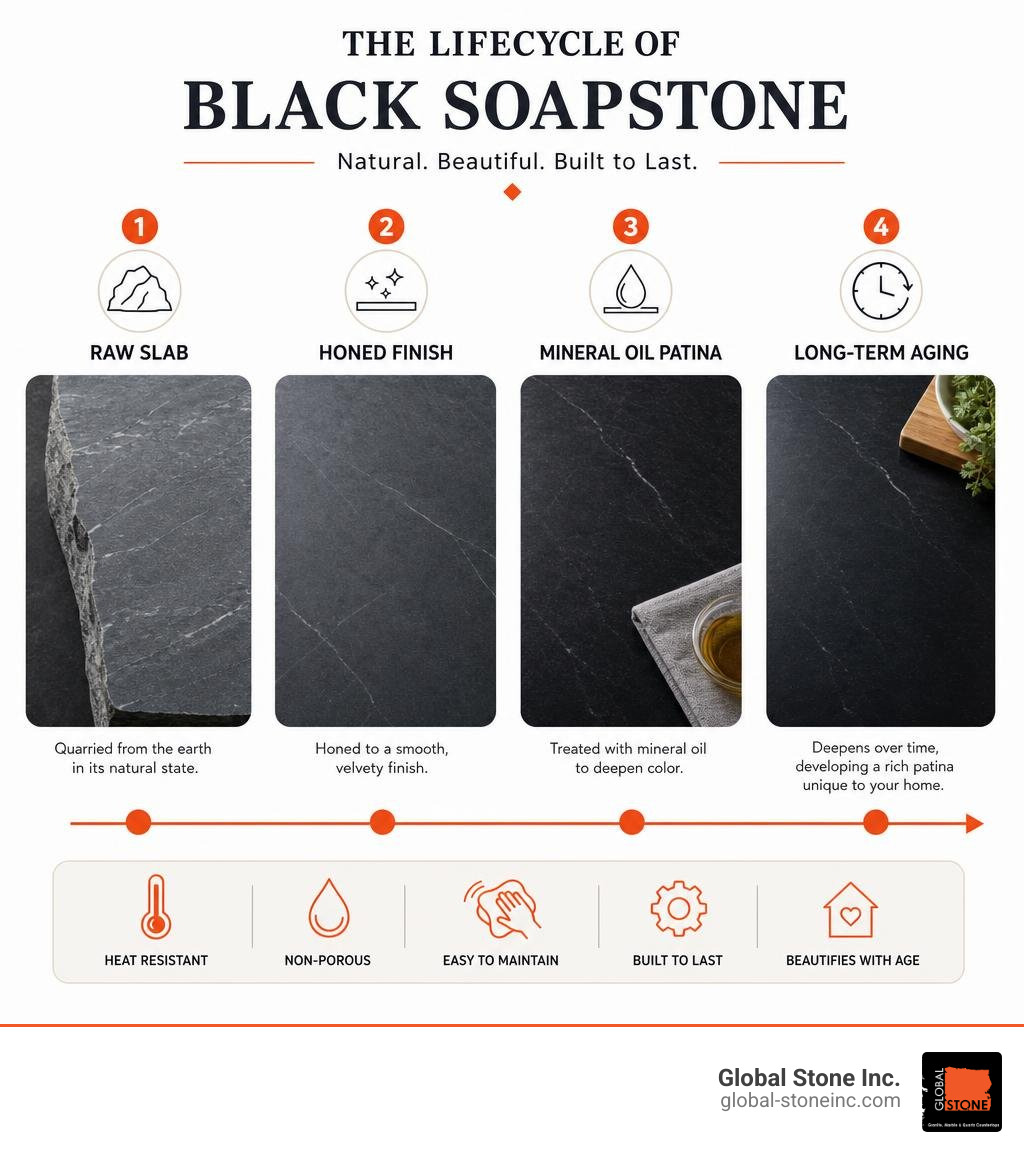
Black soapstone starts as a dark gray stone and deepens to a rich, near-black tone over time — especially after mineral oil treatment. That natural aging process, called patina, is one of the reasons homeowners keep choosing it decade after decade.
It’s timeless. It’s practical. And it pairs beautifully with a wide range of kitchen and bathroom styles.
I’m Greg Zamarski, founder of Global Stone Inc. in Elk Grove Village — with over 20 years fabricating and installing black soapstone countertops and other natural stone surfaces across the Chicago area. In this guide, I’ll walk you through everything you need to know before making your decision.
Simple black soapstone countertops word guide:
Understanding Black Soapstone: Origin, Colors, and Characteristics
To appreciate why black soapstone countertops are so highly regarded, it helps to understand what this material is at a geological level. Soapstone is a natural metamorphic rock formed under intense heat and pressure deep within the Earth’s crust. Its mineral makeup consists largely of talc, chlorite, dolomite, and magnesite.

The high talc content is what gives soapstone its famous, velvety-soft texture—often described as feeling like a dry bar of soap. While soapstone has been used for centuries in fireplaces, wood stoves, and heavy-duty laboratory sinks, it has found a permanent home in modern residential design. Because of its incredible thermal performance and chemical resistance, soapstone is often considered the GOAT of kitchen design.
Most architectural-grade soapstone is sourced from high-quality quarries in Brazil and India. These slabs are dense, heavy, and incredibly durable, making them perfect for high-traffic areas.
The Unique Appeal of Black Soapstone Countertops vs. Other Colors
While soapstone naturally occurs in shades of light gray, blue-gray, and soft green, black soapstone holds a special place in contemporary home design.
Unlike other stones where the color is static, black soapstone is a dynamic material. In its raw, untreated state, a slab of black soapstone typically presents as a deep charcoal gray with delicate, muted silver or white veins. However, once you apply a mineral oil or wax treatment, the stone undergoes a dramatic transformation:
- The Color Deepens: The charcoal gray shifts to a rich, dramatic, satin-black foundation.
- The Veining Pops: The subtle white and silver veins become highly pronounced, creating a striking contrast that looks like moonlight dancing across a dark sea.
- The Texture is Enhanced: The surface gains a luxurious, silky luster.
When sourcing these slabs, you can choose from various styles like Stormy Black or Saratoga Black, which feature unique, randomized veining patterns. Homeowners can select from different thicknesses, with 3cm (approx. 1 1/4 inch) slabs being the industry standard for structural stability. You can explore specific product specifications like the Walker Zanger 1 1/4 Slab Black Soapstone Honed to see how different finishes influence the stone’s final look.
The Pros and Cons of Black Soapstone Countertops
Every countertop material has its trade-offs. To make an informed decision for your kitchen or bathroom, you must weigh the incredible physical benefits of soapstone against its unique wear characteristics.
The Pros
- Exceptional Heat Resistance: Soapstone is virtually impervious to heat damage. It does not suffer from thermal shock, meaning you can place sizzling hot cast-iron pans directly onto the surface without worrying about cracking, scorching, or discoloration.
- Naturally Non-Porous: Unlike granite or marble, soapstone is completely non-porous. It does not absorb liquids, meaning it is highly stain-resistant, hygienic, and naturally antimicrobial. Acidic foods like lemon juice, red wine, and tomato sauce will not etch or ruin the surface.
- No Sealing Required: Because it is non-porous, you never have to apply chemical sealers to protect it.
- Easy to Repair: If the surface gets scratched or chipped, you don’t need to call in an expensive specialist. Most minor imperfections can be buffed out at home with simple sandpaper and a fresh coat of mineral oil.
- Timeless Aesthetic: It offers a soft, matte look that synthetic materials simply cannot replicate. To learn more about how soapstone stacks up in terms of aesthetics and longevity, check out our guide on natural stone countertops.
The Cons
- Susceptibility to Scratches: Soapstone is rated 1 on the Mohs Hardness scale due to its talc content. This makes it significantly softer than granite or quartz. It will scratch, ding, and develop rounded edges over time.
- Developing Patina: If you prefer a flawless, uniform look that remains identical from day one to year ten, soapstone may not be for you. It naturally darkens in areas of high use, developing a lived-in patina.
- Regular Maintenance (Oiling): While sealing is unnecessary, maintaining an even, dark black tone requires periodic applications of mineral oil or soapstone wax.
- Heavy Weight: Weighing approximately 20 to 22 lbs per square foot, soapstone slabs require sturdy, well-reinforced cabinetry to support their mass.
Designing with Black Soapstone Countertops Indoors and Outdoors
Because of its unique chemical and physical properties, black soapstone is incredibly versatile. It is one of the few natural stones that performs flawlessly in both indoor and outdoor settings.
Indoor Applications
In indoor kitchens, black soapstone countertops serve as a stunning focal point. They pair beautifully with:
- White or Cream Cabinets: Creating a classic, high-contrast farmhouse or transitional style.
- Natural Wood Tones (Walnut, Oak): Enhancing a warm, rustic, or mid-century modern aesthetic.
- Dark Cabinetry: Achieving a sleek, moody, modern-minimalist or industrial look.
Outdoor Applications
If you are planning an outdoor kitchen, BBQ grill surround, poolside bar, or fire pit station, black soapstone is arguably the single best material you can choose.
Unlike quartz—which contains petroleum resins that yellow and degrade under ultraviolet (UV) light—soapstone is completely unaffected by sunlight. It is highly weather-resistant, meaning it can withstand freezing winter temperatures, heavy rain, and scorching summer heat without cracking or fading.
Comparing Black Soapstone to Granite, Quartz, and Marble
When planning a remodel, most homeowners compare soapstone to other popular surfaces. Here is how they stack up:
| Feature | Black Soapstone | Granite | Quartz | Marble |
|---|---|---|---|---|
| Composition | Natural Stone (Talc-based) | Natural Stone (Quartz/Feldspar) | Engineered (90% Stone + Resin) | Natural Stone (Calcite) |
| Porosity | Non-porous | Porous (Requires sealing) | Non-porous | Highly porous (Stains easily) |
| Heat Resistance | Outstanding | High | Moderate (Resins can burn) | Moderate (Can etch/stain) |
| Scratch Resistance | Low (Easily repaired) | Very High | High | Moderate |
| Chemical Resistance | High (No etching) | Moderate | High | Low (Acid causes etching) |
| Aesthetic | Matte, silky, organic | Glossy/Honed, speckled | Uniform, manufactured | Elegant, heavily veined |
While materials like quartz and granite offer higher scratch resistance, they lack the organic warmth and incredible thermal properties of soapstone. For a deeper dive into choosing the right material for your lifestyle, read our analysis of the best materials for residential countertops.
Maintenance, Cost, and Installation Guide
Managing a soapstone countertop is straightforward once you understand the basic care routine.

Daily Cleaning
For day-to-day cleaning, all you need is warm water and a few drops of mild dish soap applied with a soft cloth or sponge. Avoid using highly abrasive scrubbing pads or harsh chemical cleaners, which can strip away the mineral oil layer and leave the stone looking uneven.
The Oiling Routine
To maintain that rich, dark black tone, we recommend applying food-grade mineral oil or specialized soapstone wax.
- Clean and thoroughly dry the countertops.
- Pour a small amount of mineral oil directly onto the surface.
- Use a clean, soft cloth to buff the oil evenly across the entire countertop.
- Let it sit for a few minutes, then wipe away any excess oil with a clean paper towel.
Initially, you may want to oil the stone once a week or once a month. Over time, as the patina stabilizes, you will only need to reapply oil a few times a year.
Cost and Slabs Sourcing
On average, soapstone countertops cost $55 to $120 per square foot for the material, with professional installation averaging $90 per square foot. For a standard 50-square-foot kitchen, homeowners typically spend between $2,500 and $5,000 in total.
Because of the stone’s extreme weight and softness during transit, professional fabrication and installation are highly recommended. During the fabrication process, using the best epoxy for soapstone is critical for seamless joints and secure undermount sink installations. For comprehensive long-term care advice, bookmark our countertop maintenance guide.
If you are looking to source high-quality slabs, you can explore regional inventory options such as MSI Surfaces Black Soapstone to find the perfect slab for your home.
Frequently Asked Questions
Do black soapstone countertops require sealing?
No. Soapstone is chemically inert and completely non-porous. It does not require sealing to prevent stains. Applying mineral oil is purely an aesthetic choice to darken the stone and bring out the contrast of its natural veining.
How do you remove scratches from black soapstone?
Because soapstone is soft, light scratches from knives or keys will happen. Fortunately, they are incredibly easy to fix:
- For very light scratches, simply rub a drop of mineral oil over the scratch to make it disappear.
- For deeper scratches, use a piece of 80-grit to 220-grit sandpaper to gently sand the scratched area in a circular motion until it is smooth.
- Wipe away the dust and apply a fresh coat of mineral oil to blend the repaired spot with the rest of the countertop.
Can you put hot pans directly on black soapstone?
Yes! Soapstone is highly heat-resistant and has been used for centuries in industrial settings and fireplaces. You can place hot pots, baking sheets, and cast-iron pans directly onto the surface without any fear of damage or discoloration.
Conclusion
Black soapstone countertops offer a rare combination of old-world charm, modern design flexibility, and unmatched physical durability. While they require a bit of patience as they develop their natural patina, their heat resistance, stain resistance, and ease of repair make them an exceptional, lifelong investment for your home.
At Global Stone Inc., we have spent over 20 years helping homeowners across Chicago, Naperville, and Elk Grove Village bring their design visions to life. With our in-house team of designers, fabricators, and installers—along with our industry-leading lifetime warranty—we ensure your countertop project is handled with precision from slab selection to final installation.
Ready to see the beauty of black soapstone in person? Get a Quote on Soapstone Countertops or visit our Elk Grove Village facility today to explore our current inventory of premium hand-selected slabs!