
Squeaky Clean: Removing Tough Stains from Soapstone Kitchen Counters
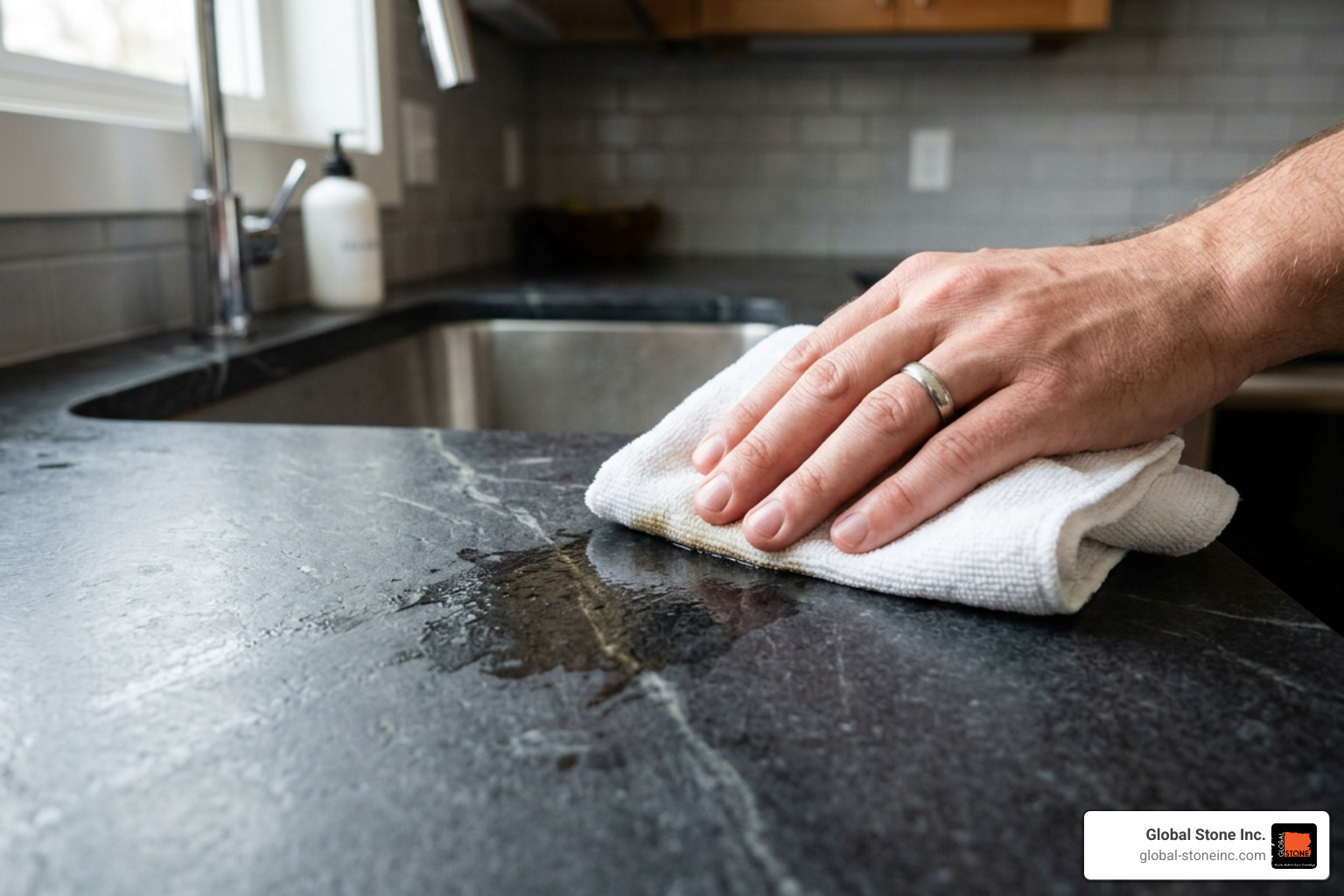
Why Soapstone Countertop Kitchen Stain Removal Is Easier Than You Think
Soapstone countertop kitchen stain removal is simpler than most homeowners expect — because soapstone is naturally non-porous, most spills sit on the surface rather than soaking in.
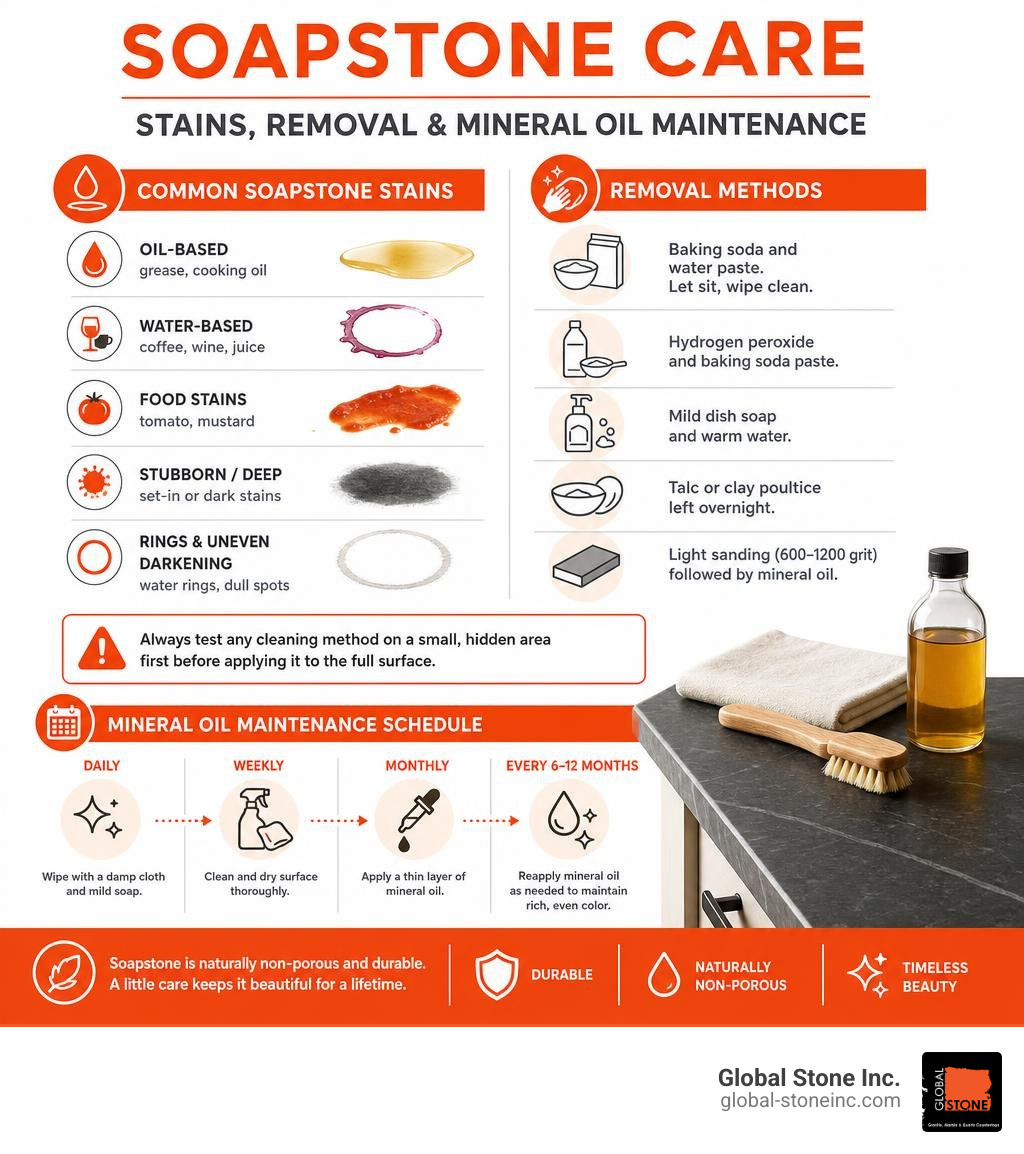
Here is a quick reference for the most common stain types and how to remove them:
| Stain Type | Removal Method |
|---|---|
| Oil-based (grease, cooking oil) | Baking soda and water paste, let sit, wipe clean |
| Water-based (coffee, wine, juice) | Hydrogen peroxide and baking soda paste |
| Food stains (tomato, mustard) | Mild dish soap and warm water |
| Stubborn or deep stains | Talc or clay poultice left overnight |
| Rings and uneven darkening | Light sanding (600-1200 grit) followed by mineral oil |
Always test any cleaning method on a small, hidden area first before applying it to the full surface.
Soapstone is a metamorphic rock made primarily of talc. That talc-rich composition makes it chemically inert — meaning acids, alkalis, and most household substances cannot damage or etch it, unlike marble or granite. What looks like a stain on soapstone is often just uneven darkening or a moisture interaction with the surface’s mineral oil treatment.
That said, oil residue, food coloring, and surface rings can still affect the look of your countertop — and knowing the right approach makes all the difference.
I’m Greg Zamarski, and with over 20 years of fabricating and installing natural stone countertops at Global Stone Inc. in Elk Grove Village, I’ve helped hundreds of Chicago-area homeowners tackle soapstone countertop kitchen stain removal and long-term maintenance. In the sections below, I’ll walk you through exactly what works — from quick daily fixes to more advanced restoration techniques.
What is Soapstone and How Does It Compare to Other Stones?
To understand how to clean soapstone, we have to look at what makes this stone so unique. Quarried primarily in places like Brazil and India, soapstone is a metamorphic rock composed largely of talc, chlorite, and dolomite. The high concentration of talc gives it a smooth, almost soapy feel when touched.
Unlike other natural stones, soapstone is completely non-porous. It does not contain microscopic pores that can trap liquids, bacteria, or dirt. This density is why it has been used for over a century in high-school chemistry labs, commercial kitchens, and historic homes across Illinois.
When you are planning a kitchen renovation, choosing the right surface material is key. Let’s look at how soapstone stacks up against other popular materials:
| Property | Soapstone | Granite | Marble | Quartz |
|---|---|---|---|---|
| Mohs Hardness | 1 to 2 (Soft) | 6 to 7 (Hard) | 3 to 4 (Medium) | 7 (Very Hard) |
| Porosity | Non-porous | Porous (Requires sealing) | High porosity (Requires sealing) | Non-porous |
| Heat Resistance | Excellent (No trivets needed) | High | Moderate (Can heat-shock) | Low (Resins can burn) |
| Acid Resistance | High (No etching) | High | Low (Etches easily) | High |
| Sealing Required | No (Oiling is cosmetic) | Yes (Every 1-2 years) | Yes (Every 6-12 months) | No |
As you can see, soapstone is significantly softer than granite or quartz. It can scratch if you drag a heavy cast-iron skillet across it. However, because it is non-porous and chemically inert, it will never etch when exposed to lemon juice, tomato sauce, or red wine.
To explore how these materials perform over decades of daily family use, check out our guide on The Best Materials for Residential Countertops and read more about how to balance aesthetics with performance in Natural Stone Countertops: Beauty and Durability Combined.
The Science of Soapstone Countertop Kitchen Stain Removal
If soapstone is completely non-porous, why are you looking at a dark ring or a smudge on your counter?
The answer lies in the surface treatment, not the stone itself. Most homeowners choose to apply mineral oil or stone wax to their soapstone counters. This cosmetic treatment darkens the stone from its natural light gray to a deep charcoal or black, highlighting its dramatic white veining.
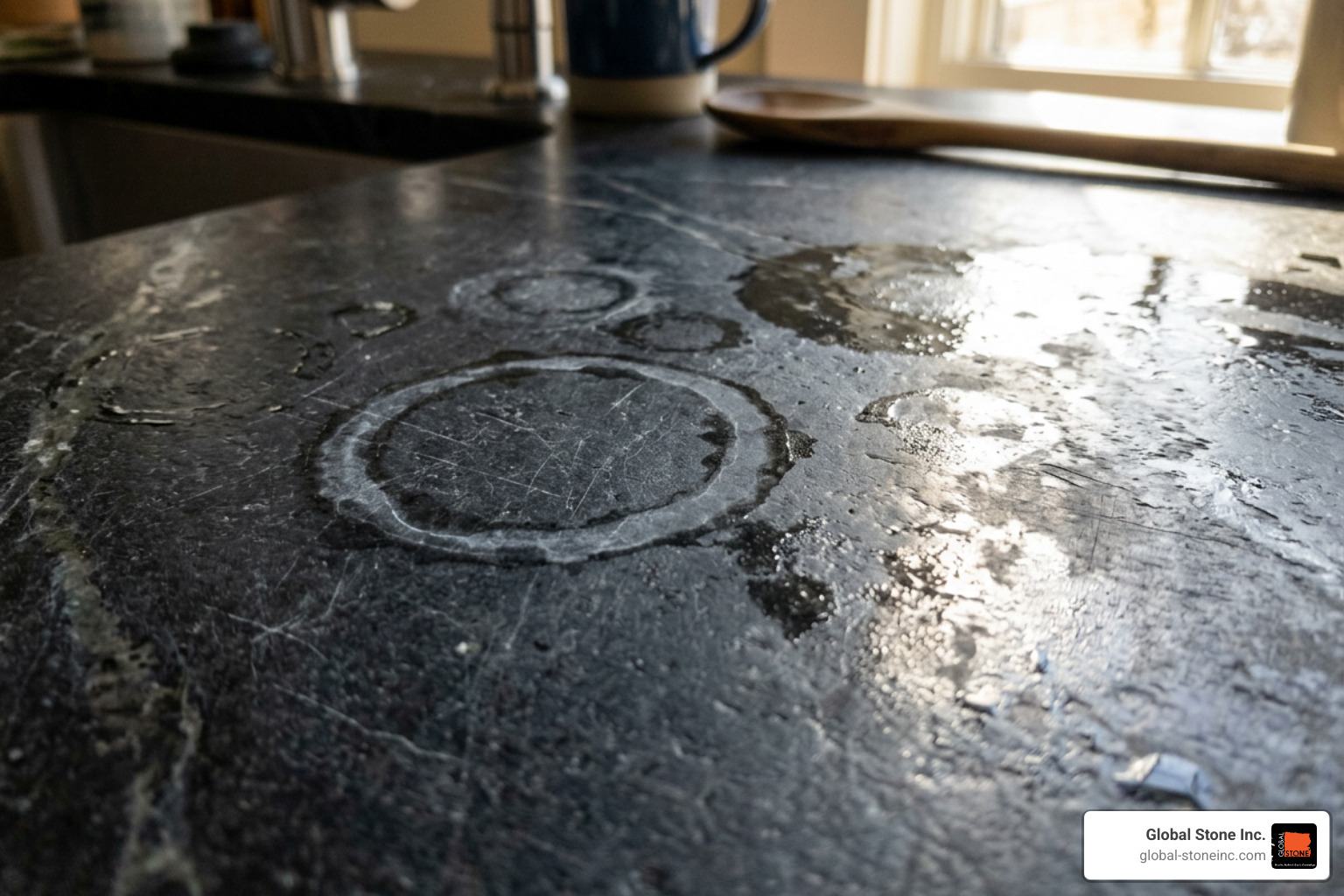
When oil, grease, water, or acidic foods sit on an oiled soapstone surface, they do not penetrate the stone. Instead, they interact with the thin layer of mineral oil on top.
- Oil-based “stains” (like bacon grease or olive oil) add more oil to the surface, creating a localized dark spot.
- Water rings and acidic spills (like lemon juice or vinegar) can strip away the mineral oil layer, leaving behind a lighter, “dry-looking” ring or spot.
Because the stone itself is chemically inert, these marks are purely superficial. They are not permanent chemical changes. Understanding this distinction is the secret to successful soapstone countertop kitchen stain removal. You are simply cleaning off surface residues or evening out the surface oil layer.
For a deeper dive into the chemical properties of soapstone and why it behaves differently than marble or granite, you can read more about What is the best stain remover for Soapstone countertops?-Stonecontact.com.
DIY Methods for Soapstone Countertop Kitchen Stain Removal
If you notice a dark spot or a pale water ring on your counter, don’t panic. You can easily resolve most surface discoloration using common household items.
1. The Mild Dish Soap Wash
For general food spills and light grease marks, start with the simplest solution:
- Mix a few drops of mild, unscented dish soap with warm water.
- Using a soft cloth or a non-abrasive sponge, gently wipe down the area.
- Rinse thoroughly with clean water to remove any soapy residue.
- Dry the surface completely with a clean cotton towel.
2. The Baking Soda Paste (For Oil-Based Stains)
If a puddle of cooking oil has left a dark patch, you can draw out the excess oil using baking soda:
- Mix baking soda with a small amount of water to create a thick, spreadable paste.
- Apply the paste directly over the dark spot.
- Let it sit for 10 to 15 minutes to absorb the surface oils.
- Gently wipe the paste away with a damp microfiber cloth.
- Rinse and dry the area.
3. The Hydrogen Peroxide Method (For Organic Stains)
If wine, coffee, or berries leave a dark mark on an untreated (unoiled) soapstone counter, hydrogen peroxide works wonders:
- Mix equal parts baking soda and hydrogen peroxide to form a paste.
- Apply it to the spot and let it sit for a few minutes.
- Gently scrub the area with a soft cloth.
- Rinse thoroughly and dry.
For more expert cleaning tips and approved cleaning products, check out the recommendations in How to Clean Soapstone Countertops, According to Experts.
Advanced Techniques for Soapstone Countertop Kitchen Stain Removal
For stubborn marks that refuse to budge with simple washing, you can step up your approach with advanced, yet completely safe, DIY techniques.
1. The Talc or Clay Poultice
For deeply embedded grease marks on older soapstone, a poultice can draw the oil out of the stone’s surface texture:
- Mix cosmetic-grade talcum powder or kaolin clay with water (or acetone for extreme grease) to create a paste with the consistency of peanut butter.
- Apply a 1/4-inch-thick layer of the paste over the stain.
- Cover the paste with plastic wrap and tape down the edges to seal it.
- Let it dry completely for 24 hours. As the paste dries, it pulls the oil out of the surface.
- Scrape the dry paste away using a plastic scraper or spatula, then wipe clean with a damp cloth.
2. Wet Sanding (For Scratches and Persistent Rings)
Because soapstone is soft, you can easily sand out surface damage. If a glass has left a deep water ring or a pan has scratched the surface, you can restore the area in minutes:
- Keep the stone wet by spraying a small amount of water on the damaged area.
- Using fine-grit wet/dry sandpaper (such as 300 to 400-grit for light scratches, or 600 to 1200-grit for very smooth finishes), sand the spot in gentle, circular motions.
- Keep the pressure light and even. Do not sand too deeply in one spot to avoid creating a dip.
- Wipe away the stone dust with a damp cloth and dry the surface.
- Reapply a thin layer of food-grade mineral oil or soapstone wax to the sanded area to blend it back in with the surrounding patina.
For a comprehensive guide on managing scratches, gouges, and the natural aging process of your stone, refer to the Soapstone Care & Restoration Guide: Scratches, Oiling, Patina (2026).
Daily Care and the Role of Mineral Oil in Stain Prevention
While removing stains is straightforward, preventing them through a solid daily care routine is even easier.
The most important thing to understand is that mineral oil does not seal soapstone. Because soapstone is non-porous, it cannot absorb sealers. Instead, mineral oil is applied purely to accelerate the natural oxidation process, turning the stone from a light gray to a uniform, rich charcoal.
The Oiling and Darkening Schedule
When we install a new soapstone countertop in a home in Naperville or Chicago, we recommend the following oiling schedule to help it develop an even, dark patina:
- First Month: Apply mineral oil once a week.
- Months 2 to 6: Apply mineral oil once a month.
- After 6 Months: The stone will typically hold its dark patina permanently. You will only need to apply oil once or twice a year to restore its luster or hide light surface scratches.
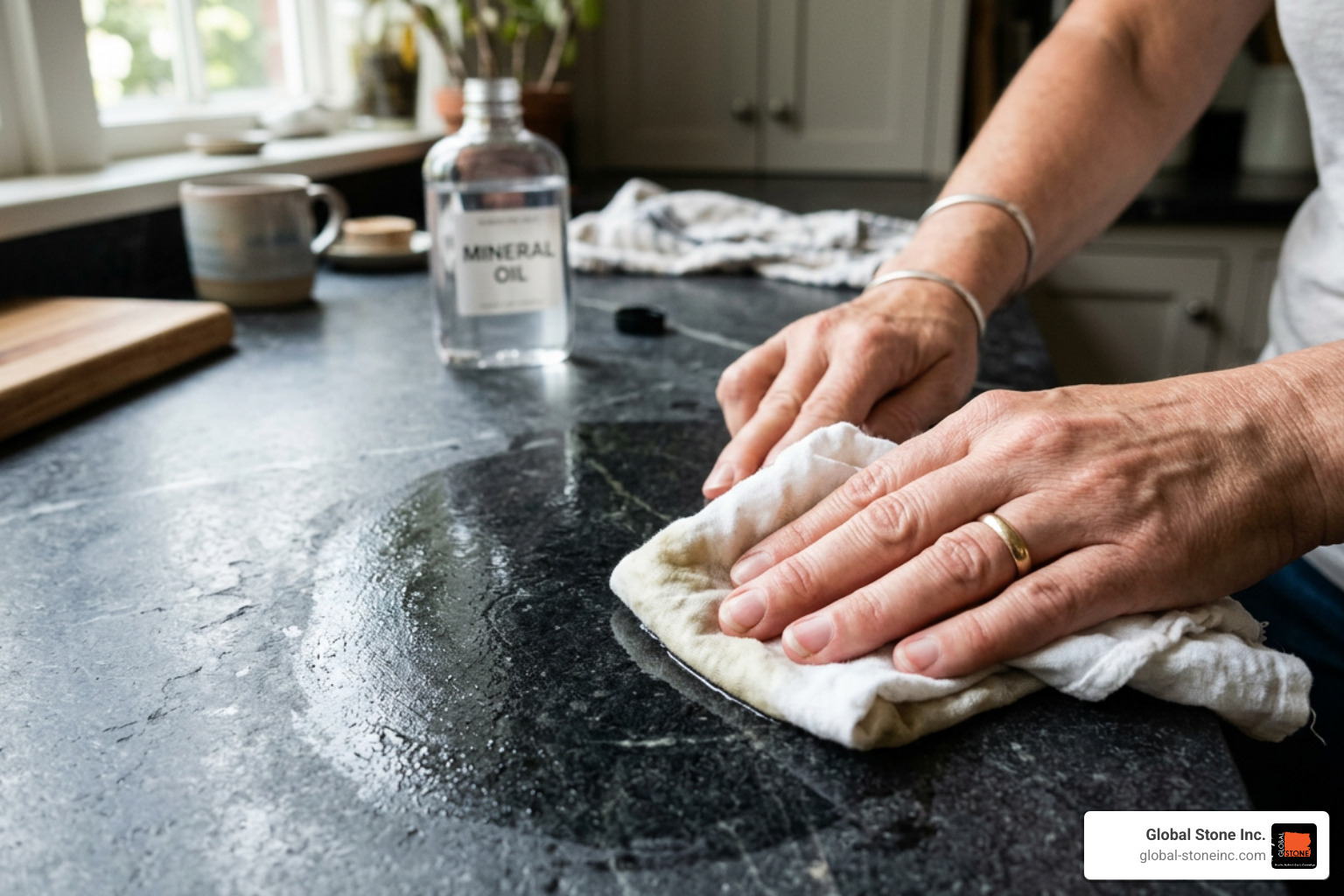
How to Apply Mineral Oil Correctly
- Clean the countertop thoroughly with mild dish soap and water, then dry it completely with clean cotton towels.
- Pour food-grade mineral oil directly onto the stone in small sections.
- Using a clean, low-lint rag, rub the oil evenly across the entire surface using wide, consistent strokes.
- Let the oil sit for 15 to 30 minutes to allow the stone’s surface texture to absorb it.
- Wipe away all excess oil with a clean, dry microfiber cloth until the surface no longer feels sticky or greasy.
To learn more about keeping your natural stone looking its best, read our complete guide on Countertop Maintenance and find out why so many Chicago homeowners consider this material the ultimate choice in Soapstone Countertops: Why They Are the GOAT of Kitchen Design.
Frequently Asked Questions about Soapstone Care
Can you use vinegar or bleach on soapstone countertops?
No, we do not recommend using vinegar, bleach, ammonia, or harsh chemical cleaners on soapstone. While these chemicals will not damage or etch the chemically inert stone itself, they will quickly strip away the mineral oil or wax finish. This leaves behind dry, light patches that look like stains, forcing you to re-oil the entire countertop to restore an even color. Stick to pH-neutral stone cleaners or mild dish soap instead.
How often should soapstone be oiled to prevent uneven darkening?
During the first year, oil your soapstone whenever you notice high-use areas (like around the sink or stove) starting to lighten. This uneven darkening is completely normal as the oil naturally wears off in high-traffic spots. Once the stone reaches its fully darkened patina state—usually within 1 to 2 years with regular oiling—the color will remain stable, and maintenance oiling will only be needed occasionally.
When should you call a professional for soapstone restoration?
While you can easily sand out minor scratches and water rings at home, you should call a professional if you encounter:
- Deep chips or gouges along the edges.
- Cracked seams or loose joints.
- Major unevenness across large slabs that requires professional honing.
If you experience a deep crack or need a structural repair, we use specialized color-matched adhesives to make the damage disappear. Learn more about how we handle these repairs in Best Epoxy for Soapstone: Don’t Let Your Kitchen Fall Apart.
Conclusion
Soapstone is one of the most durable, heat-resistant, and character-rich materials you can choose for your kitchen. While its soft surface requires a bit of mindfulness, its non-porous nature makes soapstone countertop kitchen stain removal a stress-free DIY task. With a simple routine of mild soap, baking soda, and occasional mineral oil, your counters will age beautifully, developing a stunning patina that lasts for generations.
At Global Stone Inc., we have over 20 years of experience serving the Chicago area, including Naperville, Elk Grove Village, and the surrounding suburbs. From our state-of-the-art fabrication facility in Elk Grove Village, our in-house designers, fabricators, and installers manage your project from start to finish. We back our craftsmanship with a lifetime warranty, ensuring your investment is protected for as long as you own your home.
If you are ready to bring the timeless beauty of soapstone into your kitchen, we are here to help. Get a quote for a custom Soapstone Countertop today, or stop by our showroom to explore our premium slabs in person!