The Complete Guide to Comparing Stone Countertop Options
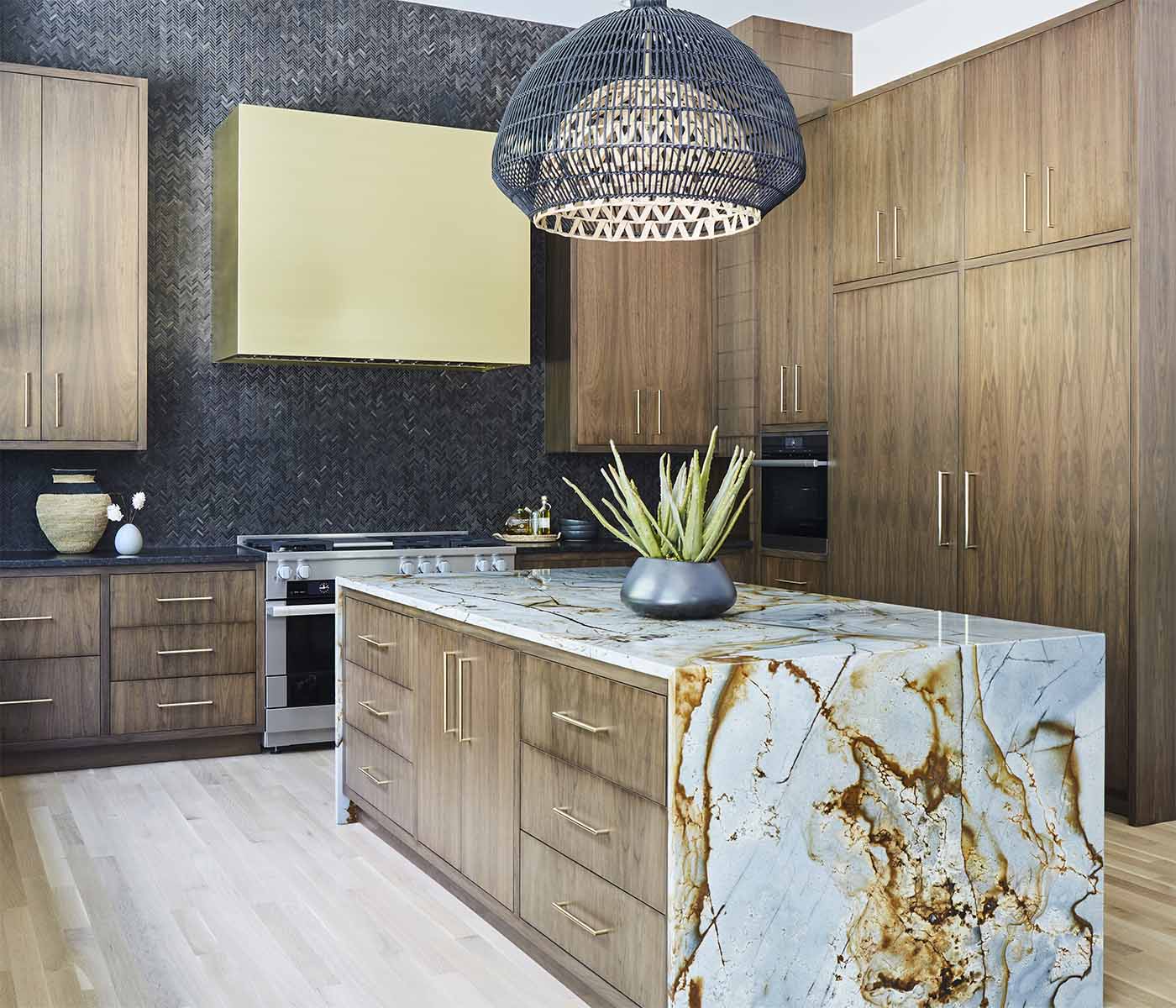
Why Choosing the Right Stone Countertops Matters for Your Home
Stone countertops are one of the most impactful upgrades you can make during a kitchen or bathroom renovation. The right material can last decades, add real estate value, and make daily life easier. The wrong choice can mean constant maintenance headaches — or worse, a surface that doesn’t hold up to how you actually cook and live.
Here’s a quick overview of the most popular options:
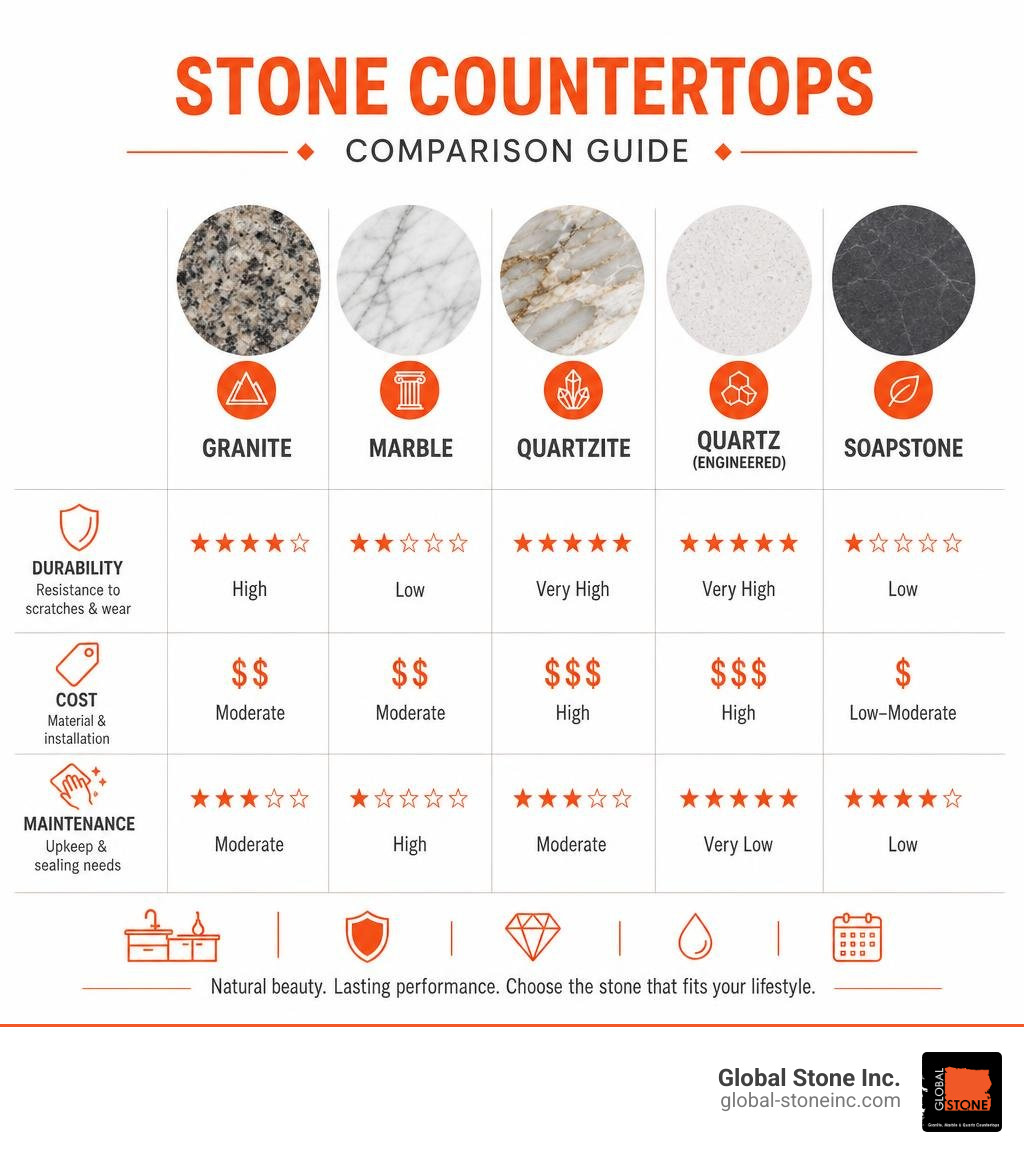
| Material | Durability (Mohs) | Maintenance | Price Range (installed) |
|---|---|---|---|
| Granite | 6.5 | Seal every 1-2 years | $50-$100/sq ft |
| Marble | 3 | Seal regularly; acid-sensitive | $50-$100/sq ft |
| Quartzite | 7 | Seal regularly | $60-$120+/sq ft |
| Quartz (engineered) | 7 | None — never needs sealing | $65-$150/sq ft |
| Soapstone | ~1 | Oil periodically; no sealing needed | Varies |
There’s a reason homeowners agonize over this decision. Every material has real trade-offs — between beauty and durability, between low maintenance and that raw, natural look only real stone can deliver.
I’m Greg Zamarski, founder of Global Stone Inc., and with over 20 years of fabricating and installing stone countertops across the Chicago area, I’ve helped thousands of homeowners navigate exactly these choices. In this guide, I’ll walk you through everything you need to make a confident, informed decision.
Popular Types of Natural and Engineered Stone Countertops
When you begin shopping for new surfaces, you will quickly realize that the market is broadly divided into two main categories: natural stone and engineered stone. Understanding how these two groups are formed and processed is the first step toward finding the perfect slab for your home.
Natural stone slabs are literally sliced out of the earth. These materials are formed over millions of years through intense geological heat and pressure, meaning no two slabs are ever exactly alike. When you choose Natural Stone Countertops, you are purchasing a piece of Earth’s history. Each slab features its own distinct patterns, mineral deposits, and subtle color variations that cannot be replicated by human technology.
On the other hand, engineered stone is a man-made product designed to mimic the beauty of natural stone while resolving some of its practical limitations. Engineered surfaces combine crushed natural minerals with polymer resins and pigments to create uniform, highly durable slabs.
When exploring The Best Materials for Residential Countertops, it is highly recommended to visit a local showroom in person. Photos and small samples cannot fully capture the depth, texture, and sweeping veining of a full-size slab. Seeing the stone under proper lighting allows you to appreciate the differences between various materials and finishes.
Granite and Marble Stone Countertops
Granite and marble are the two undisputed classic giants of the stone countertops world, yet they sit on opposite ends of the spectrum when it comes to daily performance and geological composition.
Granite is an igneous rock formed from the slow crystallization of molten magma deep beneath the Earth’s surface. This slow cooling process allows large mineral crystals to grow, resulting in the speckled, salt-and-pepper appearance classic granite is known for. Because of its volcanic origin, granite is incredibly tough and naturally resistant to heat and scratches. If you are looking for a surface that can handle hot pots and heavy cast-iron pans, Granite Countertops are an exceptional, time-tested choice.
Marble, by contrast, is a metamorphic rock that begins its life as limestone. Under intense heat and pressure, the limestone recrystallizes into marble, a rock primarily composed of calcite. This calcite composition gives marble its signature luminous glow and elegant, flowing veining. However, calcite is chemically sensitive to acids and physically soft. On the Mohs Hardness Scale, where a diamond is a 10 and granite is a 6.5, marble sits at a delicate 3.
This softness means Marble Countertops are prone to scratching, and they will chemically react (or “etch”) when exposed to acidic household staples like lemon juice, vinegar, or tomato sauce. For those interested in the diverse aesthetic varieties of this material, exploring The Ultimate Breakdown of Different Types of Marble Countertops reveals options ranging from classic Carrara to the ultra-luxurious, rare Roman Calacatta Gold marble, which can range from $80 to $260 per square foot depending on the dramatic quality of its gold and gray veining.
Quartzite, Soapstone, and Limestone Options
For homeowners who want the organic drama of natural stone but desire different physical properties, quartzite, soapstone, and limestone offer highly compelling alternatives.
Quartzite is a metamorphic rock that forms when quartz-rich sandstone is subjected to extreme heat and pressure. This process fuses the sand grains together into an incredibly dense, hard rock. On the Mohs scale, quartzite scores a 7, making it harder than granite. It often features the elegant, sweeping veining of marble but possesses the superior durability and heat resistance of granite.
Because it is harder to find, quarry, and fabricate — requiring specialized diamond-tipped cutters — Quartzite Countertops are generally more expensive, averaging $60 to $120+ per square foot. Exotic varieties like Cristallo Pink or Azul Macaubas can easily exceed $150 per square foot.
Soapstone is a talc-based metamorphic stone that has been used in homes for centuries. Because of its high talc content, soapstone has a smooth, soapy feel and a matte finish. While it is physically soft and prone to scratches (which many homeowners embrace as a rustic, evolving patina), soapstone is chemically inert and completely non-porous. This means a Soapstone Countertop is naturally resistant to stains, bacteria, and extreme heat without ever requiring chemical sealers.
Limestone and travertine are sedimentary rocks that offer soft, warm, earthy tones. Limestone is composed of calcium carbonate (similar to marble) and is highly porous. A Limestone Countertop brings a quiet, old-world elegance to a space but requires diligent sealing and care to prevent staining.
Similarly, Travertine Countertops and Slate Tile Countertops provide unique textures and rustic charm, but they must be carefully matched to the lifestyle of the household due to their porous nature.
Engineered Quartz Stone Countertops
If your absolute priority is easy maintenance and a surface you never have to “babysit,” engineered quartz is the modern gold standard.
Unlike natural quartzite, engineered quartz is manufactured in a factory. Slabs are created by combining roughly 90% to 95% crushed natural quartz aggregates with polymer resins, mineral pigments, and binding agents. This mixture is compacted under vacuum and intense pressure, then cured into solid, uniform sheets.
Because of this manufacturing process, a Quartz Countertop is completely non-porous. It never needs to be sealed, and it is highly resistant to staining from wine, coffee, citrus, and cooking oils. Quartz scores a 7 on the Mohs scale — matching natural quartzite and outperforming granite.
Furthermore, premium quartz brands offer incredible design versatility, mimicking everything from industrial concrete to delicate Italian marble. When reading The Ultimate Guide to Quartz Countertops, you will find that a properly fabricated quartz surface will easily last 30 to 50 years, and most premium manufacturers provide 15-year to lifetime residential warranties against manufacturing defects.
However, quartz has one major vulnerability: heat. The polymer resins used to bind the crushed stone are heat-sensitive. Placing a hot pan directly off the stove (temperatures exceeding 300°F) onto a quartz surface can permanently scorch, discolor, or even crack the resin binder.
Comparing Durability, Maintenance, and Cost
Choosing the right material for your stone countertops requires balancing your budget with your household’s daily habits. Let’s look at how these popular materials compare across key metrics.
To help determine which material aligns with your household’s needs, consider reading Is Natural Stone Right for Your Kitchen? A Comprehensive Guide. The table below outlines the core differences in performance and pricing:
| Stone Material | Mohs Hardness | Porosity & Sealing | Heat Resistance | Average Installed Cost (per sq. ft.) |
|---|---|---|---|---|
| Granite | 6.5 | Low; seal every 1-2 years | Excellent | $50 – $100 (basic slabs can start lower) |
| Marble | 3.0 | High; seal every 6-12 months | Moderate | $50 – $100 (exotics like Calacatta Gold: $80 – $260) |
| Quartzite | 7.0 | Moderate; seal every 1-2 years | Excellent | $60 – $120+ |
| Quartz | 7.0 | Non-porous; never needs sealing | Low (sensitive above 300°F) | $65 – $150 |
| Soapstone | 1.0 – 2.5 | Non-porous; no sealing needed | Excellent | Varies by thickness and source |
While standard granite and marble are priced similarly on average, quartzite and engineered quartz tend to command higher price tags due to fabrication complexity and manufacturing costs. Standard builder-grade granite slabs can sometimes be found for very low baseline costs, but premium, high-character natural slabs require significant investment.
Key Factors for Choosing the Right Material
When selecting stone countertops, it is easy to get swept away by beautiful patterns and colors. However, we always advise our clients in the Chicago area to step back and evaluate three practical pillars: lifestyle, budget, and slab thickness.
First, perform an honest lifestyle assessment. Do you cook daily with acidic ingredients? Do you have young children who might spill fruit juice or drop heavy cups on the counter? If you prefer a kitchen where you don’t have to wipe up spills instantly, non-porous quartz or highly durable granite are your best matches. If you view the scratches, etching, and patina of natural marble as a beautiful record of family gatherings, then marble is a wonderful, soul-filled choice.
Second, understand how slab thickness impacts both structural support and aesthetic presence. Slabs are typically sold in two nominal thicknesses: 3/4-inch (approximately 2cm) and 1-1/4-inch (approximately 3cm).
While 3/4-inch slabs are common in some regions due to shipping weights and local labor laws, 1-1/4-inch slabs are the standard for premium kitchen countertops in the Midwest. A thicker slab provides superior structural strength, allows for more dramatic edge profiles, and does not require plywood sub-tops for support during installation.
For more detailed planning tips, check out our guide on 6 Tips for Selecting Kitchen Countertops.
Best Options for High-Traffic Kitchens and Bathrooms
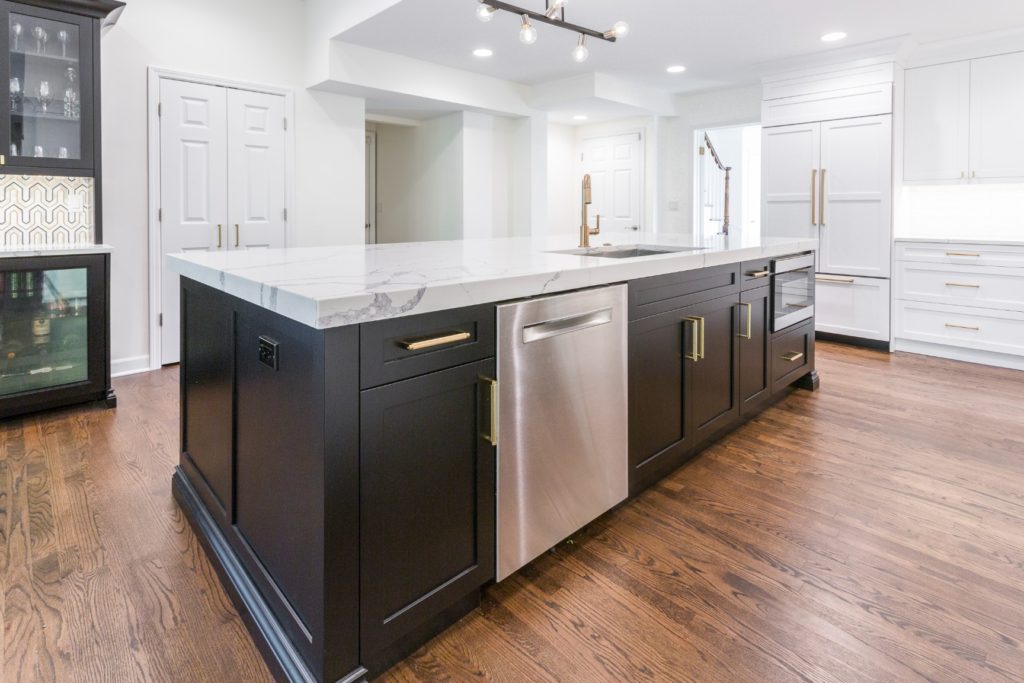
Busy family kitchens require surfaces that can handle constant impact, spills, and cleaning. For these hard-working spaces, engineered quartz and natural granite are the top recommendations. They easily resist the scratches of daily utensil use and the stains of common cooking oils and colorful spices.
Bathrooms present a different set of environmental challenges. Bathroom vanities are constantly exposed to moisture, toothpaste, hair dyes, cosmetics, and acidic grooming products. Because of this, bathroom surfaces must have high moisture and chemical resistance.
While marble is a classic and stunning choice for a master bath vanity where usage is gentler, busy family bathrooms or guest baths are often better served by non-porous quartz. To dive deeper into selecting the right surface for your vanity, read our Detailed Guide to Bathroom Countertops.
Selecting Materials for Outdoor Spaces
Designing an outdoor kitchen in the Chicago area requires materials that can withstand extreme weather shifts. Our local climate brings freezing winters and hot, humid summers, meaning outdoor stone must handle intense freeze-thaw cycles and constant UV exposure.
Engineered quartz is generally not suitable for outdoor use. The polymer resins that bind the quartz will yellow, discolor, and degrade under direct sunlight, and the freeze-thaw cycles can cause the material to crack.
Instead, the best choices for outdoor kitchens are natural granite, quartzite, and high-quality porcelain slabs. These materials are highly UV-stable and will not fade in the sun. Granite and quartzite have natural crystalline structures that accommodate temperature fluctuations without cracking, provided they are properly sealed to prevent water from freezing inside their pores. Learn more about matching natural beauty with outdoor resilience in Natural Stone Countertops Beauty and Durability Combined.
Care, Maintenance, and Design Trends
Once your new stone countertops are installed, keeping them looking pristine comes down to establishing the right care routine and choosing finishes that match your maintenance tolerance.
The finish you choose for your slab plays a massive role in how it wears over time:
- Polished Finish: This classic high-gloss look highlights the full depth of the stone’s color and patterns. However, polished surfaces show fingerprints, water spots, and scratches more easily.
- Honed Finish: A honed finish is smooth but completely matte. It is highly popular for modern designs and is excellent for marble because it helps disguise the dull spots caused by acid etching.
- Leathered Finish: This textured finish is created by brushing the stone with diamond-tipped brushes. It retains a matte look but features a subtle, textured surface that feels incredibly organic and is highly effective at hiding fingerprints, water spots, and minor scratches.
For a comprehensive breakdown of caring for these different finishes, refer to our guide on Countertop Maintenance.
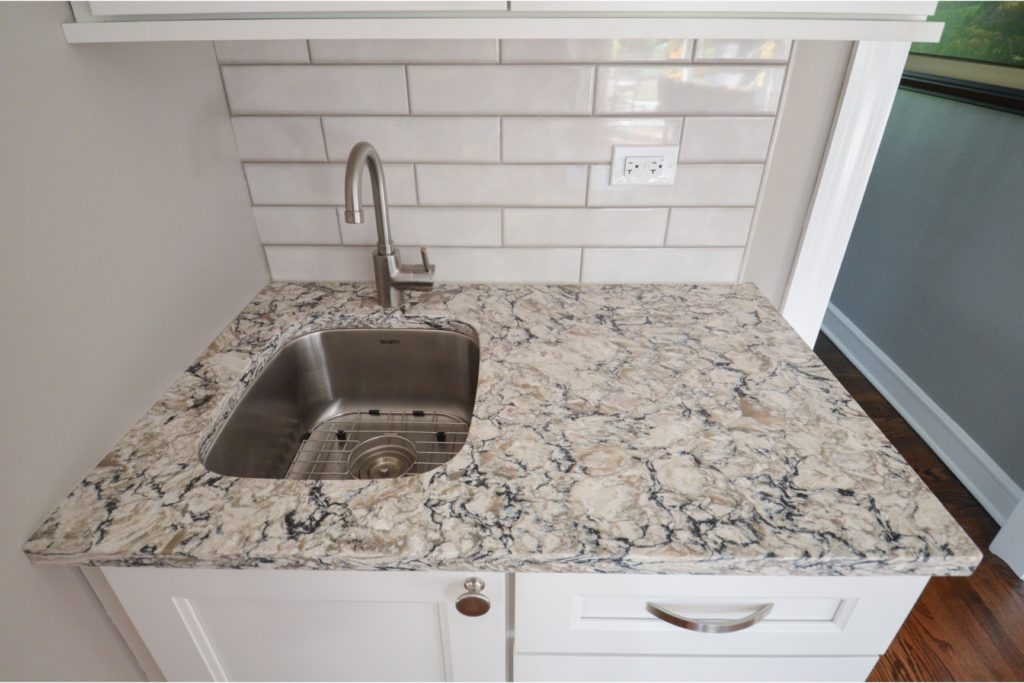
Proper Sealing and Daily Cleaning Routines
For natural stones like granite, marble, and quartzite, proper sealing is essential to prevent staining. Sealers do not create an impenetrable plastic barrier on top of the stone; rather, they are “impregnating” sealers that sink deep into the microscopic pores of the stone to repel liquids.
That sealing your marble will not prevent physical scratching or chemical acid etching — it only buys you time to wipe up a spill before it sinks in and leaves a deep stain.
For daily cleaning, avoid harsh chemical cleaners, bleach, ammonia, or vinegar. These acidic or highly alkaline chemicals will strip away your sealer and can dull the polished finish of your stone. Instead, use warm water, a few drops of mild dish soap, and a soft microfiber cloth.
When preparing for your project, knowing How to Measure Countertops accurately is a crucial first step toward getting a precise fabrication and installation layout.
Modern Colors, Finishes, and Edge Profiles
As we move through 2026, we are seeing beautiful evolutions in stone countertop design. Homeowners are moving away from stark, clinical white kitchens and embracing warmer, more organic tones. Concrete-look quartz, warm taupes, and dramatic, colorful veining are highly sought after.
One of the most stunning luxury trends is bookmatching. This technique involves slicing two consecutive stone slabs from the same block, much like opening a book, so that the veining patterns mirror each other perfectly. This creates a breathtaking, symmetrical art piece when installed on a large kitchen island or a full-height backsplash.
Edge profiles have also shifted toward clean, minimalist lines. While decorative edges like the Ogee or Bullnose remain popular for traditional homes, modern designs favor the Eased edge, the Bevel, or the dramatic mitered edge. A mitered edge involves cutting the slab at a 45-degree angle to join it with a vertical apron, creating the illusion of a massive, ultra-thick solid stone block.
Before finalizing your design and edge profiles, review our Quick Start Guide to Countertop Installation Quotes to understand how these custom fabrication options affect your overall project budget.

Frequently Asked Questions
What is the difference between quartz and quartzite?
The difference comes down to geological authenticity versus engineering. Quartzite is a 100% natural metamorphic rock quarried from the earth, featuring unique, irregular crystalline patterns. It is highly heat-resistant but requires regular sealing.
Quartz is an engineered, man-made stone composed of crushed quartz minerals bound together with polymer resins. It is completely non-porous and never needs sealing, but it is sensitive to extreme heat.
How long do natural stone surfaces last?
With proper care, sealing, and maintenance, natural stone countertops will easily last the entire lifetime of your home. Granite, quartzite, and even well-loved marble are incredibly durable materials that retain their structural integrity for generations, making them an exceptional long-term investment.
Can engineered quartz be used in outdoor kitchens?
We do not recommend standard engineered quartz for outdoor installations. The polymer resins used in quartz are highly sensitive to UV light and will turn yellow or discolor over time when exposed to direct sunlight. Furthermore, the rapid temperature shifts of Chicago winters can stress the resin binders, leading to cracks. Natural granite, quartzite, or specialized outdoor-rated porcelain are far superior options for exterior spaces.
Conclusion
Choosing the perfect stone countertops is a journey that blends your personal design vision with the practical realities of your daily life. Whether you fall in love with the classic, sweeping drama of natural marble, the rugged, carefree durability of engineered quartz, or the exotic, tough-as-nails character of quartzite, the right surface will elevate your home for decades to come.
At Global Stone Inc., we believe that luxury craftsmanship should be accessible and stress-free. Serving the Chicago area from our state-of-the-art fabrication facility in Elk Grove Village, IL, we bring over 20 years of experience to every project. We handle the entire process under one roof — with our own in-house designers, digital templaters, fabricators, and installers — allowing us to maintain absolute quality control and offer an industry-leading lifetime warranty.
For inspiration and to explore local options, you can browse our extensive portfolio of completed projects across the Chicago suburbs, including custom installations in Elk Grove Village, Naperville, and surrounding areas.
To see our high standards of customer satisfaction and expert craftsmanship firsthand, we invite you to read our verified client reviews on Global Stone – Granite, Marble & Quartz Countertops .
Ready to transform your kitchen or bathroom? Explore our full range of custom Countertops and schedule your personalized consultation with our design team today!