
Mastering the Banjo Countertop Over Toilet Design
Why a Banjo Countertop Over Toilet Can Transform a Small Bathroom
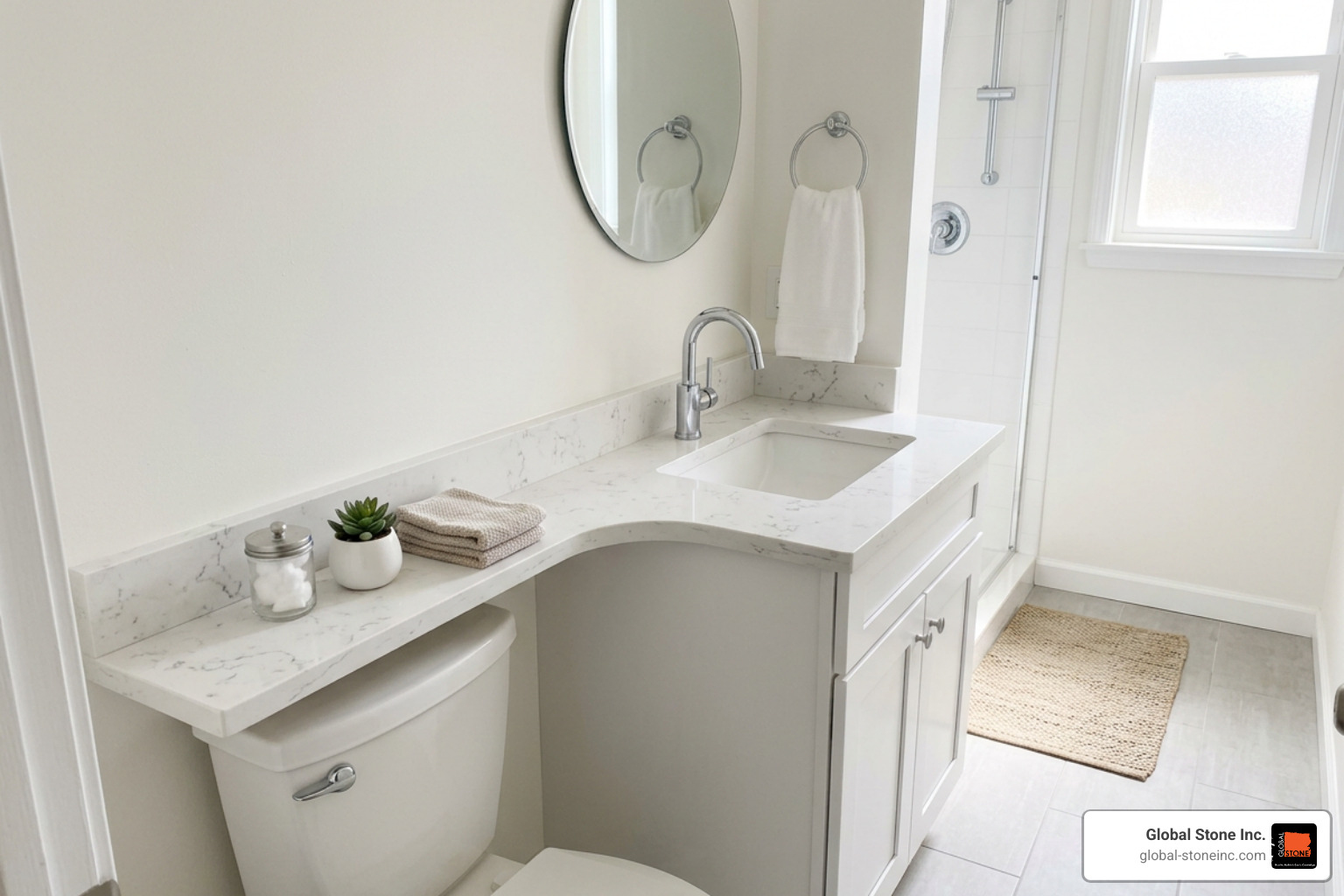
A banjo countertop over toilet is a narrow extension of a vanity top that runs above the toilet tank, adding useful surface space without expanding the vanity cabinet. Its shape has a broad sink area and a slimmer “handle” over the toilet, which is why it is called a banjo top.
For a compact bathroom, this design can create a clean landing spot for daily items while making the vanity and toilet wall feel more connected. The key is careful planning: the countertop must clear the tank lid, allow room for future repairs, and have proper wall support.
| Quick answer | What to know |
|---|---|
| Best use | Small bathrooms that need more counter space |
| Typical shape | Wide at the sink, narrow over the toilet tank |
| Ideal materials | Quartz, granite, solid surface, or laminate |
| Main concern | Tank-lid and plumbing access must remain easy |
| Best result | A custom-fabricated top with strong, concealed support |
A dated laminate banjo shelf can feel heavy, but a slim quartz or natural-stone version with clean edges, light colors, and hidden brackets can look current in 2026. It is not the right fit for every layout, but it can be a smart way to gain function where every inch matters.
I am Greg Zamarski, and I have spent more than 20 years working with custom granite, marble, and quartz fabrication and installation at Global Stone Inc. In this guide, I will explain how to plan a banjo countertop over toilet that is attractive, durable, properly supported, and practical to live with.
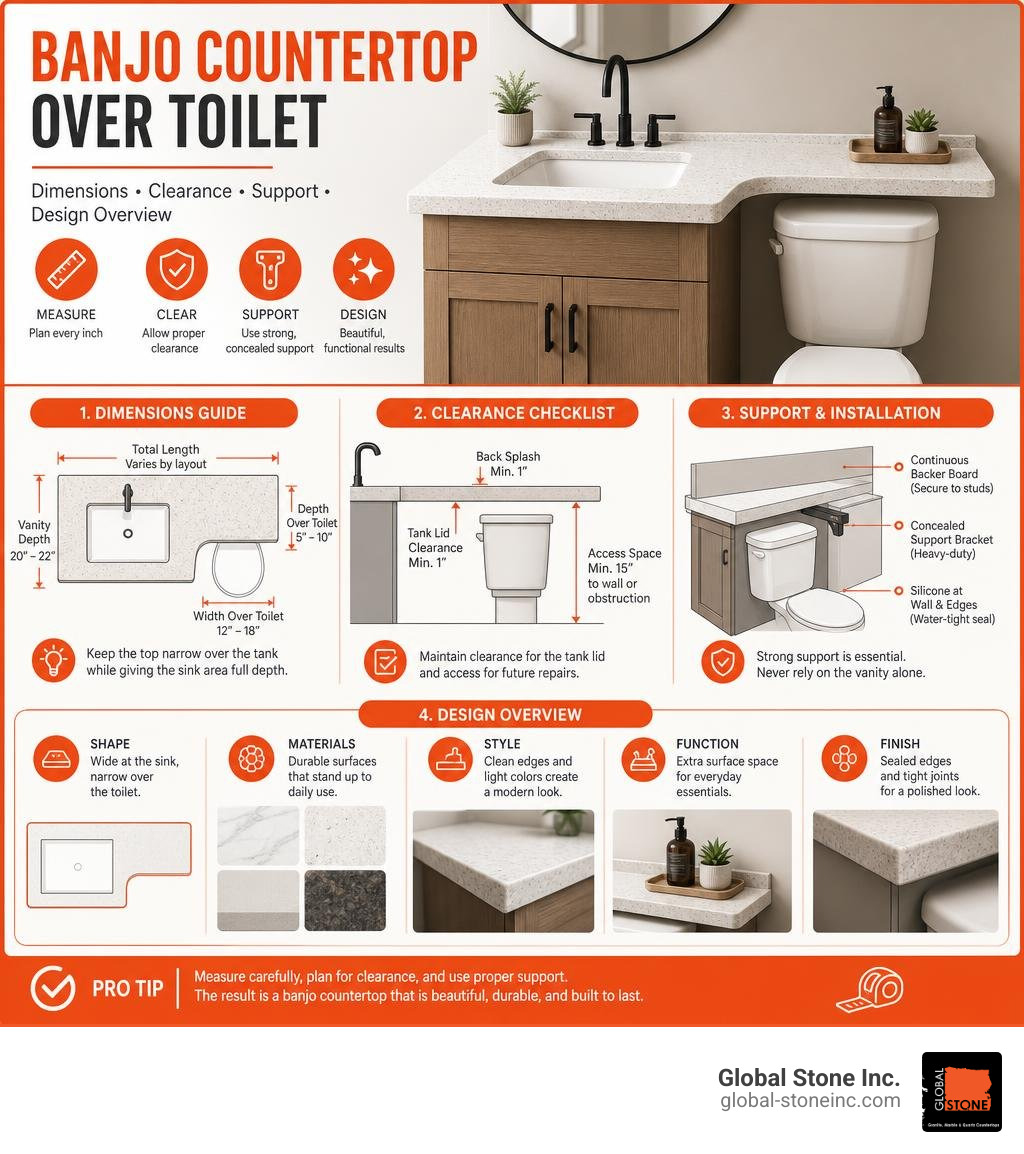
Banjo countertop over toilet word roundup:
Understanding Banjo Countertop Design: Pros, Cons, and Modern Styles
What is a Banjo Countertop Over Toilet and Why Choose One?
A banjo countertop over toilet gets its musical name from its unique silhouette. When viewed from above, the wide section holding the bathroom sink resembles the body of a banjo, while the narrow ledge extending horizontally over the adjacent toilet tank acts as the instrument’s neck.
In classic urban floor plans—such as standard 8×5 guest baths common across Chicago, Naperville, and surrounding areas—the toilet sits directly beside the vanity cabinet. Without a banjo extension, the area directly above the toilet tank remains unutilized vertical space. By continuing the stone or composite material across the tank, homeowners gain valuable horizontal surface area without requiring a wider vanity base or expanding into the floor footprint.
Why do homeowners choose this layout? In tiny powder rooms and hall baths, counter real estate comes at a premium. A standard 37 x 22 bathroom vanity top or 43 x 22 vanity top might offer only a few inches of resting space around the sink basin. Adding an extended banjo shelf creates an ideal landing zone for hand soaps, decorative tissue boxes, guest towels, or small air-purifying plants. To understand the fundamental layout variations of these continuous tops, check out our guide on what is a banjo bathroom countertop and do you need one? and browse through comprehensive insights in the Banjo Countertop Over Toilet: Complete Guide 2026.
Pros and Cons of Over-Toilet Countertop Extensions
While the added surface space is a clear benefit, extended countertops require weighing practical trade-offs before starting a renovation. Below is a realistic breakdown of the advantages and drawbacks we evaluate with clients at our Elk Grove Village fabrication facility:
| Aspect | Pros (Why It Works) | Cons (Potential Drawbacks) |
|---|---|---|
| Storage & Surface | Adds 2 to 4 extra square feet of usable counter space in tight bathrooms. | Can encourage clutter if not kept organized with tray containers. |
| Safety & Floor Flow | Wall-anchored stone eliminates tripping hazards created by freestanding floor shelves or unstable over-toilet rack units. | Fixed extensions restrict space above the toilet lid if vertical clearance isn’t calculated properly. |
| Aesthetics | Creates a unified, continuous horizontal line that visually stretches small rooms. | Dated dark tile or thick laminate versions can feel heavy and boxy. |
| Plumbing Access | Keeps items secure away from wet sinks. | Plumbers may find it tighter to service flush valves or replace flappers without adequate overhead clearance. |
| Mirror Integration | Allows installation of a wide wall mirror spanning both sink and toilet, reflecting extra light. | Requires precision measuring during bathroom countertop installation to prevent wall gaps. |
As detailed in Why You Need Banjo Bathroom Countertops, wall-anchored extensions eliminate the safety hazards posed by tippy floor-standing racks while creating cohesive visual architecture across narrow walls.
Modernizing the Banjo Countertop: Outdated Myth vs Contemporary Reality
Many homeowners remember 1980s and 1990s banjo tops made of thick beige laminate or heavy ceramic tile with dark grout lines, leading them to assume that all extended tops look dated today. However, contemporary stone fabrication techniques have completely transformed this feature into a high-end luxury element.

Modernizing a banjo countertop over toilet relies on four key design shifts:
- Engineered Quartz and Light Natural Stone: Replacing dark, textured laminates with clean white quartz, Calacatta marble patterning, or polished quartzite instantly brightens compact rooms by bouncing natural and overhead light.
- Slim, Square Edge Profiles: Traditional bullnose edges can look heavy. Selecting sleek eased or micro-bevel edges gives stone slabs a crisp, floating look.
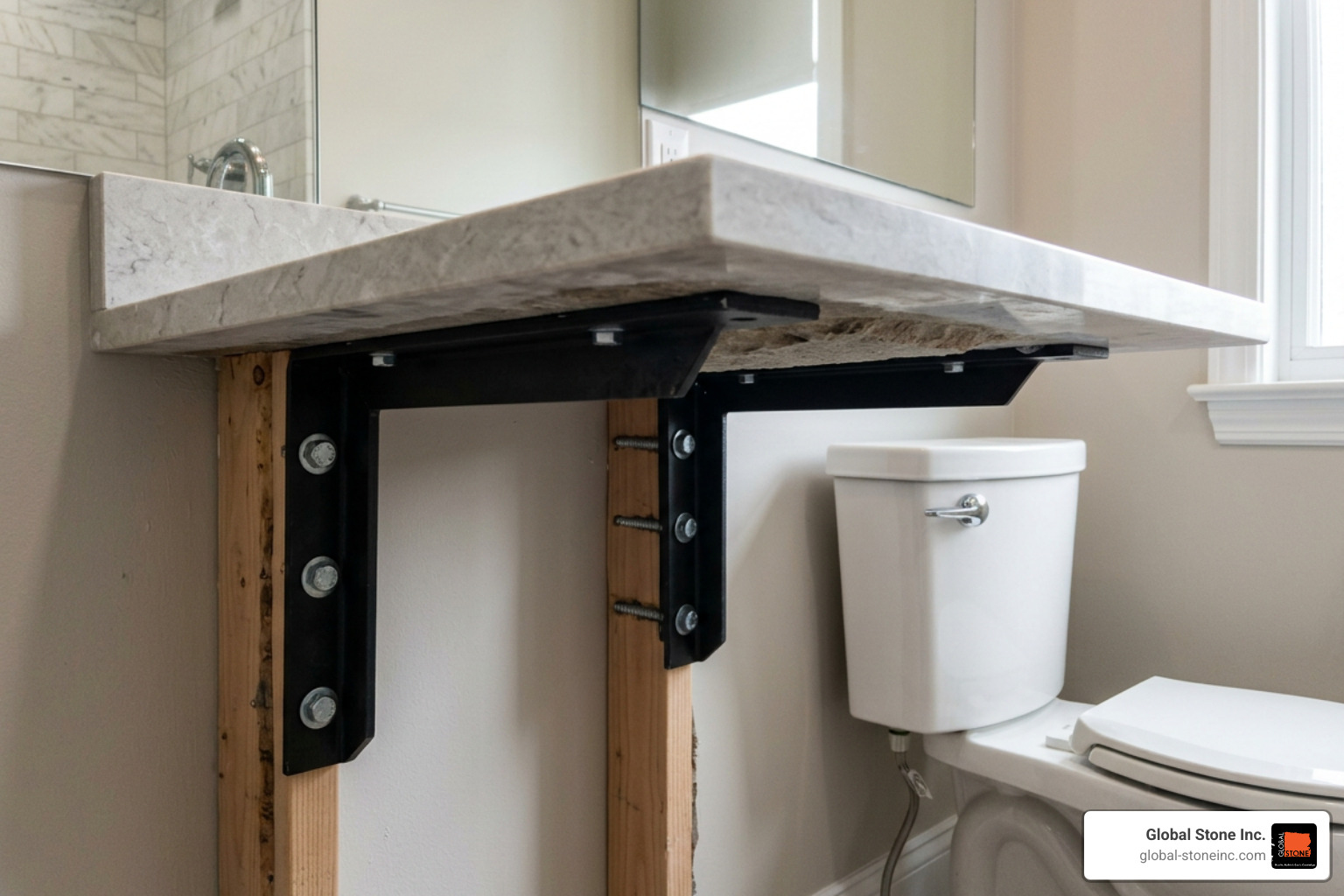
- Concealed Wall Support: Heavy wooden corbels under the counter create visual clutter. Using hidden heavy-duty steel brackets concealed within the drywall creates an elegant floating appearance.
- Full-Width Wall-to-Wall Mirrors: Mounting a single custom-framed mirror across both the vanity sink and over-toilet extension visually doubles the bathroom’s perceived depth, turning an awkward corner into a intentional feature.
When paired with modern wall-hung faucets or under-mount sinks, an extended stone counter delivers streamlined luxury while serving practical daily needs.
Planning a Banjo Countertop Over Toilet: Critical Measurements and Specs
Essential Technical Dimensions and Structural Support
Proper planning requires strict adherence to technical dimensions. Because natural stone and quartz are extremely dense, extending an unsupported “arm” over a toilet tank can create structural stress points that cause cracking if step-by-step guidelines are ignored.
Here are the critical dimensions and load criteria we follow:
- Extension Depth: A standard banjo countertop extends 6 to 8 inches beyond the back wall over the main vanity area, and typically narrows to 4 to 6 inches in depth over the toilet tank. This narrower profile preserves comfortable head clearance for seated users.
- Vertical Height Clearance: The underside of the countertop should sit at least 29 inches above the finished floor, leaving ample space above standard toilet tanks.
- Weight Capacity: A properly supported extension shelf is engineered to support 50 to 100 pounds of evenly distributed weight. It is meant for toiletries, decor, and tissue boxes—not for standing or sitting!
- Support Brackets: Metal heavy-duty L-brackets or hidden steel cantilever supports must be placed every 16 to 24 inches along the extended arm. Each bracket must carry a minimum load rating of 200 pounds and be anchored directly into wood wall studs using structural lag screws.
For full material dimensions and structural standards across various bathroom layouts, review our detailed guide to bathroom countertops as well as our A-Z guide to bathroom vanity top materials sizes.
How to Maintain Toilet Access Under a Banjo Countertop Over Toilet
The single biggest regret homeowners experience with poorly planned banjo tops is losing accessibility to the toilet tank for routine maintenance. If a fill valve breaks or the flapper wears out, you must be able to reach inside the tank without removing stone slabs or ripping out drywall.
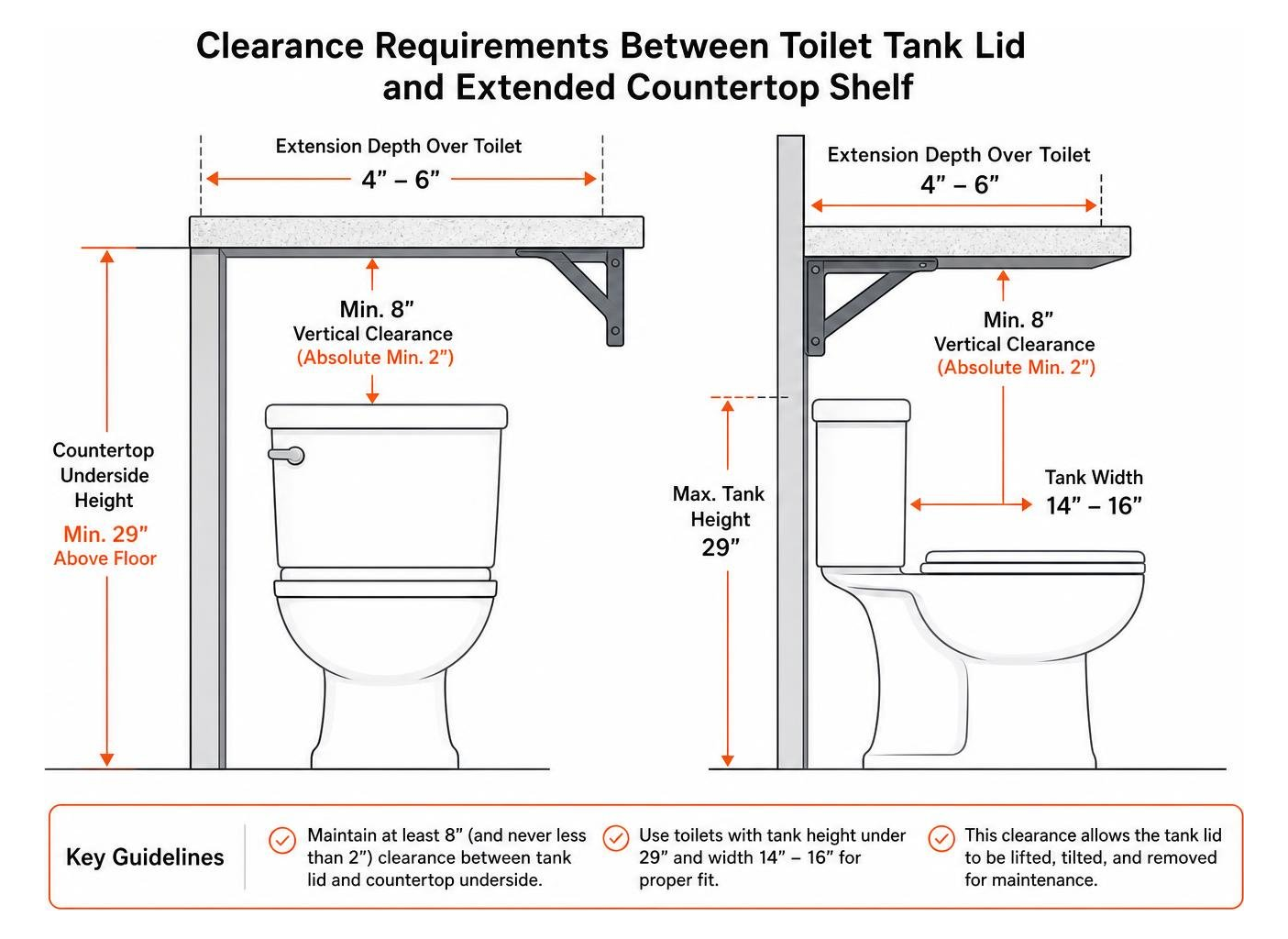
To guarantee long-term convenience, follow these plumbing guidelines:
- Vertical Lid Clearance: Maintain a minimum vertical gap of 8 inches (and never less than 2 inches absolute lower limit) between the top of the toilet tank lid and the underside of the banjo shelf. This gap allows you to lift the tank lid, tilt it, and slide it out smoothly during plumbing repairs.
- Toilet Compatibility: Select toilets with tanks under 29 inches in height and 14 to 16 inches in width. Low-profile, two-piece toilets or compact elongated models pair exceptionally well with over-toilet counters.
- Removable or Hinged Extensions: In tight custom wood or composite builds, some homeowners incorporate concealed brass hinges on the shelf extension, allowing the section over the toilet to pivot upward during major plumbing overhauls.
For expert plumbing and design perspectives regarding clearance calculations, see the industry advice shared in Banjo Countertop Over Toilet? – Gilmans Kitchens and Baths.
How to Install, Modify, or Remove a Banjo Countertop
Installing a Stone or Quartz Banjo Countertop
Installing a custom stone or quartz banjo top requires precise leveling, stud anchoring, and waterproofing. Here is how our professional installation team executes a secure setup:
- Verify Level and Wall Plumbing: Before placing stone, check the vanity base cabinet and adjacent wall with a 4-foot level. Inspect wall studs using a electronic stud finder and mark anchor locations.
- Mount Hidden Wall Support Brackets: Secure heavy-duty steel angle brackets into the wall studs along the over-toilet extension area. Ensure brackets sit perfectly flush with the top edge of the vanity cabinet.
- Dry-Fit the Slab: Carefully lift the stone slab into position to check wall fit, sink cutout alignment, and toilet lid clearance. Verify that the overhang sits square.
- Apply Adhesive and Waterproof Sealant: Apply beads of heavy-duty construction adhesive or 100% silicone along the top edges of the vanity cabinet and mounting brackets. Set the stone top firmly into place.
- Seal Backsplash Edges: Apply a clean bead of mold-resistant 100% silicone caulk along the entire seam where the countertop meets the drywall or tiled backsplash to prevent water intrusion behind the cabinet.
To review techniques on preventing counter movement, read our guide on how to stop the wobble and secure your bathroom vanity top. If you are remodeling across the Chicagoland region, explore our full-service bathroom remodeling Chicago IL and bathroom remodeler Chicago options.
Cutting and Removing an Existing Extension Shelf
If you bought a home built in the 1980s or 1990s with an old laminate or solid-surface banjo top that blocks a new taller toilet, you can cut off the extended arm without replacing the entire vanity cabinet.

As described in the step-by-step tutorial on How To Remove Banjo Counter Tops, trimming an existing shelf requires the following tools and safety precautions:
Essential Tools & Supplies Needed:
- Painter’s tape and long straightedge marker
- Personal protective equipment (respirator mask, safety goggles, ear protection)
- Circular saw fitted with a diamond blade (for stone/solid surface) or fine-tooth carbide blade (for laminate)
- Shop vacuum with HEPA filter
- Angle grinder with diamond polishing pads
- Utility knife, putty knife, joint compound, and texture spray for wall repairs
Step-by-Step Removal Process:
- Mark the Cut Line: Apply blue painter’s tape along the flush edge where the vanity cabinet meets the extended toilet arm. Draw a straight cut line using a Sharpie and metal straightedge.
- Set Up Dust Control: Have a helper hold the nozzle of a running shop vacuum directly adjacent to the saw blade to catch airborne stone or composite dust.
- Execute the Cut: Wearing full protective gear, guide the circular saw along the marked line at a smooth, steady pace without forcing the blade.
- Deburr and Polish Edge: Use an angle grinder with fine diamond polishing pads to smooth out sharp raw edges along the cut line.
- Patch Drywall: Unscrew old support wall brackets, scrape away remaining caulk with a putty knife, patch drywall holes with joint compound, sand smooth, and apply matching texture spray before painting.
Homeowners who complete this modification, as highlighted in real-life case studies like The Small and Awkward Bathroom with the Banjo Countertop, find that removing an awkward shelf can open up a narrow room when replacing older low-profile plumbing fixtures.
Cost Analysis, Storage Ideas, and Smart Alternatives
Complete Installation Cost Breakdown (DIY vs. Professional)
Budgeting for a banjo countertop over toilet depends on material selection and whether you choose self-installation or hire experienced stone fabricators. Approximately 70% of homeowners opt for professional installation due to the technical challenges of scribing stone slabs against uneven bathroom walls and ensuring structural wall support.
| Cost Component | DIY Installation (Budget Materials) | Professional Installation (Mid-Range Quartz) | High-End Custom Installation |
|---|---|---|---|
| Material Cost | $100 – $300 (Laminate / Prefab) | $400 – $800 (Engineered Quartz / Granite) | $800 – $1,800+ (Calacatta Marble / Exotic Quartzite) |
| Tools & Hardware | $0 – $100 (Brackets, Silicone, Blades) | Included in Service | Included in Service |
| Labor & Fabrication | $0 (Self-installed) | $500 – $1,500 (Template, Cutting, Fitting) | $1,000 – $2,000+ (Custom Inlays / Wall Scribing) |
| Total Project Cost | $100 – $500 | $900 – $2,300 | $1,500 – $3,500+ |
Investing in engineered quartz provides the ideal balance of long-term durability, stain resistance, and sleek appearance in wet bathroom environments.
Storage Solutions and Space-Saving Alternatives
An extended over-toilet counter serves as a launchpad for vertical storage organization. Here are modern organization ideas to maximize utility:
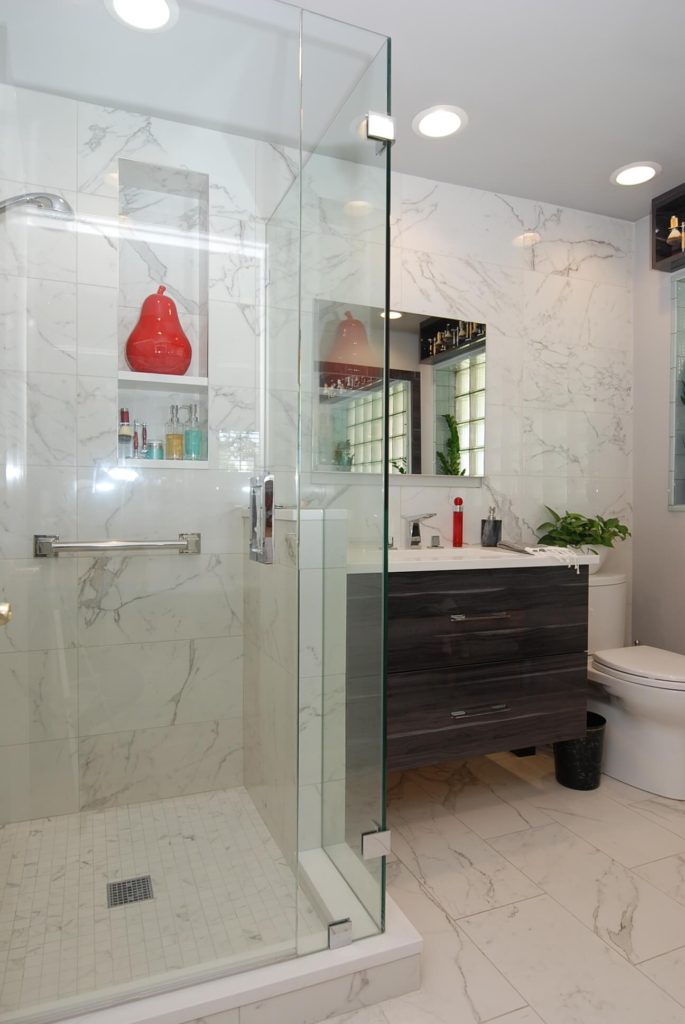
- Vertical Cabinetry Towers: Mounting a narrow storage tower directly on top of the extended counter section creates vertical linen storage without sacrificing floor space.
- Appliance Garages: Incorporate small appliance garages with pull-down tambours at the edge of the counter to tuck away hair dryers, electric toothbrushes, and charging cords.
- Open Floating Shelves: Mount matching stone or wooden floating shelves 12 to 15 inches directly above the banjo extension to store folded towels, bath salts, and decorative canisters.
- Recessed Wall Stud Niches: Instead of extending horizontal counters outward into small rooms, cut into drywall between wall studs to create recessed shelving units.
- Wall-Hung Cabinets & Étagères: Over-toilet wall cabinets with frosted glass doors offer enclosed storage without impacting overhead clearance around the toilet lid.
If you are redesigning a complete layout and need professional guidance on undermount sinks, check out our service on new bathroom sink installation in Chicago.
Frequently Asked Questions
Are banjo countertops outdated for modern bathrooms?
No. While older 1980s laminate versions look dated, modern banjo countertops crafted from engineered quartz or natural granite with square polish edges, hidden wall brackets, and seamless wall-to-wall mirrors are highly stylish and practical solutions for small bathrooms in 2026.
What toilet height works best with a banjo countertop extension?
Toilets with total tank heights under 29 inches and tank widths between 14 and 16 inches work best. Maintaining a minimum clearance gap of 8 inches above the toilet tank lid ensures easy access for future plumbing maintenance and component replacements.
Can you cut a stone banjo countertop without replacing the entire vanity?
Yes. Experienced DIYers or professional stone fabricators can cut off an extended stone arm using a circular saw equipped with a diamond masonry blade, combined with continuous dust vacuuming and edge polishing using an angle grinder.
Conclusion
A thoughtfully planned banjo countertop over toilet remains one of the most effective ways to maximize surface functionality in tight bathroom layouts. By incorporating precise measurements, adequate vertical clearance above the toilet tank lid, and concealed structural wall supports, you turn unutilized wall area into a beautiful, lasting feature.
At Global Stone Inc., our in-house designers, fabricators, and installers bring over 20 years of experience to homeowners across Elk Grove Village, Naperville, and the wider Chicago area. We back all of our custom natural stone and quartz fabrications with a lifetime warranty, ensuring your bathroom remodel stands up to daily living for decades to come.
Ready to explore premium quartz and natural stone options for your next bathroom renovation? Explore Custom Bathroom Countertops with our expert team today!